
Delhi’s Cloud Seeding Trials Fail to Produce Rain, But Officials Note Drop in Pollution Levels

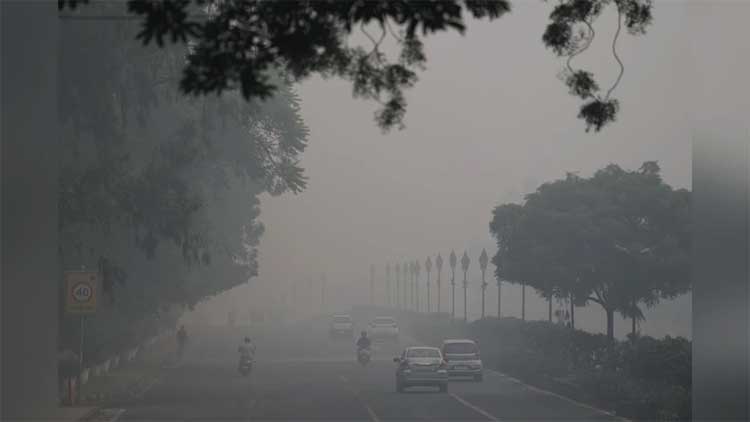
The Delhi government on Tuesday conducted two cloud seeding trials in an effort to induce artificial rain and curb worsening air pollution in the capital. However, both sorties — flown from Kanpur and Meerut — failed to produce rainfall by Tuesday evening.
According to Manindra Agrawal, Director of IIT Kanpur, the experiments were “not completely successful” as the flares fired from the aircraft did not lead to precipitation.
“We did two sorties, one in the afternoon and another in the evening. Around 14 flares were fired, but there hasn’t been any rain so far. So, in that sense, it is not completely successful,” Agrawal told NDTV.
Details of the Cloud Seeding Operation
The trials were carried out using a Cessna aircraft equipped with salt-based and silver iodide flares to stimulate cloud formation and rainfall. A similar test had been conducted last week over Burari.
Delhi Minister Manjinder Singh Sirsa said the latest operations marked the third overall trial, covering the outer parts of the city, including Khekra, Burari, North Karol Bagh, and Mayur Vihar.
“Two cloud seeding trials were conducted in Delhi today — the first from Kanpur and the second from Meerut. Each used about eight flares weighing between 2 and 2.5 kilograms. So far, this has been a historic step for Delhi,” Sirsa said.
Why the Trials Did Not Work
A preliminary report by the Delhi government indicated that the moisture content in the atmosphere was too low — around 10–15%, as predicted by the IMD — making it unsuitable for successful cloud seeding.
Agrawal echoed this assessment, explaining that while there was decent cloud cover, “the clouds did not have very high moisture content — only 15–20%. The possibility of causing rain with such low moisture content is not very high.”
He added that the team plans to attempt a third round of trials on Wednesday, noting that the previous attempts had helped refine their process.
Partial Success: Pollution Levels Drop
Despite the absence of rainfall, officials noted a measurable decline in particulate matter levels following the seeding attempts. According to the Delhi government report, PM2.5 and PM10 levels dropped at the targeted locations shortly after the trials.
Before the first seeding, PM2.5 levels stood at 221 (Mayur Vihar), 230 (Karol Bagh), and 229 (Burari), which later decreased to 207, 206, and 203 respectively. Similarly, PM10 levels fell from around 207–209 to 163–177.
Two light precipitation events — 0.1 mm in Noida and 0.2 mm in Greater Noida — were also recorded around 4 p.m., possibly as a result of atmospheric disturbances from the trials.
The first flight took off from the IIT Kanpur airstrip at 12:13 p.m., covering Khekra, Burari, North Karol Bagh, Mayur Vihar, Sadakpur, and Bhojpur, while the second sortie from Meerut airstrip targeted Khekra, Burari, Mayur Vihar, Noida, Modinagar, and Meerut.
Officials said the next phase of trials will focus on days with higher atmospheric humidity to maximize the chances of inducing rain and further reducing pollution levels in the capital.
Comments are closed.