
Delhi’s AQI Soars Past 700 as Toxic Smog and Dust Blanket the Capital

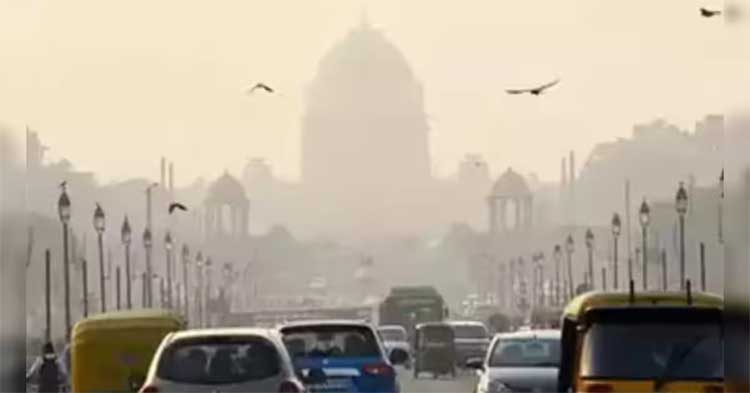
Delhi’s air quality plunged to “hazardous” levels on Friday morning, with the city recording an overall Air Quality Index (AQI) of 727, according to Swiss air quality monitor IQAir. The national capital has been engulfed in thick smog since Diwali, as a mix of post-festival pollution, crop residue burning in neighbouring states, and stagnant winds continue to trap pollutants over the city.
Officials said a slight improvement may occur later in the day as wind speeds increase.
On Thursday, Delhi’s AQI stood at 311, falling in the “very poor” category, according to data from the Central Pollution Control Board (CPCB).
Delhi Ranks 4th Among Most Polluted Indian Cities
Out of 254 cities monitored, Rohtak topped the list of most polluted locations with an AQI of 348, followed by several cities in north India. Delhi ranked fourth, with PM2.5 identified as the primary pollutant.
According to CPCB’s Sameer app, 32 of Delhi’s 38 monitoring stations recorded air quality in the “very poor” range — all with readings above 300.
Stubble Burning Major Contributor
The Air Quality Early Warning System has projected that stubble burning will be the biggest contributor to Delhi’s PM2.5 concentration through the weekend. Its share in Delhi’s air pollution rose sharply from 1.2% on Wednesday to 21.5% on Thursday, and is expected to jump to 36.9% on Friday before easing slightly to 32.4% on Saturday.
Satellite data showed 94 farm fire incidents in Punjab, 13 in Haryana, and 74 in Uttar Pradesh on Wednesday, according to PTI.
Transport emissions are expected to be the second-largest source, accounting for around 11–16% of PM2.5 levels between Thursday and Saturday.
Protests Over Toxic Air
Amid the worsening air crisis, students and activists on Thursday held a protest at Jantar Mantar, accusing both the central and Delhi governments of failing to address the city’s escalating pollution and climate crisis.
More than 80 demonstrators took part in the protest, organized by Scientists for Society and the Campaign for Right to Public Health. The gathering included students, artists, journalists, and members of groups such as Naujawan Bharat Sabha and Disha Students’ Organisation.
Comments are closed.