

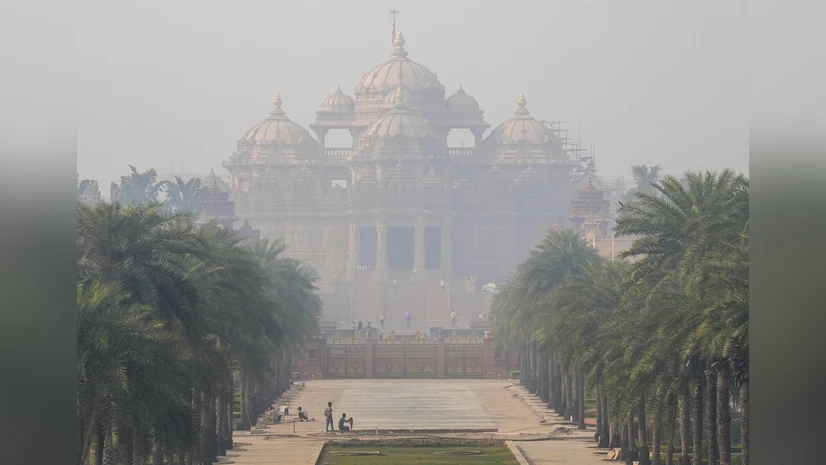
Delhi’s air quality deteriorated to hazardous levels, with the Air Quality Index (AQI) breaching 400 in multiple areas, prompting the implementation of Stage IV of the Graded Response Action Plan (GRAP). The crisis, driven by a combination of stubble burning in neighboring states, vehicular emissions, and unfavorable weather conditions, has sparked public health concerns and renewed calls for long-term solutions to India’s capital city’s persistent pollution problem.
The Air Quality Crisis
The Central Pollution Control Board (CPCB) reported that Delhi’s average AQI reached 420 on July 17, classified as “severe” and posing significant health risks, particularly to children, the elderly, and those with respiratory conditions. Key areas like Anand Vihar and Mundka recorded AQI levels as high as 480, driven by high concentrations of PM2.5 and PM10 particles. The thick smog has reduced visibility, disrupted flights, and led to a surge in hospital admissions for respiratory ailments.
The crisis is attributed to multiple factors:
-
Stubble Burning: Satellite data indicates over 2,000 farm fires in Punjab and Haryana over the past week, contributing significantly to Delhi’s pollution. Despite efforts to curb stubble burning, enforcement remains weak.
-
Vehicular Emissions: Delhi’s 12 million registered vehicles, combined with diesel-powered trucks, are a major source of pollutants.
-
Weather Conditions: Low wind speeds and high humidity have trapped pollutants, creating a smog blanket over the National Capital Region (NCR).
Government Response and GRAP Measures
In response, the Commission for Air Quality Management (CAQM) activated Stage IV of GRAP on July 16, imposing stringent measures:
-
Ban on construction activities and non-essential diesel trucks entering Delhi.
-
Closure of schools and colleges, with a shift to online classes.
-
Restrictions on coal and firewood usage in industries and households.
-
Encouragement of work-from-home policies for 50% of employees in public and private offices.
The Delhi government has also deployed additional air purifiers in public spaces and increased water sprinkling to settle dust. Chief Minister Arvind Kejriwal urged neighboring states to enforce stricter measures against stubble burning, though inter-state coordination remains a challenge.
Public and Political Reaction
The crisis has sparked widespread concern. Residents have taken to X to express frustration, with hashtags like #DelhiChokes trending. One user wrote, “Can’t breathe in Delhi anymore—when will the government act beyond temporary bans?” Health experts warn that prolonged exposure to AQI above 400 can cause severe respiratory and cardiovascular issues.
Opposition parties have criticized the Aam Aadmi Party (AAP) government for failing to implement long-term solutions, while the central government has faced scrutiny for inadequate funding for clean air initiatives. Environmental groups are pushing for stricter enforcement of the National Clean Air Programme (NCAP) and investment in sustainable farming practices to reduce stubble burning.
Broader Implications
The air quality crisis has significant consequences:
-
Public Health: Hospitals report a 30% increase in respiratory cases, with children and the elderly most affected. Long-term exposure could lead to a rise in chronic illnesses.
-
Economic Impact: Flight cancellations and reduced productivity due to health issues and work-from-home mandates are costing Delhi’s economy millions daily.
-
Environmental Policy: The crisis underscores the need for stronger regional cooperation and investment in green technologies, such as electric vehicles and biomass management.
India’s global image as an emerging economy is also at stake, with the persistent pollution problem drawing international attention. The World Health Organization (WHO) has reiterated that Delhi’s air quality violates global standards, urging urgent action.
Path Forward
To address Delhi’s air pollution crisis, experts suggest:
-
Regional Coordination: Strengthen collaboration between Delhi, Punjab, Haryana, and Uttar Pradesh to curb stubble burning through subsidies for alternative crop residue management.
-
Green Transport: Accelerate the shift to electric vehicles and expand public transport under the Delhi Metro Phase IV project.
-
Industrial Reforms: Enforce stricter emission norms for industries in the NCR and promote renewable energy sources.
-
Public Awareness: Launch campaigns to encourage carpooling, reduced firecracker use, and tree planting.
Long-term solutions, such as developing a robust biomass economy and upgrading urban infrastructure, are critical to breaking the cycle of annual smog.
Delhi’s air quality crisis on July 17, 2025, with an AQI breaching 400, highlights the urgent need for comprehensive action to combat pollution. While emergency measures like GRAP provide temporary relief, sustainable solutions require regional cooperation, technological innovation, and public commitment. As the capital chokes under smog, policymakers must act decisively to ensure a breathable future for Delhi’s residents.
Comments are closed.