
Delhi-NCR Air Panel Enforces GRAP Stage 2 Ahead of Diwali as Pollution Nears ‘Very Poor’ Levels

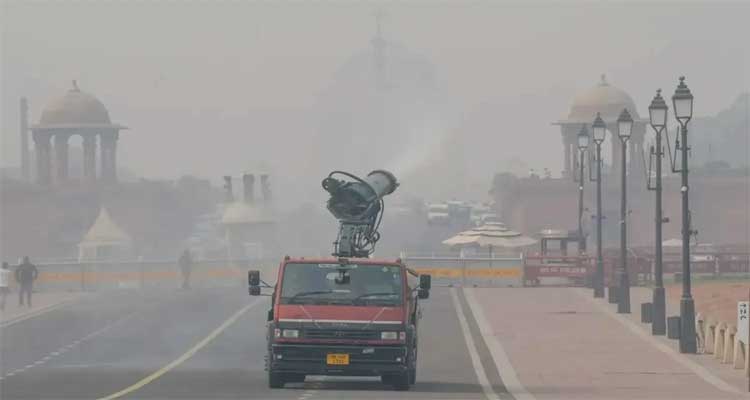
A day before Diwali, the Centre’s air quality panel on Sunday imposed Stage II restrictions of the Graded Response Action Plan (GRAP) across Delhi-NCR, anticipating a sharp dip in air quality due to adverse weather conditions and the bursting of firecrackers.
The Commission for Air Quality Management (CAQM) said the decision was taken after Delhi’s Air Quality Index (AQI) showed an “increasing trend” through the day — rising from 296 at 4 p.m. to 302 by 7 p.m. “The forecast by IMD/IITM also predicts further deterioration of AQI in the coming days,” the panel said in a statement.
Stage II of GRAP is triggered when the air quality reaches the “Very Poor” category. On Sunday evening, Delhi’s AQI hovered around 296, while Noida and Ghaziabad already recorded “Very Poor” levels and Faridabad remained in the “Moderate” range, according to the Central Pollution Control Board (CPCB).
“The Sub-Committee accordingly decides to invoke all actions under Stage-II (‘Very Poor’ Air Quality) of the extant GRAP in the entire NCR, with immediate effect, in addition to the Stage-I actions already in force,” the CAQM said.
Sixth Straight Day of ‘Poor’ Air
Sunday marked the sixth consecutive day of “Poor” air quality in the national capital. Delhi’s AQI stood at 268 on Saturday and had remained between 245 and 254 over the previous two days. Officials warned that the levels are likely to deteriorate further during Diwali, even as only “green firecrackers” have been permitted in the city on a trial basis.
What is GRAP?
The Graded Response Action Plan (GRAP) is a regulatory framework designed by the CAQM to combat rising air pollution in Delhi-NCR based on the severity of the AQI.
The plan has four stages:
-
Stage 1: “Poor” (AQI 201–300)
-
Stage 2: “Very Poor” (AQI 301–400)
-
Stage 3: “Severe” (AQI 401–450)
-
Stage 4: “Severe Plus” (AQI 450+)
Restrictions Under GRAP Stage 2
Stage II restrictions include:
-
Ban on the use of coal and firewood, including tandoors in hotels, restaurants, and open eateries.
-
Ban on diesel generator sets, except for emergency and essential services.
-
Implementation of all Stage I measures, including dust control and vehicular curbs.
Advisory for Citizens:
-
Use public transport and avoid personal vehicles where possible.
-
Replace vehicle air filters regularly.
-
Avoid construction or demolition work that generates dust.
-
Do not burn waste or biomass in the open.
For Authorities:
-
Increase frequency of bus and metro services.
-
Intensify mechanical road cleaning and daily water sprinkling in high-traffic areas.
-
Conduct strict inspections at construction sites to enforce dust control.
-
Ensure uninterrupted power supply to reduce generator use.
-
Raise parking fees to discourage private vehicle use.
The CAQM said these measures aim to mitigate the seasonal spike in pollution, which typically worsens during Diwali and the winter months due to stagnant air and festive emissions.
Comments are closed.