
Delhi at 3°C, Gurugram freezes: Why the plains are colder than Shimla this winter

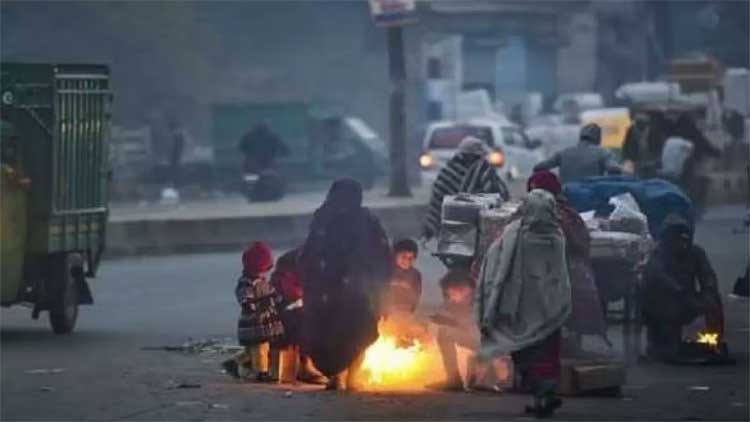
Residents of Gurugram continued to battle an intense cold wave on Tuesday, a day after the city recorded a historic minimum temperature of 0.6 degrees Celsius — its lowest in nearly five decades and colder than several Himalayan hill stations. Delhi also shivered, with the minimum temperature dipping to 3 degrees Celsius.
According to the India Meteorological Department (IMD), Gurugram’s 0.6-degree reading was logged on Monday morning, matching the city’s January 22, 1977 low. Temperatures have dropped below this level only three times on record: minus 0.4 degrees Celsius on December 5, 1966, 0 degrees Celsius on January 11, 1970, and 0.3 degrees Celsius on January 22, 1979.
On Monday, Gurugram was colder than many popular hill destinations. Himachal Pradesh’s Kangra and Palampur recorded 3 degrees Celsius, Jammu 3.4 degrees, while Uttarakhand’s Mukteshwar, Jollygrant and Tehri stood at 4.1 degrees each. By contrast, Mussoorie recorded 7.7 degrees and Shimla 8.8 degrees.
The cold wave has gripped much of the National Capital Region and northwest India. Delhi’s Safdarjung station recorded a minimum of 3 degrees Celsius, while other plains also saw near-freezing conditions — Hisar at 2.6 degrees, Amritsar 1.1 degrees, Churu 1.3 degrees, Karnal 3.5 degrees and Meerut 4.5 degrees.
Explaining the unusual pattern, IMD Director General M Mohapatra said cloud cover over the hills due to an active western disturbance prevented heat loss at night, keeping temperatures relatively higher there. “The night was cloudy over the higher reaches, which is why minimum temperatures remained higher,” he said.
Over the plains, clear skies combined with persistent cold northwesterly winds led to strong radiative cooling, allowing temperatures to plunge sharply.
The severe cold left visible signs across Gurugram and its outskirts, with frost forming over crops, grasslands and vehicle windshields, while dense fog reduced visibility on roads.
IMD has extended an orange alert until January 13, warning of cold wave to severe cold wave conditions, dense fog and ground frost across parts of Haryana, Delhi and neighbouring states. Temperatures are expected to remain abnormally low for the next few days, with no significant change likely over northwest India before a gradual rise of 2 to 4 degrees Celsius later in the week.
Meteorologists said the extreme cold is being driven by western disturbances, an upper-air cyclonic circulation over north Haryana, and strong westerly winds, compounded by an exceptionally dry winter that has left much of northwest India without snow cover.
Comments are closed.