
Delhi Air Quality Deteriorates Further, Remains ‘Poor’ for Fourth Straight Day

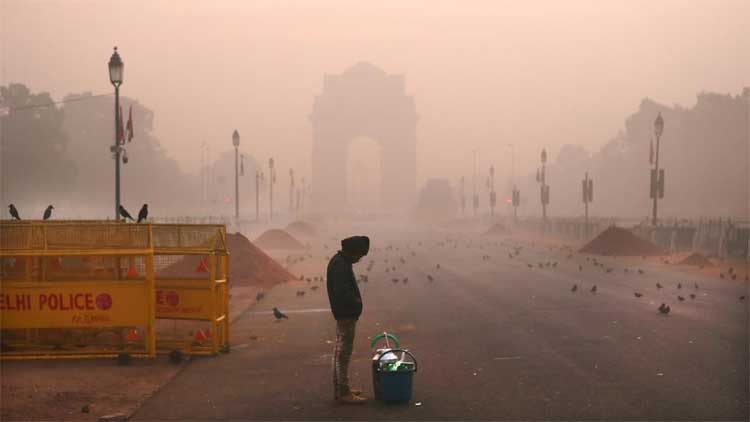
Delhi’s air quality continued to decline on Friday, marking the fourth consecutive day in the ‘poor’ category with an Air Quality Index (AQI) of 242, according to official data. On Thursday, the city recorded a 24-hour average AQI of 245, showing little improvement.
Some localities reported even higher levels of pollution, with AQI readings crossing 300 — entering the ‘very poor’ range. Transport emissions remained the biggest contributor to Delhi’s pollution, accounting for 18.7% of total emissions on Thursday, as per data from the Decision Support System. Forecasts from the Air Quality Early Warning System indicate no immediate relief in the coming days.
Area-wise AQI in Delhi (Friday Morning):
-
Bawana: 310
-
Akshardham: 369
-
Narela: 244
-
Anand Vihar: 252
-
Nehru Nagar: 268
-
JLN Stadium: 230
-
CRRI Mathura Road: 290
-
Okhla Phase 2: 247
According to the Central Pollution Control Board (CPCB), an AQI between 201–300 is classified as ‘poor,’ 301–400 as ‘very poor,’ and above 400 as ‘severe.’
The capital’s annual struggle with toxic air typically begins in winter, when falling temperatures, stagnant winds, and stubble burning in neighboring states worsen pollution levels. Delhi had enjoyed relatively clean air since June 11, thanks to monsoon rains and favorable wind conditions, but that streak ended last week.
Green Crackers Allowed Under Strict Rules
As air quality dips ahead of Diwali, the Supreme Court has permitted the sale and use of green firecrackers in Delhi-NCR under strict conditions. The Delhi government said it will enforce the court’s directions through designated sale zones and patrol teams to monitor compliance.
The apex court’s order allows green crackers to be used only between 6–7 am and 8–10 pm on the day before and the day of Diwali, emphasizing that this is a “test case” relaxation limited to the festival period.
A senior Delhi government official said the administration will ensure “strict compliance” with the court’s directions in coordination with relevant agencies, manufacturers, and law enforcement.
Health Risks Mount as Pollution Rises
Experts have urged caution ahead of Diwali, warning that rising pollution levels could severely impact vulnerable groups — including children, the elderly, pregnant women, and those with asthma, COPD, or heart conditions.
The Delhi government is also preparing a post-Diwali artificial rain plan to combat pollution spikes, aiming to improve air quality if meteorological conditions permit.
Comments are closed.