
“Country In Safe Hands”: Faisal Patel’s Praise for Modi Government Sparks Political Debate

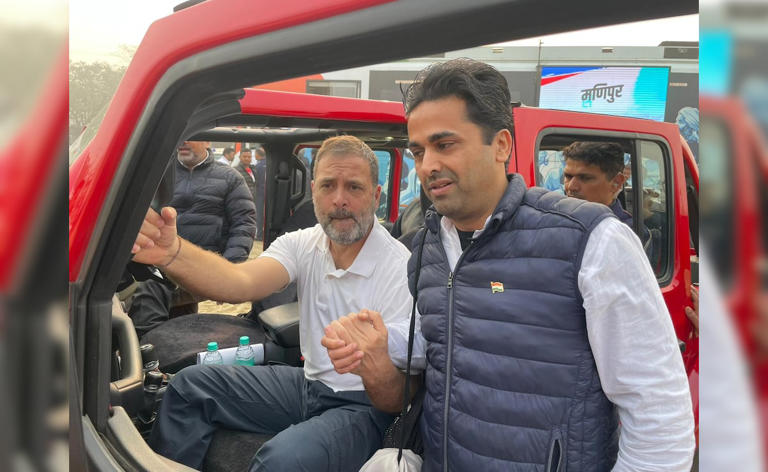
Faisal Patel, son of the late Congress stalwart Ahmed Patel, made headlines by praising Prime Minister Narendra Modi’s government, stating that India is “in safe hands” due to the strength of its armed forces and effective leadership during crises like Operation Sindoor. Reported by outlets such as News18, NDTV, and India TV, Patel’s remarks, which also commended leaders like External Affairs Minister S Jaishankar and Home Minister Amit Shah, have stirred debate given his Congress affiliation and the party’s ongoing criticism of the BJP-led government. The statement, amplified on X by users like @ANI and @JaiRam92739628, comes amid Faisal’s self-described “sabbatical” from public life following tensions with Congress over electoral opportunities.
This unexpected praise from a Congress scion, whose father was a key strategist for Sonia Gandhi, raises questions about internal party dynamics and India’s political landscape. This article explores the context of Faisal Patel’s remarks, their political significance, implications for Congress and BJP, and a critical perspective on their broader impact as of August 12, 2025, at 4:25 PM IST.
Context: Faisal Patel’s Remarks and Political Backdrop
Faisal Patel’s comments were made in the context of Operation Sindoor, a military response to the Pahalgam terrorist attack that killed 26 civilians, as reported by India TV. Speaking to ANI and CNN-News18, Patel lauded Modi’s leadership, stating, “It can’t be better than who’s running the show… The armed forces have done a great job, and PM Narendra Modi showed great leadership and brought us out of a huge crisis.” He also praised Jaishankar’s foreign policy acumen and Modi’s ability to elevate bureaucrats to ministerial roles, adding, “Our country is in safe hands because of our Armed Forces. I feel that the leaders who are running the country right now, Narendra Modi, Dr S Jaishankar, Amit Shah, Rajnath Singh, and Sudhanshu Trivedi, are working hard.”
Patel’s remarks are notable given his lineage. His father, Ahmed Patel, was a Congress veteran, serving as a three-time Lok Sabha MP from Bharuch, Gujarat, and a Rajya Sabha member for nearly three decades. Known as Sonia Gandhi’s “right hand,” Ahmed was a key strategist until his death from COVID-19 in 2020. Faisal, however, announced a “sabbatical” from Congress in February 2025, citing frustration over being “denied” opportunities to follow his father’s legacy, particularly after Congress ceded the Bharuch seat to the Aam Aadmi Party (AAP) in the 2024 Lok Sabha elections, as per NDTV. Despite this, Patel clarified, “I am not upset with the Congress at all. The whole party is my family,” while also critiquing internal advisory issues.
Political Significance: A Cross-Party Endorsement
Faisal Patel’s praise for Modi’s government is significant for several reasons:
-
Congress Internal Dynamics: Patel’s remarks highlight tensions within Congress, particularly after the Bharuch seat decision. His critique of party advisors—“They are not doing a good job”—and praise for leaders like Rahul Gandhi, Shashi Tharoor, and Sachin Pilot suggest a call for reform while maintaining loyalty, as noted in Hindustan Times.
-
BJP’s Political Leverage: The endorsement from a Congress scion provides the BJP with a powerful narrative, especially amid Congress’s criticism of Operation Sindoor’s handling. X posts like @BJPAkashG’s note Patel’s praise as a “break in ranks,” amplifying BJP’s claim of broad support.
-
Operation Sindoor Context: Patel’s reference to the Pahalgam attack and Operation Sindoor aligns with national security sentiments, where Modi’s decisive response has garnered public approval. His comments, as per News18, contrast with Congress’s narrative, creating a political fault line.
-
Personal and Legacy Factors: As Ahmed Patel’s son, Faisal’s voice carries weight in Gujarat and Congress circles. His public stance, despite his sabbatical, signals a nuanced position—supporting national leadership while critiquing party internals, as per Economic Times.
Implications for Congress and BJP
Patel’s remarks have far-reaching implications:
-
For Congress: The statement risks embarrassing Congress, particularly as Rahul Gandhi and other leaders criticize Modi’s government. Patel’s praise, reported by NDTV, may fuel perceptions of disunity, especially amid his earlier exit announcement on X: “I have decided to stop working for Congress… I was denied every step of the way.” This could prompt internal reflection, as Patel’s critique of advisors echoes broader concerns about party strategy.
-
For BJP: The BJP gains a public relations boost, with Patel’s endorsement validating Modi’s leadership on national security. Posts on X, such as @JaiRam92739628’s, highlight BJP leaders’ “hard work,” reinforcing their narrative of effective governance. This could sway public opinion in BJP’s favor ahead of state elections.
-
For Gujarat Politics: In Gujarat, where Ahmed Patel’s legacy looms large, Faisal’s comments could influence local sentiment, particularly in Bharuch, a seat lost to BJP in 2024. His praise may complicate Congress’s efforts to regain ground, as per Moneycontrol.
-
For U.S.-India Ties: Patel’s remarks align with broader praise for Modi’s geopolitical stance, including his response to U.S. tariffs, as noted in related coverage. This strengthens Modi’s image as a global leader, potentially influencing India’s diplomatic leverage.
Critical Perspective: Strategic Move or Political Misstep?
Faisal Patel’s praise for Modi’s government is a bold move that reflects both personal frustration and national sentiment. His focus on Operation Sindoor and the armed forces taps into widespread approval of Modi’s security policies, as evidenced by public support on X. By commending BJP leaders while remaining a Congress member, Patel positions himself as a pragmatic figure, prioritizing national interest over party loyalty. This aligns with other Congress voices, like Shashi Tharoor’s occasional divergence from party lines, as noted in News18.
However, the statement risks alienating Congress loyalists. Patel’s critique of party advisors and his sabbatical suggest internal discontent, potentially weakening Congress’s unity at a time when it seeks to challenge BJP’s dominance. The timing—amid Congress’s attacks on Operation Sindoor—could be seen as a misstep, amplifying BJP’s narrative, as per India TV. Moreover, Patel’s reliance on national security rhetoric may oversimplify complex governance issues like inflation and unemployment, which he acknowledged but downplayed.
Critically, Patel’s comments reflect a broader trend in Indian politics: the blurring of party lines on national security issues. While his praise may resonate with voters prioritizing stability, it raises questions about Congress’s ability to present a cohesive opposition. The lack of clarity on Patel’s future political plans—whether he will return to Congress or pursue an independent path—adds uncertainty to his motives.
Broader Context: India’s Political and Geopolitical Landscape
Patel’s remarks unfold against a dynamic political backdrop. Modi’s government faces challenges like inflation and unemployment, as Patel noted, yet enjoys strong support for its security and foreign policy, particularly after Operation Sindoor. The BJP leverages endorsements like Patel’s to counter opposition narratives, as seen in X posts by @JagranNews and @jankibaat1. Concurrently, Modi’s assertive stance on U.S. tariffs, praised by figures like ex-Pentagon official Elbridge Colby, enhances India’s global image, aligning with Patel’s view of effective leadership.
Within Congress, Patel’s comments highlight ongoing struggles to redefine its strategy post-2024 elections. The party’s decision to cede Bharuch to AAP, disappointing Patel and his sister Mumtaz, reflects broader challenges in coalition politics and leadership advisory, as per Livemint. Patel’s praise for Modi, while maintaining Congress ties, underscores the complex interplay of legacy, loyalty, and pragmatism in Indian politics.
Comments are closed.