
Coral Reefs Face Fourth Global Bleaching Event Amid Rising Ocean Temperatures

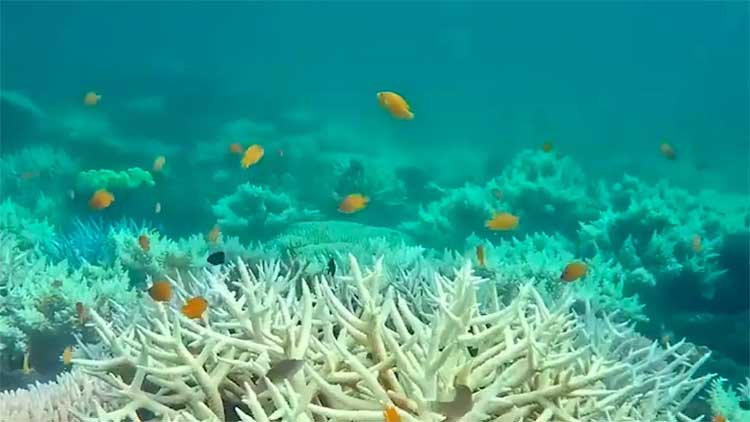
Coral reefs, often called the “Rainforests of the Ocean,” are experiencing their fourth mass bleaching event, according to the National Oceanic & Atmospheric Administration (NOAA) and the International Coral Reef Initiative (ICRI). Alarmingly, this is the second such event in the past decade, highlighting the growing threat of global warming to marine ecosystems.
What Is Coral Bleaching?
Corals are underwater ecosystems composed of coral polyps and symbiotic algae. Coral polyps build calcium carbonate skeletons, while algae provide them with essential nutrients. When sea temperatures rise beyond a critical threshold, these algae are expelled, leaving corals white, energy-deprived, and at risk of death.
India recorded its first mass bleaching in 1998 across the Gulf of Kachchh, Lakshadweep, Gulf of Mannar, and Andaman & Nicobar Islands. Since then, repeated events have stressed coral populations.
Global Context
The Great Barrier Reef is also under threat, with its fifth mass bleaching reported recently by the Australian Institute of Marine Science (AIMS). El Niño conditions, combined with disruptions in ocean currents and the Indian Ocean Dipole, exacerbate marine heatwaves, affecting corals across the Pacific and Indian Oceans.
Resilience Among Coral Species
Not all corals are equally vulnerable. Stylophora pistillata in the northern Red Sea tolerates higher temperatures, while robust species like Porites are increasingly dominating previously common branching coral zones. Nevertheless, coral vulnerability remains high, especially in the eastern Arabian Sea and the Bay of Bengal.
Conservation Efforts
Conservation strategies include:
-
Artificial reefs: Concrete structures with algal biofilms that aid coral regeneration.
-
Protected zones and advisories: Governments issue bleaching alerts and regulate tourism to minimise stress.
-
Legal protection: Corals are safeguarded under India’s Wildlife (Protection) Act, 1972.
The Road Ahead
While some predict corals could vanish in 20–30 years, adaptation is possible. Experts stress that reducing fossil fuel emissions, controlling pollution, managing tourism, and protecting resilient species are vital to sustaining coral ecosystems.
Dr. Grinson George, Director of ICAR-CMFRI, said, “Corals are highly sensitive to climate change, but with careful protection and targeted restoration, they can persist in modified forms. Immediate action is crucial to safeguard these irreplaceable marine habitats.
Comments are closed.