
COP30: Why the Brazil Summit Could Be a Turning Point in the Global Climate Fight

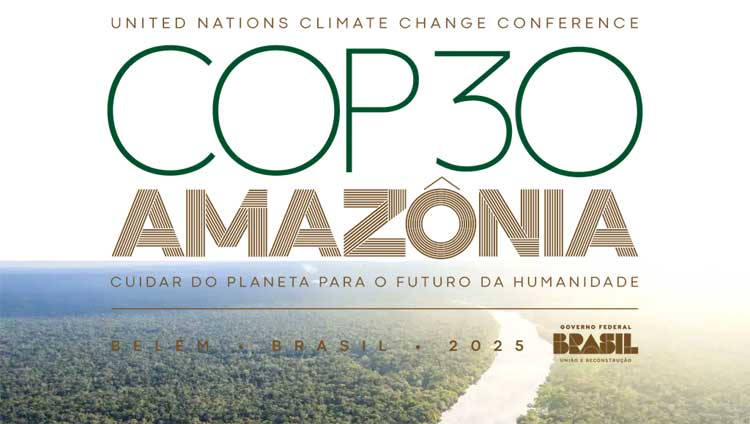
With less than four months to go until COP30, the upcoming UN climate summit in Belém, Brazil (10–21 November) is shaping up to be one of the most pivotal—and politically charged—climate gatherings in recent memory. Amid intensifying global tensions and waning consensus on how to share the burden of climate action, this year’s summit stands at a critical crossroads for the planet.
🌎 Why COP30 Matters More Than Ever
While COP summits are an annual affair, COP30 is unique in both symbolism and stakes:
-
Host nation Brazil, a key Global South power and BRICS member, is home to the Amazon rainforest, often described as the “lungs of the planet.” Its stewardship of the Amazon is central to global ecological health.
-
Climate change impacts—from scorching heatwaves to catastrophic floods—are worsening each year. Yet, fossil fuel consumption continues to rise, pushing the planet towards a dangerous 3°C warming trajectory by 2100.
The question: Can COP30 deliver a new climate deal that actually accelerates a global transition to renewable energy and climate justice?
🇧🇷 Brazil’s Climate Crossroads
Brazil’s President Luiz Inácio Lula da Silva, widely seen as climate-conscious, will host COP30. But the country faces internal contradictions:
-
On 17 July, Brazil’s Senate passed a bill that weakens environmental protections, potentially fuelling deforestation in the Amazon.
-
Lula may veto the bill, but even then, a fierce political standoff is expected—clouding Brazil’s credibility as a climate leader.
🇺🇸 Trump’s Interference & the BRICS Divide
Geopolitical tensions are compounding the challenge:
-
Former US President Donald Trump recently slapped a 50% tariff on Brazilian imports, allegedly pressuring Lula to ease up on prosecuting far-right ex-president Jair Bolsonaro—a Trump ally.
-
Trump’s anti-climate policies—including gutting green incentives and withdrawing from the Paris Agreement—signal that a potential return to power could seriously undermine global climate progress.
-
His disdain for the BRICS bloc and its growing influence may further derail any attempt at a unified climate agenda.
🌐 What BRICS Wants at COP30
At their July summit, BRICS countries reaffirmed support for:
-
The Paris Agreement
-
Climate equity and “common but differentiated responsibilities”
-
Increased climate finance from developed nations to support poorer countries’ development and adaptation needs
COP30 is expected to revolve around climate finance, especially funding mechanisms for the loss and damage fund and green infrastructure.
🌲 India’s Forests Are Losing Carbon-Capturing Power
Back home, India is facing a quiet climate crisis in its forests. A recent IIT Kharagpur study reveals:
-
In India’s densest forests, the carbon absorption capacity has declined by 12% per decade over the last 20 years.
-
The drop is due to drier soils and rising heat stress, which affect photosynthetic efficiency.
-
Despite an increase in India’s total green cover, primary forests—the most effective carbon sinks—are vanishing under development pressures.
This spells trouble for India’s climate targets, particularly the goal of creating carbon sinks of 3 billion tonnes of CO₂ by 2030.
💰 The $1.5 Trillion Climate Funding Gap
According to a new Deloitte report, India will need $1.5 trillion by 2030 to meet its climate and energy transition goals. The investments would be split across:
-
$200–250 billion for 500GW non-fossil energy
-
$75–80 billion for biofuels
-
$90–100 billion for green hydrogen
-
$600–650 billion for sustainable transport and other development goals
📚 Climate Fiction as Warning: The Drowned World
J.G. Ballard’s 1962 sci-fi novel The Drowned World imagines an Earth ravaged by runaway warming—London turned into a swamp, polar regions as the last human refuge, and civilization collapsing into primal regression.
Its haunting message is clear: climate collapse is not just an environmental issue, but an existential one. Without decisive action, our future may echo Ballard’s bleak vision.
🔎 Also in the News:
-
Pentagon’s $1 trillion budget could spike global emissions: A deep dive into the climate cost of militarization.
-
Himachal Pradesh’s apple farmers are reeling from erratic weather, spotlighting the urgency of climate adaptation.
-
Why storytelling—not just data—is vital to inspire real climate action: A new analysis explores the psychology of planetary change.
Comments are closed.