
COP30 Report Flags Major Climate-Health Funding Gap: Just 0.5% of Global Climate Finance Supports Health Systems

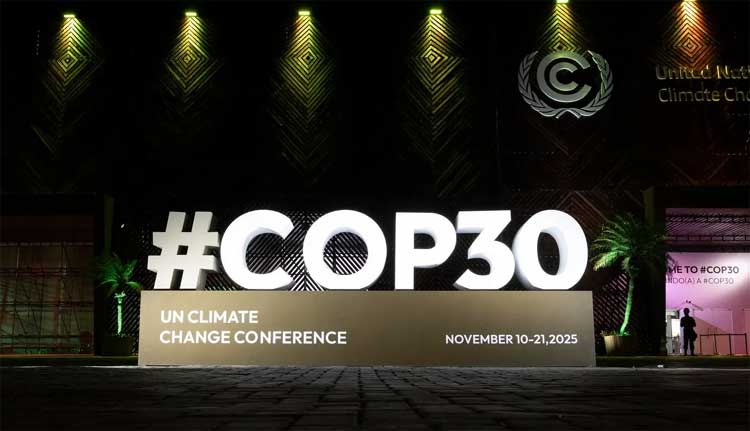
As COP30 opens in Belém, Brazil, on Monday (November 10, 2025), a new international report by adelphi, a Europe-based think-and-do tank, has revealed a severe shortfall in global climate funding for health systems. The report warns that the world is “critically under-investing” in preparing healthcare infrastructure to cope with climate impacts.
According to the report — “The Nexus of Adaptation and Health Finance: Mapping Multilateral Climate Funds’ Investments and National Needs” — only 0.5% of total multilateral climate finance, roughly $173 million since 2004, has been directed toward strengthening health systems in climate-vulnerable countries. This falls drastically short of the $2.54 billion in health adaptation needs identified in countries’ National Adaptation Plans (NAPs).
Despite growing recognition that climate resilience and public health are deeply interconnected, the report finds that funding continues to bypass health needs, even as extreme heat, infectious diseases, and collapsing infrastructure increasingly threaten lives — particularly in Sub-Saharan Africa and South Asia.
“The climate crisis and its impact on human health are severe and life-threatening,” said Mathilde Wilkens, co-author of the report. “Linking multilateral climate funds with countries’ health priorities and investing in vulnerable regions is key to building resilient health systems.”
While 87% of the 67 NAPs submitted to the UNFCCC include health goals — and 39% have outlined dedicated budgets — less than 0.1% of those requirements have been met with actual finance.
Countries like Bangladesh and Nepal have shown strong national planning for climate-resilient healthcare, yet lack of funding threatens implementation.
“Bangladesh faces escalating health threats from climate change — from infectious diseases to heat stress and mental health impacts,” said Md. Shamsuddoha, chief executive of the Center for Participatory Research and Development (CPRD). “Scaling up multilateral climate funds for the health sector is vital to safeguard communities and sustain adaptation goals.”
The study also highlights stark regional disparities: over 70% of climate-health adaptation funding comes from the Green Climate Fund, but most of it flows to East Asia and the Pacific, while South Asia — projected to face 18% of future climate-related health impacts — has received no dedicated health adaptation projects. Fragile and conflict-affected states, where health systems are weakest, receive only 4% of adaptation finance.
COP30, being hailed as the “Adaptation COP”, runs from November 10–22, with Brazil expected to unveil the Belém Health Action Plan, placing health at the core of adaptation talks.
adelphi’s report urges negotiators to seize the moment to align climate and health investment priorities. It calls for grant-based funding to avoid worsening debt burdens, stronger cross-sectoral collaboration, and ambitious health indicators under the Global Goal on Adaptation.
“This is a critical moment,” the report concludes. “Without scaled-up, targeted investment in climate-resilient health systems, the human cost of the climate crisis will continue to rise.”
Comments are closed.