
COP30 in Brazil: Climate Summit to Confront Inequality and Action Gaps Head-On

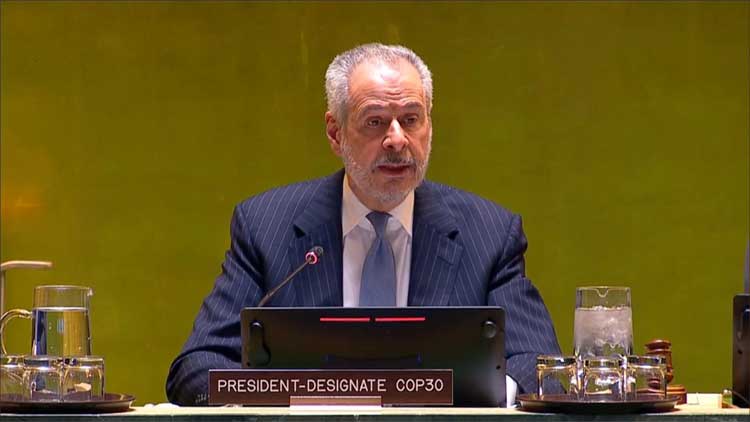
When world leaders, diplomats, business giants, and climate activists gather in Brazil this November for the United Nations’ pivotal COP30 summit, they won’t be met by polished resorts or global metropolises. Instead, they’ll descend upon Belém, a high-poverty city on the edge of the Amazon — and that’s entirely by design.
In a bold shift from previous host cities like Paris, Dubai, and Cancun, Brazil is placing the spotlight on environmental justice, inequality, and the urgent need for real-world solutions. COP30 President-designate André Corrêa do Lago told the Associated Press that the goal is to ensure that attendees “see a developing country and city with considerable infrastructure issues,” reflecting the intertwined realities of poverty, climate vulnerability, and deforestation.
A Summit Grounded in Reality
Brazilian President Luiz Inácio Lula da Silva pushed for Belém to host the summit, emphasizing that climate discussions must reflect the lived experiences of people on the frontlines — particularly in the Global South. “We cannot hide the fact that we live in a world with deep inequalities,” said do Lago. “Climate action must come closer to the people.”
The Amazon’s proximity is symbolic and strategic. Once a vital carbon sink, parts of the rainforest are now emitting more CO₂ than they absorb, largely due to rampant deforestation — an issue Brazil wants front and center on the COP30 agenda.
Infrastructure Scramble and Skyrocketing Prices
Yet, with fewer than four months to go, preparations are behind schedule. Brazil has faced criticism over the lack of accommodations, with reports of rooms being priced as high as $15,000 per night. In response, the government is chartering two cruise ships to provide 6,000 beds and implementing a phased booking system prioritizing 98 lower-income countries. Local residents will also be encouraged to rent out apartments.
Key Issues: From Emissions Gaps to Green Finance
COP30 is more than just a symbolic setting. It’s a landmark year under the 2015 Paris Agreement, requiring nations to submit updated climate plans, or NDCs (Nationally Determined Contributions). Most countries — including the U.S. — have missed the deadline. The UN is pushing for all updates to be submitted by September, in time for analysis ahead of the summit.
UN Secretary-General António Guterres stressed that these plans must be comprehensive, economy-wide, and in line with the 1.5°C target — a goal scientists warn is slipping out of reach. Last year, global temperatures even temporarily crossed the critical threshold.
Do Lago acknowledged that the new plans are likely to fall short. “The gap between commitments and reality will be one of the biggest challenges,” he said.
In parallel, countries will negotiate a $1.3 trillion financial roadmap to help vulnerable nations adapt and decarbonize. Brazil is also pushing to elevate the role of nature-based solutions — especially forests — as central to the climate agenda.
Human Right to a Healthy Climate
Adding urgency to the discussions, the UN’s top court recently ruled that a clean and healthy environment is a fundamental human right. The ruling could serve as legal leverage in pressuring governments to act.
“Failure of a state to take appropriate action to protect the climate system may constitute an internationally wrongful act,” declared ICJ President Yuji Iwasawa.
A COP of Solutions, Not Just Promises
For do Lago, COP30 must break from the tradition of lofty pledges and vague timelines. “We hope to be remembered as a COP of solutions,” he said. “This is not about sacrifice. It’s about opportunity, progress — and fairness.”
With the Amazon at its doorstep, and inequality laid bare, Brazil is betting that facing the climate crisis in all its complexity is the best way to inspire meaningful action.
Comments are closed.