
COP30 Ends With Modest Climate Deal Lacking Fossil Fuel Phaseout, Drawing Mixed Reactions

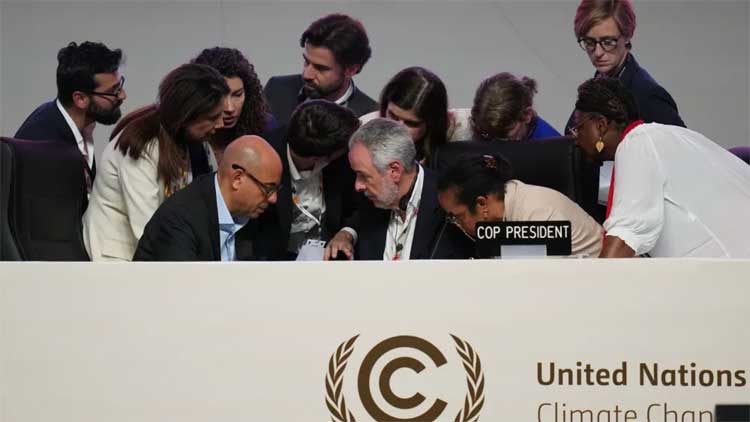
United Nations climate negotiators in Brazil reached a subdued agreement Saturday that boosts funding for countries facing increasingly severe climate impacts, but stops short of including explicit commitments to phase out fossil fuels or strengthen weak national emissions targets — omissions that dozens of countries had demanded.
Brazil, the host of COP30, said it would work with Colombia to develop a separate roadmap to transition away from fossil fuels, though it would not carry the authority of decisions formally adopted at the summit. Colombia reacted angrily after the deal passed, citing the absence of fossil-fuel language it had pushed for.
The agreement was finalized after negotiators blew past a Friday deadline, holding a marathon round of late-night discussions in COP30 President André Corrêa do Lago’s office. Do Lago acknowledged the shortcomings but said Brazil would continue the hard conversations throughout the year: “Even if they are not reflected in this text we just approved.”
UN Secretary-General António Guterres said the outcome showed countries “can still come together,” but warned that the gap between current action and what science demands “remains dangerously wide.”
A deal many called the best possible — but far from enough
Reactions were mixed. Some nations and climate advocates said the politically strained moment made a limited agreement inevitable.
“Given the circumstances of geopolitics today, we’re actually quite pleased,” said Palau Ambassador Ilana Seid, chair of the small island states coalition. “The alternative is no decision at all.”
“This deal isn’t perfect and is far from what science requires,” said Mary Robinson, former Irish president and chair of The Elders. “But it is significant that countries continue to move forward together.”
UN climate chief Simon Stiell praised countries for standing together after the United States withdrew from the Paris Agreement earlier this year, saying 194 nations remained “rock-solid in support of climate cooperation.”
Others voiced disappointment.
“COP30 gave us some baby steps,” said Mohamed Adow of Power Shift Africa. “But it failed to rise to the occasion.”
Approval process sparks anger
Tensions erupted in the plenary session that approved the text. While many delegates applauded the agreement, several countries accused do Lago of rushing the process and ignoring objections.
Colombia’s Daniela Duran Gonzalez sharply criticized the lack of fossil fuel references and said the outcome “ignores science.”
A separate section establishing 59 global indicators for measuring climate adaptation — reduced from 100 more precisely drafted metrics — drew heavy criticism from the EU, Canada, and Latin American countries, who said the revisions were vague and unworkable. They said their attempts to intervene were brushed aside. Do Lago later apologized.
Key battles: fossil fuels, finance, and emissions
Major sticking points included:
-
A fossil fuel phaseout roadmap, which did not make it into the agreed text.
-
Recognition that national emissions plans are inadequate, which many countries wanted stated more forcefully.
-
Tripling adaptation finance to $120 billion annually — but only by 2030, five years later than vulnerable nations had sought.
-
Trade-related climate measures, which several nations argued could unfairly restrict developing economies.
Climate advocates said delaying the finance target leaves vulnerable nations exposed. “It leaves countries without support to match escalating needs,” Adow said.
Others condemned the lack of ambition outright.
“Strip away the outcome text and the emperor has no clothes,” said Greenpeace International’s Jasper Inventor.
Panama’s Juan Carlos Monterrey Gomez was blunt: “A climate decision that cannot even say ‘fossil fuels’ is not neutrality — it is complicity.”
Heated exchanges close out the summit
As debate dragged on, tempers flared. Russia’s ambassador-at-large Sergei Kononuchenko scolded Latin American delegates, saying they were “behaving like children who want all the sweets.”
Argentina’s Eliana Ester Saissac shot back sharply: “We are in no way behaving like spoiled children,” drawing cheers from the room.
Comments are closed.