
Cop30: Dozens of Countries Threaten to Block Deal Without Roadmap for Fossil Fuel Phase-Out

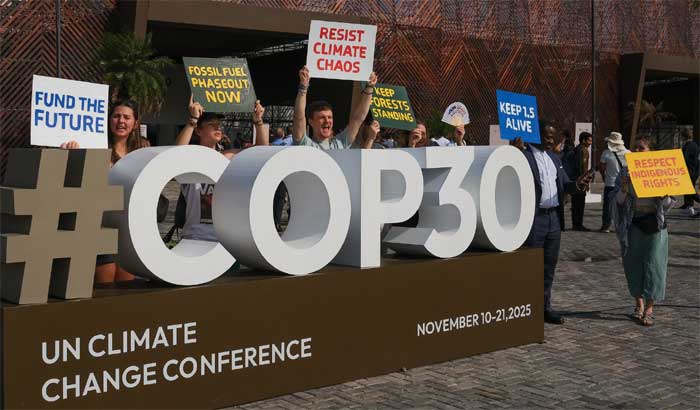
Countries backing a global phase-out of fossil fuels at the Cop30 climate summit in Brazil have warned they will block any final agreement that fails to include a clear commitment to such a transition, The Guardian has reported. The escalating standoff marks one of the most contentious moments of the negotiations, which are set to wrap up on Friday but are widely expected to extend into the weekend.
Tensions spiked on Thursday night when at least 29 countries sent a strongly worded letter to Brazil, the Cop30 presidency, insisting that a roadmap to “transition away from fossil fuels” be included in the final outcome. A draft published earlier in the week contained an option to begin developing such a roadmap, but Brazil was reportedly preparing to drop it due to resistance from petro-states such as Saudi Arabia and Russia, as well as large fossil-fuel-consuming nations, including India.
The dispute intensified further when some opposing countries threatened to walk out. Before any action could be taken, a fire broke out in part of the conference venue near delegation offices, halting talks for more than six hours.
‘A red line’ for supporters
The letter, seen by The Guardian, states:
“We cannot support an outcome that does not include a roadmap for implementing a just, orderly, and equitable transition away from fossil fuels… Anything less would inevitably be seen as a step backward.”
The demand builds on the Global Stocktake agreement reached at Cop28 in Dubai in 2023, which for the first time committed all countries to “transition away from fossil fuels”—but without a timeline or concrete plan.
Since then, nations such as Saudi Arabia have attempted to dilute or reverse the commitment. At Cop29 in Azerbaijan in 2024, efforts to reaffirm the pledge fell apart amid opposition.
A push for a new forum
To avoid another deadlock, pro-phase-out nations drafted proposals for a global forum where all countries could contribute to a long-term roadmap. The roadmap would not impose deadlines and would take at least a year or more to complete at future Cops. More than 80 countries backed the initiative during a joint press conference earlier this week.
But the move drew fierce pushback from members of the Like-Minded Developing Countries group—including Saudi Arabia, Egypt, Iran and Bolivia—who remain opposed.
Countries behind the roadmap
According to The Guardian, signatories supporting the roadmap include Austria, Belgium, Chile, Colombia, Costa Rica, Croatia, Czechia, Estonia, Finland, France, Germany, Guatemala, Honduras, Iceland, Ireland, Liechtenstein, Luxembourg, the Marshall Islands, Mexico, Monaco, the Netherlands, Panama, Palau, Slovenia, Spain, Sweden, Switzerland, the UK and Vanuatu.
Colombia’s environment minister Irene Vélez Torres said the presidency’s “take-it-or-leave-it” text was inadequate and lacked the ambition demanded by science and global public expectations.
“This Cop’s success cannot be measured by adopting a text at any cost,” she said. “Adopting a weak or empty text would be a failure to future generations.”
Final stretch of negotiations
Other unresolved issues could also complicate the final hours of Cop30, including the weakness of national climate plans, financing arrangements for developing nations, trade and transparency rules, and the scale of funding required to help vulnerable countries adapt to climate impacts.
With negotiations already delayed by the venue fire, all eyes now turn to whether the Brazilian presidency will agree to keep the fossil fuel roadmap in the final package — or risk a major breakdown in the talks.
Comments are closed.