
COP30 Climate Finance Roadmap: A Path to Ambition or Another Missed Opportunity?

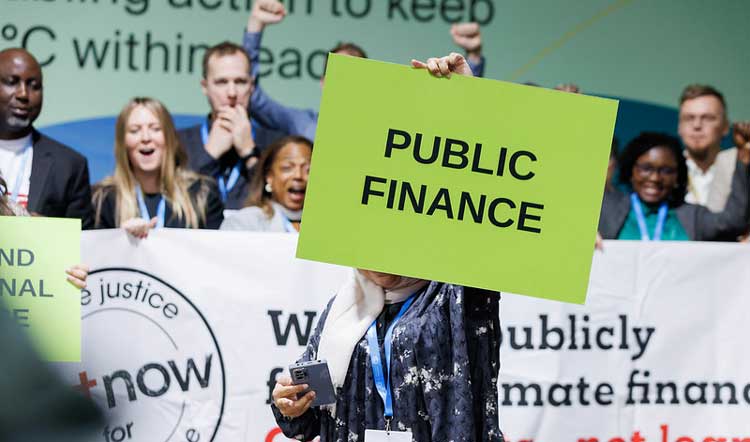
At the start of negotiations, G77+China countries stood united in support of Africa’s call for a $1.3 trillion annual climate finance goal, to replace the outdated $100 billion target set 15 years ago. This demand aimed to reflect the real needs of developing nations facing mounting climate impacts.
Some G77 members also advocated for a detailed roadmap outlining how developed countries would mobilise public finance to meet this goal. However, wealthier nations in the Global North pushed for a broader interpretation of the $1.3 trillion — one that included all forms of finance from all possible sources, rather than a clear commitment to public finance.
Ultimately, the vaguer formulation prevailed, with a final agreement calling for mobilising “all finance from all sources,” and initiating a roadmap process toward that target. This outcome was deeply disappointing for the Global South, as it obscures the historical responsibility of rich nations to provide public climate finance, and potentially shifts the financial burden to developing countries.
A Risky Road Ahead: Will the Roadmap Deliver?
The “Roadmap to $1.3 Trillion”, while potentially historic, is now largely in the hands of COP29 host Azerbaijan and COP30 host Brazil. Its success will hinge on whether it sets a bold standard for ambition, particularly in demanding grant-equivalent public finance from developed nations.
If it falls short, the roadmap risks:
-
Entrenching global climate injustice
-
Deepening debt burdens in vulnerable countries
-
Delaying climate action when it is most urgent
The Cost of Inaction
Poorer countries — many of whom contributed little to climate change — could face loss and damage costs of $450–$900 billion annually by 2030, not including mitigation or adaptation expenses.
Despite this, the COP29 decision on the new finance goal excluded a specific target for loss and damage funding. The roadmap, however, could still correct this oversight.
The recently launched Loss and Damage Fund, with an initial phase budget of $250 million, is only a start. Communities like Africa’s nomadic pastoralists, whose lives and livelihoods are being erased by climate disruption, remain underserved.
Debt and Development: The Hidden Crisis
According to UNCTAD, two-thirds of developing countries now face external debt repayment levels higher than their capacity. In 2023, African governments spent 17% of their revenues servicing debt — the highest level in decades, equivalent to 15% of their export earnings.
For context, after World War II, Germany’s debt repayments were capped at just 3% of exports, based on the vision of Keynes and others, to allow for economic recovery. No such consideration is being extended to today’s Global South.
Many developing countries simply lack the fiscal space to invest in climate action, often forced to prioritise healthcare or education instead. And while COP30 President-designate Andrea Corrêa do Lago is right to stress the long-term economic benefits of climate action, those benefits don’t always translate into revenues, especially where capital costs are higher and markets are inefficient.
Reform and Opportunity: A Global Architecture for Climate Finance
The Roadmap presents an opportunity not just to raise money, but to rebuild the architecture of international climate finance. This means:
-
Scaling up grant-based public finance
-
Advancing country platforms to unlock private investment — but backed by technical assistance and catalytic public funds
-
Supporting UN-led reforms, including a UN tax convention and a sovereign debt workout mechanism, both potentially on the table at the upcoming Financing for Development (FfD) Conference in Seville
However, progress hinges on whether rich nations are willing to cede control and embrace meaningful reform.
Time for Boldness, Not Business as Usual
With climate impacts accelerating and the 1.5°C target slipping away, the world can’t afford another vague promise. The Baku-to-Belém Roadmap must do what the Paris Agreement and UAE Consensus did in their time: set a new standard of ambition.
That means:
-
Anchoring a clear target for public finance, not vague all-source estimates
-
Addressing loss and damage head-on
-
Recognising the burden of debt and enabling fiscal space
-
Catalysing structural reform, not just short-term pledges
Comments are closed.