
COP 30 President-Designate Outlines Ambitious Climate Action Agenda in Fourth Letter to Global Community

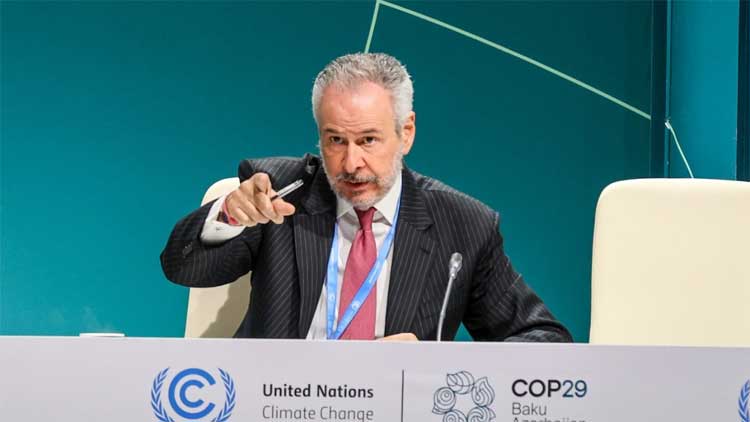
In a letter dated June 20, 2025, André Aranha Corrêa do Lago, President-designate of the 2025 UN Climate Change Conference (COP 30), unveiled a bold and solutions-driven COP 30 Action Agenda ahead of the November summit in Belém, Brazil.
Released during the June sessions of the UNFCCC Subsidiary Bodies, the letter calls for a coordinated global effort—referred to as a “mutirão”—uniting governments, civil society, and businesses to align with the outcomes of the Global Stocktake (GST) and treat it as a collective “global NDC” (Nationally Determined Contribution).
A Solutions-Based, Six-Axis Agenda
The incoming Presidency’s vision is anchored in the principles of a just transition and equity, and builds on previous UNFCCC decisions and the Paris Agreement. The COP 30 Action Agenda is organized into six thematic axes with 30 measurable objectives, covering mitigation, adaptation, and means of implementation:
1. Energy, Industry, and Transport Transition
-
Triple renewable energy capacity and double energy efficiency
-
Scale up zero- and low-emission technologies in hard-to-abate sectors
-
Ensure universal energy access
-
Transition away from fossil fuels in a just, orderly, and equitable way
2. Stewardship of Forests, Oceans, and Biodiversity
-
Invest in halting and reversing deforestation
-
Restore ecosystems and support nature-based solutions for climate and biodiversity
-
Protect and rehabilitate oceans and coastal ecosystems
3. Transforming Agriculture and Food Systems
-
Promote land restoration and sustainable farming
-
Build resilient and sustainable food systems
-
Ensure equitable access to food and nutrition
4. Resilience in Cities, Infrastructure, and Water Systems
-
Foster multilevel climate governance
-
Develop climate-resilient buildings and infrastructure
-
Address water and solid waste management in urban areas
5. Advancing Human and Social Development
-
Strengthen health systems
-
Address the intersection of climate, hunger, and poverty
-
Expand education, capacity building, and green job creation
-
Promote cultural heritage as part of climate resilience
6. Unlocking Enablers and Accelerators
-
Mobilize sustainable finance and climate-integrated investments
-
Harmonize carbon markets and accounting standards
-
Advance climate technologies and digital infrastructure
-
Encourage innovation, AI, climate entrepreneurship, and the bioeconomy
-
Safeguard information integrity in climate discourse
From Fragmentation to Alignment
Corrêa do Lago emphasizes the importance of turning fragmented efforts into coordinated climate action. Using a musical analogy, he describes the GST as an opportunity to turn “cacophony into an orchestrated symphony,” with negotiations providing the score, NDCs as instruments, and the Action Agenda as the coordinated performance.
The letter reaffirms the Presidency’s commitment to transparency, monitoring, and accountability for both existing and new initiatives. It calls on all existing coalitions and stakeholder groups formed in past COPs to accelerate delivery and scale impact across these six axes.
‘Activation Groups’ to Mobilize Action
To operationalize the agenda, COP 30 will establish Activation Groups for each of the 30 key objectives. These groups will bring together subnational governments, private sector actors, NGOs, and communities to drive tangible outcomes.
With this comprehensive roadmap, the incoming COP 30 Presidency signals a strong push to shift from planning to implementation at scale, leveraging the GST as both a diagnostic tool and a springboard for renewed global ambition.
Comments are closed.