
Congress’s Risky Gamble: Is Bharat’s Democratic Fabric at Stake?

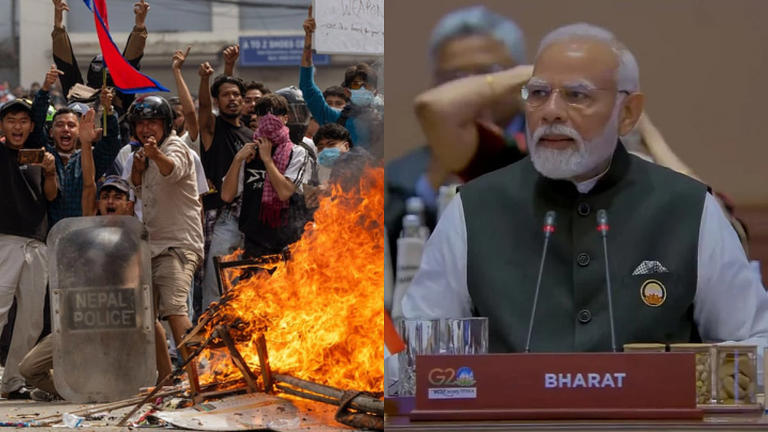
Bharat’s democratic system, celebrated worldwide as the largest exercise in popular governance, now finds itself under intense scrutiny.
At the heart of the debate lies the Congress party’s increasingly confrontational strategy—one that critics argue risks undermining democratic institutions while chasing short-term political gains.
A Legacy at Crossroads
The Congress party, which once laid the foundation of India’s parliamentary democracy, now appears divided between tradition and desperation. Its leadership has leaned heavily on obstructionist tactics in Parliament, frequent walkouts, and sharp rhetoric aimed at discrediting government initiatives. While such tools are part of any democracy, their excessive use raises concerns about the health of constructive opposition.
Analysts suggest that the Congress is struggling to find relevance in an era dominated by new political narratives—ranging from nationalism and development politics to the rising role of regional outfits. Instead of recalibrating policies or reconnecting with grassroots voters, the party has often leaned toward disruptive strategies that risk destabilizing institutions rather than strengthening them.
The Impact on Governance
Frequent disruptions in Parliament have delayed key legislation on economic reforms, technology policy, and social welfare. Experts point out that obstructionist politics might help create headlines but also erode public trust in elected representatives.
“Healthy democracies thrive on debate, not disruption,” remarked a senior constitutional scholar. “When political parties prioritize point-scoring over policy-making, citizens suffer the most.”
Critics argue that such tactics harm Bharat’s global image as a stable democracy capable of balancing diversity with governance efficiency. At a time when the country seeks to attract foreign investment and expand its influence in global forums, political instability could send the wrong message.
Democratic Institutions Under Strain
Opponents of Congress’s current approach argue that repeated questioning of constitutional bodies—including the Election Commission and judiciary—weakens the credibility of institutions that safeguard democracy. While accountability and criticism are essential, persistent allegations without substantive proof can create an environment of distrust.
At the same time, Congress leaders defend their actions as necessary resistance against what they call “authoritarian tendencies” of the ruling government. They argue that dissent and disruption are not only legitimate but also vital in ensuring checks and balances.
The Road Ahead
Moving forward, the Congress faces a defining choice:
-
Will it return to policy-driven politics, offering clear alternatives to citizens?
-
Or will it continue with high-stakes confrontational tactics that risk fracturing democratic trust?
Political observers note that Bharat’s democracy has survived far greater challenges—from Emergency-era curbs to coalition collapses—and will likely endure this phase too. However, the current strategy could prove costly not only for the Congress but also for the country’s democratic fabric if it alienates citizens further.
Bharat’s democracy thrives on both strong governments and responsible opposition. The Congress, as a historic pillar of this system, bears a larger share of responsibility to uphold democratic values. Reckless strategies may yield momentary political advantage but risk weakening the very institutions that have long sustained Bharat’s democratic journey.
Comments are closed.