
Cloudbursts Wreak Havoc in India and Pakistan as Climate Change Fuels Extreme Rainfall

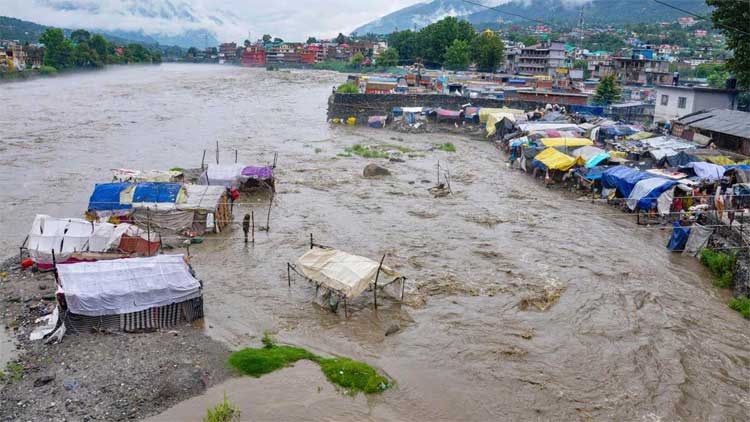
Cloudbursts — sudden, violent downpours that release torrents of rain in a matter of minutes — are devastating mountain regions of India and Pakistan, killing hundreds and leaving villages in ruins.
In Pakistan’s northwestern Buner district, nearly 300 people died after a cloudburst unleashed flash floods, landslides, and mudflows that flattened homes. In India’s Uttarakhand state, a recent cloudburst sent floodwaters crashing into Himalayan villages, recalling the 2013 disaster that killed more than 6,000 people.
What are cloudbursts?
A cloudburst occurs when more than 100 millimeters (4 inches) of rain falls in under an hour over a small area, often no more than 30 square kilometers. Trapped by mountains and fueled by strong upward air currents, rain clouds hold vast amounts of moisture until they collapse, releasing it all at once — like a “rain bomb.”
Why are India and Pakistan vulnerable?
Both countries sit at the collision point of moisture-laden monsoon winds and towering mountain ranges — the Himalayas, Hindu Kush, and Karakoram. This geography forces air upward, triggers condensation, and creates prime conditions for cloudbursts.
Traditionally, South Asia has two monsoon seasons, but climate change has disrupted these patterns. Warmer air holds more moisture, leading to intense downpours interspersed with dry spells. Scientists say rising global temperatures, melting glaciers, and a warming Indian Ocean are making cloudbursts more frequent and more destructive.
Why are they so deadly?
Cloudbursts are extremely difficult to predict because they happen suddenly and on such small scales. Even in Buner, where an early warning system was in place, the rains struck too quickly for residents to be evacuated.
When they hit, the results are catastrophic: floodwaters surge down valleys, boulders tumble from unstable slopes, and mudflows engulf entire communities.
What can be done?
Experts say precautions — though limited — are possible. Avoiding construction along rivers, delaying mountain travel during heavy rain, keeping emergency kits ready, and improving drainage channels can save lives. Afforestation and better land management could also reduce surface runoff and help absorb excess rainwater.
But without tackling the larger drivers of climate change, cloudbursts are expected to intensify.
“Rising global temperatures have supercharged the hydrologic cycle,” said Khalid Khan, former special secretary for climate change in Pakistan. “In our northern regions, warming accelerates glacier melt, destabilizes slopes, and adds excessive moisture to the atmosphere. Rare events are becoming common — and common events, catastrophic.”
Comments are closed.