
Climate Change Worsened Deadly Floods in Southern Africa, Scientists Say

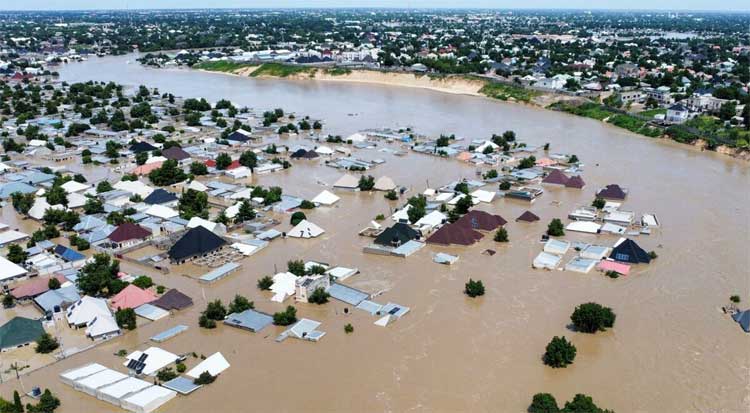
Human-caused climate change intensified the recent torrential rains and floods that devastated parts of southern Africa, killing more than 100 people and displacing over 300,000, researchers said on Thursday.
A study by World Weather Attribution found that regions in South Africa, Mozambique, and Zimbabwe experienced nearly a year’s worth of rainfall in just 10 days. The extreme downpours triggered severe flooding, causing widespread destruction to homes, roads, and bridges, with damages estimated in the millions of dollars.
In Mozambique, many homes and buildings were completely submerged, while infrastructure in South Africa’s Limpopo and Mpumalanga provinces and parts of Zimbabwe was washed away. The disaster led to significant human suffering, including loss of life and large-scale displacement.
The study, conducted by international scientists using peer-reviewed methods, confirmed a “clear move toward more violent downpours.” Data showed that rainfall of this magnitude, which usually occurs once every 50 years, is becoming more intense due to climate change.
Researchers said the impact was compounded by the ongoing La Niña phenomenon, which naturally brings wetter conditions to southern Africa. However, this time it occurred in a much warmer atmosphere, increasing the severity of the rainfall.
“Our analysis clearly shows that continued burning of fossil fuels is not only increasing the intensity of extreme rainfall, but turning events that would have happened anyway into something much more severe,” said Izidine Pinto, senior climate researcher at the Royal Netherlands Meteorological Institute.
Pinto added that climate change likely increased rainfall intensity by around 40 percent, a rise that cannot be explained by natural factors alone. “What would have already been a serious period of heavy rain was transformed into a violent deluge that communities were not equipped to handle,” he said.
Scientists were particularly alarmed by the scale of the disaster, even in regions accustomed to seasonal flooding. Bernardino Nhantumbo of the Mozambique weather service noted that some areas received in just two to three days the rainfall normally expected for an entire rainy season.
Mozambique’s location downstream of nine international rivers further worsened the situation, as heavy rainfall upstream increased river flows and flooding. “Even with accurate forecasts, it is impossible to prevent the damage associated with events of this scale,” Nhantumbo said.
Central and southern Mozambique were among the worst-hit regions, with the provincial capital Xai-Xai and the town of Chokwe largely submerged.
Researchers also highlighted the urgent need to develop climate models within Africa to better understand and predict extreme weather events. Friederike Otto, professor of climate science at Imperial College London, said most available climate models are developed in the U.S., Europe, or Asia.
“There is not a single climate model developed in Africa,” Otto said. “As a result, models are often better suited to the regions where they are created, making it harder to accurately assess impacts in African countries.”
Scientists stressed that improving regional climate research and reducing global fossil fuel emissions are crucial to limiting future disasters. Without stronger action, they warned, extreme rainfall and flooding events in southern Africa are likely to become even more frequent and destructive.
Comments are closed.