
Climate change shrinks pool of potential Winter Olympics host sites in Europe

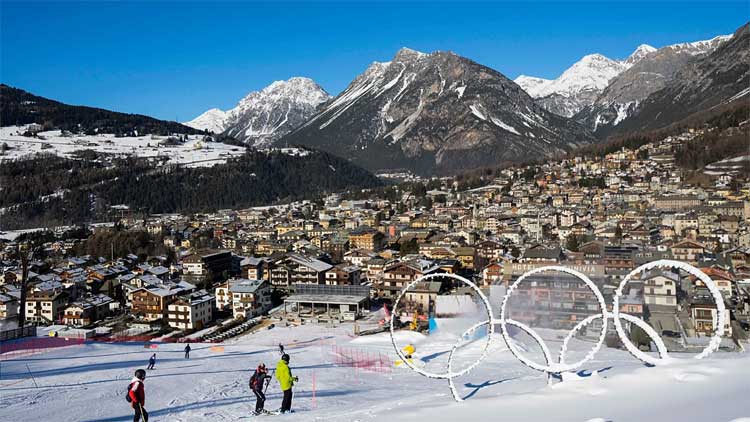
As the global climate crisis deepens, its impact on winter sports is becoming increasingly visible, raising serious questions about the future viability of Winter Olympic venues. The upcoming Milan–Cortina Games in Italy underscore the growing pressure on hosts to adapt to warming conditions.
French biathlete Maya Cloetens, training near Grenoble — host of the 1968 Winter Olympics — says winters have changed dramatically. “In just 15 years, the snow has completely changed,” she said, pointing to shorter seasons and reduced snowfall in the region.
Scientific research paints a stark picture. Studies by the University of Waterloo and the University of Innsbruck suggest that of 93 mountain locations currently suitable for hosting the Winter Olympics, only around 52 are likely to remain viable by the 2050s. By the 2080s, that number could fall to as few as 30.
In response, the International Olympic Committee (IOC) is considering rotating the Games among a smaller pool of reliable venues and possibly scheduling events earlier in the calendar to cope with warmer temperatures.
The challenges are even greater for the Paralympic Winter Games. Research indicates that moving the event three weeks earlier could almost double the number of suitable locations — but only if snowmaking technology continues to improve.
Artificial snow, first used at the Olympics in Lake Placid in 1980, has become increasingly central to staging the Games. While Cortina’s 1956 Olympics relied entirely on natural snowfall, Beijing 2022 depended almost completely on manufactured snow. For the Milan–Cortina Games, organizers plan to produce around 2.4 million cubic meters of artificial snow.
That reliance raises environmental concerns. Snowmaking requires vast amounts of energy and water, and organizers estimate they will need about 946 million liters of water — roughly equivalent to 380 Olympic-sized swimming pools. As climate change intensifies, securing such water supplies is expected to become more difficult.
Experts warn that snowmaking is not a long-term solution. The technology depends on sufficiently cold temperatures, even as Europe continues to warm at a rapid pace.
Acknowledging the environmental footprint of large-scale sporting events, the IOC says it is committed to reducing electricity and water consumption and exploring measures such as limiting attendance. With the French Alps set to host the 2030 Winter Olympics and Salt Lake City selected for 2034, the IOC says sustainability, existing infrastructure and strict environmental standards will be key factors in future hosting decisions.
As Milan–Cortina organising committee member Diana Bianchedi noted, the moment calls for a fundamental shift in how winter sports are staged — one that aligns with the realities of a warming planet.
Comments are closed.