
Climate Change Intensified Deadly Floods Across South and Southeast Asia, Study Finds

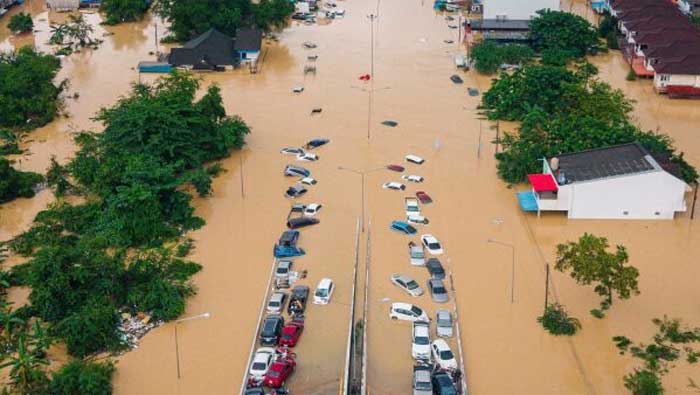
New research shows that climate change amplified the devastating floods that killed more than 1,600 people across South and Southeast Asia last November. A series of three tropical cyclones, stretching from Sri Lanka to Indonesia, caused at least $20 billion in damages, submerging homes, businesses, roads, railways, crops, and factories.
Scientists say unusually warm Indian Ocean waters—about 0.2°C above long-term averages—likely fueled the two strongest storms, Cyclones Ditwah and Senyar, by providing extra heat and moisture. Without human-driven warming, ocean temperatures would have been roughly 1°C cooler. Climate change also likely intensified extreme rainfall during the storms.
Researchers noted that the floods were worsened by seasonal monsoon timing, rapid urbanization, and widespread deforestation, which turned heavy rains into catastrophic flooding. In some areas of Sri Lanka, floodwaters exceeded 14 to 15 feet, far above typical monsoon levels.
While scientists cannot yet precisely quantify how much climate change increased rainfall from these cyclones, rapid attribution analyses and historical weather studies indicate a clear climate signal. For instance, ClimaMeter, an attribution group in France, found that rainfall driving Indonesia’s floods was up to 15% heavier than it would have been without warming.
Experts warn that the floods highlight growing economic and social risks, as many climate models used by insurers and financial firms still struggle to capture such extreme, rapidly evolving events. “It presents a drag on activity, as well as a burden for the region’s populations,” said Frederic Neumann, HSBC’s chief Asia economist.
Gianmarco Mengaldo of the National University of Singapore noted that the findings align with a decades-long trend of intensifying extreme rainfall across Southeast Asia.
Comments are closed.