
Climate Change and Agriculture: Rising Risks, Economic Costs and the Path to Resilience

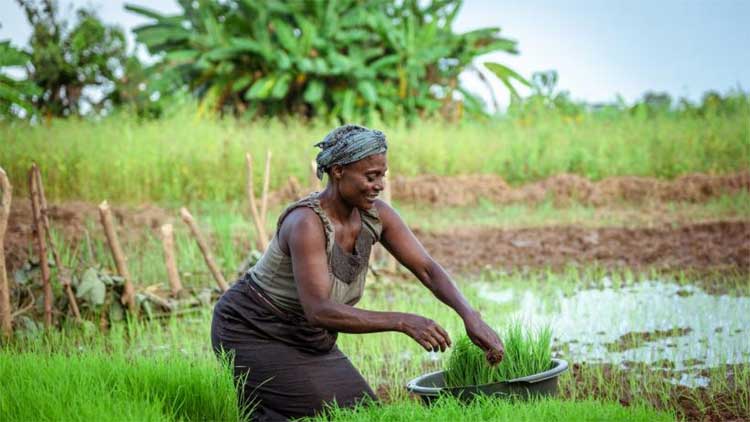
Climate change is among the defining challenges of the 21st century, and few sectors are as exposed to its consequences as agriculture. The sector depends heavily on stable climatic conditions, including predictable temperatures, rainfall patterns and healthy soils. At the same time, agriculture is a significant contributor to greenhouse gas emissions, creating a complex relationship in which it is both a victim of and contributor to climate change.
This dual challenge carries far-reaching implications for food security, rural livelihoods and economic stability. Across the world, farmers are confronting increasingly severe disruptions caused by droughts, heatwaves, floods and erratic rainfall. Understanding the scale of the threat and investing in effective adaptation strategies will be crucial to protecting both people and ecosystems.
Rising temperatures and declining productivity
Extreme heat is rapidly becoming one of the most significant constraints on agricultural productivity. According to a joint assessment by the World Meteorological Organization (WMO) and the Food and Agriculture Organization (FAO), some regions could face up to 250 days each year that are too hot for safe outdoor work, severely limiting planting and harvesting activities.
Research suggests that every 1°C increase in average global temperature is associated with an estimated 6% decline in yields of major staple crops such as maize, rice, wheat and soybeans. Together, these crops account for more than 60% of global calorie consumption.
Higher temperatures also accelerate crop development, shortening growing seasons and increasing the likelihood of heat stress during critical stages such as flowering and grain filling. The result is lower yields, reduced crop quality and increased economic losses for farmers.
Agriculture remains a cornerstone of many developing economies and supports the livelihoods of more than 2.5 billion people worldwide. As climate impacts intensify, the consequences extend well beyond farms, affecting national economies and global markets.
Water stress and extreme weather
Changing precipitation patterns are compounding the challenge. Reduced rainfall and declining soil moisture limit water availability during peak growing periods, while intense downpours increase the risk of flooding, erosion and nutrient loss.
Too little rainfall can trigger prolonged droughts that weaken crops and degrade soil health. Excessive rainfall, meanwhile, can destroy harvests, damage infrastructure and disrupt transportation networks. Both extremes create favourable conditions for pests and diseases, further threatening agricultural production.
Developing countries are particularly vulnerable because many farmers lack access to irrigation systems, insurance, resilient infrastructure and other resources needed to cope with climate-related shocks.
Global economic consequences
The effects of climate change on agriculture ripple through the global economy. Reduced agricultural output can lead to food shortages, higher prices and increased market volatility.
The 2022 heatwave in India and Pakistan, for example, reduced wheat production by an estimated 15-20%, contributing to higher global wheat prices and inflationary pressures in food-importing countries.
Between 2000 and 2020, climate-related disruptions contributed to a 25% increase in global food price volatility. Similar events have demonstrated how local climate shocks can have worldwide consequences. The 2010 Russian heatwave led to a sharp decline in wheat exports, disrupting food supplies and increasing prices across international markets.
In the Horn of Africa, a severe drought between 2020 and 2023 caused widespread crop failures and livestock losses, leaving millions dependent on humanitarian assistance. Governments were forced to divert resources toward emergency relief efforts, slowing progress on long-term development goals.
The World Bank estimates that climate change could push millions more people into poverty by 2030, with agriculture-related losses playing a major role in that outcome. Countries with large agricultural sectors are likely to face mounting economic challenges as climate risks grow.
The cost of inaction
Climate-related disasters have inflicted an estimated $3.8 trillion in agricultural losses over the past three decades, equivalent to roughly $123 billion annually. These losses have disproportionately affected developing and agrarian economies, where large shares of the population depend on farming for income and employment.
Farmers are on the frontline of the climate crisis, yet their ability to adapt often depends on access to information, financing and resilient farming practices.
One of the most effective adaptation tools is the deployment of multi-hazard early warning systems. Delivered through mobile alerts, community radio and local networks, these systems provide advance notice of extreme weather events, allowing farmers to harvest early, protect livestock and reduce potential losses.
Financing agricultural resilience
Despite agriculture’s vulnerability to climate change, the sector receives only a small share of global climate finance.
Speaking to Anadolu, Kaveh Zahedi, Assistant Director-General and Director of the Office of Climate Change, Biodiversity and Environment at the FAO, noted that only around 4% of climate finance is currently directed toward agricultural resilience.
Zahedi said transforming global agriculture and food systems will require an estimated $1.3 trillion annually, far exceeding the resources currently available through climate finance mechanisms alone.
This financing gap has become a major concern in international climate negotiations.
Azerbaijan’s climate initiatives
As host of COP29, Azerbaijan has sought to position itself as a leader in climate diplomacy and agricultural resilience.
One of its flagship efforts, the Baku Harmony Climate Initiative for Farmers, developed in partnership with the FAO, aims to strengthen resilience in rural communities, with a particular focus on women and young people who are often the most vulnerable to climate-related shocks.
Financial innovation is also a central pillar of the country’s approach. The New Collective Quantified Goal (NCQG) agreed at COP29 seeks to increase climate finance from the previous target of $100 billion annually to $300 billion, while setting a broader ambition of mobilising $1.3 trillion per year by 2035.
Such funding could help scale solutions including precision agriculture, biofertilisers, climate-smart irrigation systems and renewable energy infrastructure in rural areas.
Turning agriculture into part of the solution
Climate change poses a multidimensional challenge to agriculture, affecting crop yields, food security, employment and economic growth. Rising temperatures, shifting rainfall patterns and increasingly frequent extreme weather events threaten the stability of food systems worldwide.
Yet agriculture also has the potential to become a key part of the climate solution. Investments in climate-smart farming, soil conservation, water stewardship, renewable energy and sustainable land management can simultaneously strengthen resilience and reduce emissions.
With the right combination of adaptation measures, mitigation strategies and targeted financing, agriculture can transition from being one of climate change’s greatest victims to one of its most important solutions. Early warning systems, resilient farming practices and increased investment in rural communities can deliver immediate benefits while helping secure global food systems for future generations.
Comments are closed.