
Climate change accelerating in Himalayas, nature-based solutions essential: J&K LG Manoj Sinha

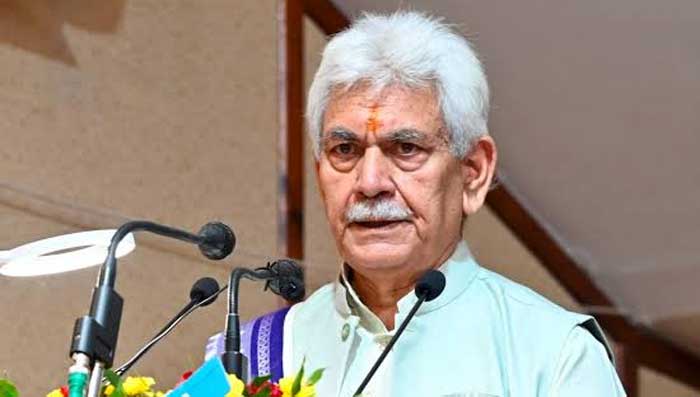
Climate change is accelerating across the Himalayas at an alarming pace, Jammu and Kashmir Lieutenant Governor Manoj Sinha said on Monday, urging policymakers to adopt nature-based solutions and advanced technology to safeguard the ecologically fragile region.
Addressing a climate conference at the Islamic University of Science and Technology (IUST) in Awantipora, Sinha said the Himalayas witnessed nearly one natural disaster every day between January and August last year, underscoring the growing impact of climate change.
He pointed to the increasing frequency of flash floods and cloudbursts in Jammu and Kashmir, saying these disasters have severely damaged roads, water supply schemes and power infrastructure.
“There is no dichotomy between development and conservation. Nature itself is infrastructure,” Sinha said, stressing that environmental protection and economic growth must go hand in hand.
Explaining the concept of nature-based infrastructure, he said watersheds serve as effective flood-control systems while also purifying water and supporting irrigation. Wetlands, he added, act as natural reservoirs by absorbing excess monsoon water and gradually releasing it during dry periods.
Sinha also described dense forested mountain slopes as natural barriers that protect villages from landslides and mountain collapses.
“When we destroy these natural systems, we are playing with the future,” he warned, urging experts to integrate nature-based solutions into development planning.
The Lieutenant Governor also advocated the use of remote sensing, geospatial mapping and artificial intelligence to monitor glacier retreat, spring flow, soil health and forest cover. He said such data should guide every development project in the Himalayan region.
Sinha further called for embedding nature-based solutions into project budgeting, appraisal and monitoring processes, while ensuring that farmers, shepherds, orchard owners and tribal communities are treated as equal stakeholders in environmental conservation.
He also proposed that annual budget reviews should assess whether forests and ecosystems have become healthier or weaker, making governments accountable for the region’s environmental wealth.
Comments are closed.