
‘Climate Action Cannot Be One-Size-Fits-All’: German Ambassador and South Asia Envoy Reflect on COP30 Outcomes

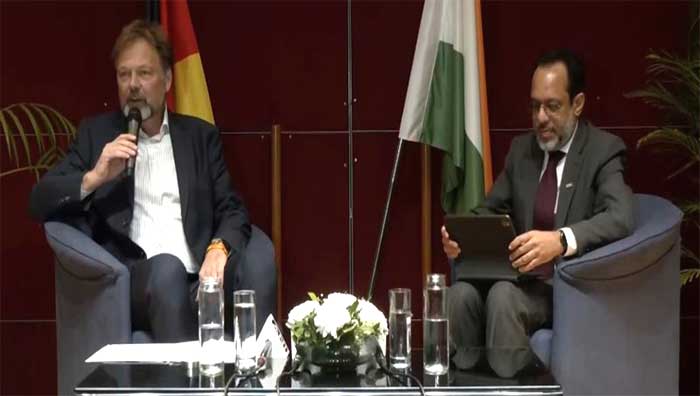
German Ambassador to India Philipp Ackermann, reflecting on the recent COP30 climate conference in Belem, Brazil, emphasised the importance of multilateralism and collective action, noting that “credible climate action cannot be one-size-fits-all.”
COP30, held from November 10–21, 2025, brought together world leaders, scientists, and stakeholders to discuss global climate solutions. Speaking at the German Embassy’s ‘Climate Talks’ series in New Delhi, Ackermann highlighted the “Global Mutirão” decision adopted in Belem, a collective effort reinforcing that climate change cannot be tackled by any single nation alone.
The discussion, titled “COP30: Reflections from Belem,” also featured Arunabha Ghosh, Founder-CEO of the Council on Energy, Environment and Water (CEEW) and South Asia Envoy to COP30. Ghosh stressed that COP30 marked a shift from abstract debate to actionable implementation, particularly for South Asia, where adaptation and resilience priorities vary widely across countries like Nepal, Sri Lanka, the Maldives, and Bangladesh.
“Multilateralism, with all its imperfections, still matters,” Ghosh said, adding that just transitions must prioritise people whose livelihoods depend on fossil fuels today. He further noted that trade, co-developed technology, and investment can be powerful drivers of climate ambition.
Ambassador Ackermann highlighted advances in adaptation and just transition at COP30, while acknowledging gaps in mitigation. He pointed to Germany’s pledge of €1 billion to protect tropical forests and reaffirmed Germany’s commitment to climate finance, noting that it contributed €11.8 billion in 2024, exceeding its annual pledge of €6 billion and mobilising over €1 billion in private capital.
Strengthening Indo-German cooperation post-COP30, Ackermann highlighted collaboration under the Green and Sustainable Development Partnership (GSDP) and new International Climate Initiative (IKI) grants supporting India’s National Adaptation Plan, forest and biodiversity resilience, and evidence-based climate policy integration.
Ghosh reflected on the outcomes from a South Asian perspective, including operationalisation of the Loss and Damage Fund, adaptation needs, and opportunities for cooperation on just transition, green skills, and energy systems.
COP30 marked ten years since the Paris Agreement, accelerating the push to meet the 1.5°C pathway. While progress was made on adaptation, tripling adaptation finance by 2035 and operationalising the Loss and Damage Fund, negotiations on fossil fuel phase-out and climate finance highlighted ongoing global divides.
Germany and India emerged as key partners shaping climate action: Germany through sustained climate-finance contributions and leadership in global initiatives, and India through its scale, ambition, and commitment to equitable solutions. The Climate Talks underscored that implementation, innovation, and collaboration will define the next phase of global climate action.
Comments are closed.