
Clash of Powers: Parliament and Supreme Court at a Constitutional Crossroads

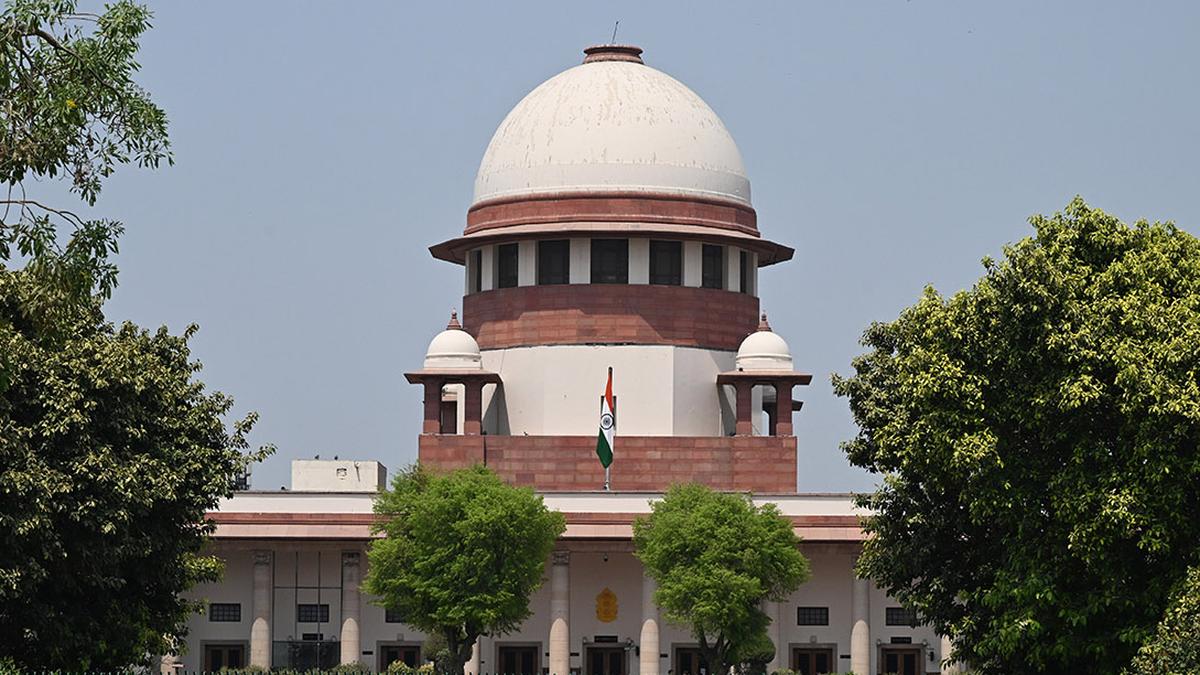
India’s democracy, known for its vibrant institutions and robust constitutional framework, is witnessing a rare moment of visible tension between two foundational pillars — the Parliament and the Supreme Court. What was once a behind-the-scenes balance of power has now become a frontline debate on authority, interpretation, and intent.
The recent face-off, emerging from judicial interventions in legislative matters and Parliament’s assertive response, has ignited public discourse around the limits of judicial review, ideological leanings of the bench, and the sanctity of legislative supremacy.
Background: Trigger Points of the Tussle
While Parliament and the judiciary have had occasional disagreements in India’s post-independence history, the current standoff is deeper, ideological, and systemic. Some key flashpoints include:
-
Judicial Scrutiny of Constitutional Amendments: The Supreme Court has, on multiple occasions, struck down or reinterpreted amendments passed by Parliament, citing the ‘basic structure doctrine’, which limits Parliament’s power to alter the Constitution’s core features.
-
Delays and Contentions in Judicial Appointments: The long-standing debate over the collegium system versus executive participation in judicial appointments continues, with the government alleging opacity and lack of accountability.
-
Recent Verdicts on Electoral and Social Reforms: Judgments around disqualification of elected leaders, reservations, and socio-religious policies have caused Parliament members to question whether the Court is venturing into policy-making rather than adjudication.
Parliament’s Concerns: Sovereignty and Mandate
Members of Parliament across party lines have expressed that an unelected judiciary cannot override the will of the people expressed through their elected representatives. The concern is that policy and governance, which require political accountability, are being overshadowed by legal interpretation.
In recent debates, Parliamentarians have highlighted:
-
The need to limit judicial activism
-
Restore separation of powers as envisioned by the Constitution
-
Introduce legislation to regulate judicial overreach
Some leaders have even hinted at constitutional amendments to clarify the respective domains of legislature and judiciary.
Supreme Court’s Position: Guardian of the Constitution
The judiciary, on the other hand, sees itself as the final arbiter of constitutional validity. The Supreme Court maintains that its role is to ensure that all legislation and executive actions conform to the Constitution, especially when fundamental rights are at stake.
The Court’s defenders argue that:
-
Judicial review is a core component of constitutional checks and balances
-
The Court has historically upheld democratic values against executive or legislative overreach
-
Allegations of ideological bias are politically motivated and threaten institutional independence
Public Discourse: Facts, Ideology, and Institutional Trust
This confrontation has polarised public opinion. While one side believes the judiciary is protecting democratic values, the other accuses it of becoming an unelected super-legislature.
At the heart of the debate lies a deeper ideological question:
Should judges interpret the Constitution strictly as written, or evolve its meaning to reflect contemporary values?
Critics argue that judicial ideology — conservative or liberal — is increasingly influencing verdicts, while others call for greater transparency in how judges are selected and how constitutional interpretation evolves.
What’s at Stake?
-
Institutional Balance: The Indian Constitution envisages mutual respect and autonomy between Parliament, Executive, and Judiciary. Prolonged conflict can erode that equilibrium.
-
Public Trust: The credibility of both institutions depends on the public’s trust. Escalating disputes risk damaging confidence in the democratic process.
-
Legal and Governance Uncertainty: Ongoing clashes over jurisdiction and authority may lead to delays in policy implementation, confusion in law, and institutional paralysis.
Conclusion: Can Dialogue Restore Balance?
India’s constitutional democracy thrives on dialogue, not deadlock. While disagreements are natural in a system of checks and balances, institutional confrontation must not devolve into gridlock or mutual delegitimisation.
Comments are closed.