
China’s Tibet Military Buildup Endangers Himalayan Ecology and Regional Stability

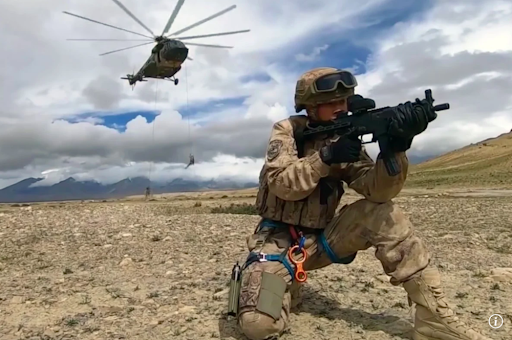
a report highlighted the severe environmental and geopolitical consequences of China’s military expansion in Tibet, warning that the rapid buildup of infrastructure and troop deployments on the Tibetan Plateau threatens Himalayan ecology, water security, and regional stability. The report details how the construction of roads, tunnels, airstrips, and bases disrupts the fragile ecosystem, accelerates permafrost degradation, and endangers Asia’s water supply, affecting billions downstream. With an estimated 70,000 to 120,000 People’s Liberation Army (PLA) troops stationed in the region, the militarization also heightens tensions with India and strengthens China’s control over Tibet. This article explores the report’s findings, their implications, challenges, and opportunities for addressing the ecological and geopolitical fallout.
Context of the Report
Military Expansion in Tibet
-
Historical Growth: China’s military presence in Tibet has evolved from initial deployments in the 1950s to a sophisticated network integrated into its national defense and economic strategy, with 40,000 to 50,000 troops in the Tibet Military District alone.
-
Infrastructure Development: Extensive construction of roads, tunnels, airstrips, and bases, particularly in permafrost regions, supports China’s defensive posturing and power projection, driven by tensions with India, including the 2020 Galwan Valley clashes.
-
Strategic Objectives: The buildup serves external goals, such as reinforcing Tibet as a buffer zone against India, and internal objectives, including tightening control over Tibetans amid cultural and religious suppression.
Environmental Concerns
-
Permafrost Degradation: The Tibetan Plateau, with 1.06 million sq. km of permafrost—the world’s largest high-altitude frozen zone—has seen ground temperatures rise 0.1 to 0.5°C annually over the past 30 years. Military activities exacerbate this, releasing greenhouse gases and disrupting hydrological systems.
-
Water Security Risks: Home to Asia’s largest glacier and permafrost reserves, the plateau feeds major rivers like the Brahmaputra and Indus, critical for 2 billion people in South and Southeast Asia. Military construction threatens these water systems, risking shortages.
-
Biodiversity Impact: Satellite imagery and field studies show accelerated land degradation from military projects, endangering local ecosystems and contributing to global climate instability.
Geopolitical Drivers
-
India-China Tensions: China’s militarization responds to strained relations with India over their disputed Himalayan border, intensified by ongoing confrontations and India’s infrastructure buildup.
-
Domestic Control: The PLA’s presence reinforces Beijing’s dominance over Tibetans, whose demands for cultural and religious freedoms face repression, amplifying internal security measures.
Implications of the Findings
Environmental Impact
-
Ecosystem Damage: Military construction disrupts the plateau’s role as a carbon sink, releasing stored carbon and accelerating global warming, with ground temperature rises threatening long-term ecological stability.
-
Water Security Threats: Alterations to fragile water systems could reduce river flows, impacting agriculture and livelihoods in countries like India, Bangladesh, and Pakistan, with potential economic losses in the billions.
-
Biodiversity Loss: Degradation of 35,000 sq. km of vulnerable terrain endangers species unique to the Himalayas, undermining conservation efforts and global biodiversity goals.
Geopolitical Consequences
-
Regional Instability: The military buildup escalates tensions with India, risking further border clashes and destabilizing South Asia, where trade and security are already strained.
-
Global Climate Repercussions: The plateau’s environmental changes contribute to climate instability, affecting global weather patterns and necessitating international cooperation to mitigate impacts.
Social and Economic Effects
-
Downstream Communities: Reduced water availability threatens food security and economic stability for 2 billion people reliant on Himalayan rivers, potentially sparking cross-border disputes.
-
Tibetan Suppression: Increased military presence intensifies control over local populations, limiting cultural expression and fueling resentment, which could lead to social unrest.
Challenges
Environmental Management
-
Mitigating Degradation: Halting permafrost and glacier damage requires advanced technologies and significant investment, challenging given the scale of military infrastructure.
-
Regulatory Gaps: Enforcing stricter environmental standards in Tibet is difficult due to China’s centralized control and limited transparency in military operations.
Geopolitical Hurdles
-
India-China Rivalry: Ongoing border disputes complicate cooperative solutions, with India’s own military buildup in the region escalating tensions.
-
International Oversight: Limited access for global NGOs to monitor Tibet’s environmental impact hinders cross-border collaboration, as China resists external scrutiny.
Operational Constraints
-
Infrastructure Scale: The extensive network of military facilities, covering thousands of kilometers, makes ecological restoration costly and logistically complex.
-
Climate Feedback Loops: Military-driven degradation could accelerate warming, creating self-reinforcing cycles that are difficult to reverse without immediate action.
Opportunities
Environmental Reforms
-
Ecological Preservation Zones: Establishing mandatory protection zones around glaciers and water sources, as suggested by the report, could safeguard critical ecosystems, preserving 35,000 sq. km of vulnerable terrain.
-
Sustainable Infrastructure: Investing in waste treatment systems and permafrost protection technologies could reduce environmental damage, aligning with global sustainability goals.
Diplomatic Engagement
-
Regional Cooperation: China could collaborate with India and other downstream nations to address water security, potentially easing tensions through joint environmental initiatives.
-
Global Partnerships: Engaging international NGOs for transparent monitoring could enhance China’s credibility and foster shared solutions for Himalayan conservation.
Strategic Rebalancing
-
Military Planning Reforms: Prioritizing ecological sensitivity in military construction, such as setbacks from water sources, could balance security needs with environmental protection.
-
Economic Benefits: Sustainable practices could attract international investment in green technologies, supporting Tibet’s economy while mitigating global climate impacts.
Comments are closed.