
China’s Renewable Energy Push: Record Solar and Wind Capacity Additions in 2025

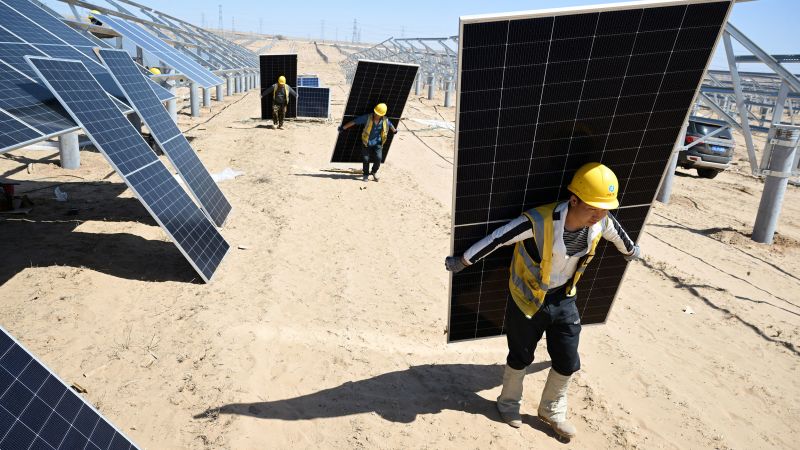
China announced a record-breaking addition of 320 gigawatts (GW) of solar and wind energy capacity in the first half of the year, solidifying its position as the global leader in renewable energy deployment. This milestone, reported by the National Energy Administration (NEA), reflects China’s aggressive push toward its 2060 carbon neutrality goal and its commitment to peaking emissions before 2030. The surge in clean energy investments comes amid global pressure to combat climate change and growing competition in the renewable energy sector.
Record-Breaking Capacity Additions
According to the NEA, China added 180 GW of solar power and 140 GW of wind power capacity between January and June 2025, a 25% increase over the same period in 2024. This brings China’s total renewable energy capacity to over 1,500 GW, accounting for nearly 50% of its electricity generation mix. Key projects include massive solar farms in Inner Mongolia and offshore wind installations along the eastern coast, supported by state-backed financing and private sector innovation.
The rapid expansion is driven by technological advancements, such as next-generation solar panels with higher efficiency and larger wind turbines optimized for low-wind regions. Additionally, China’s investments in grid infrastructure have reduced curtailment rates, ensuring more renewable energy reaches consumers. The NEA reported that renewable energy utilization rates reached 98% in Q2 2025, a significant improvement from previous years.
Driving Factors
Several factors underpin China’s renewable energy surge:
-
Policy Support: The Chinese government has prioritized renewables through subsidies, tax incentives, and streamlined project approvals. The 14th Five-Year Plan (2021–2025) set ambitious targets for clean energy, which have been exceeded ahead of schedule.
-
Global Climate Commitments: With increasing scrutiny at international forums like COP30, China is accelerating its transition to low-carbon energy to meet its 2030 and 2060 pledges.
-
Economic Benefits: The renewable sector has created millions of jobs and boosted domestic manufacturing, with Chinese firms like LONGi and Goldwind dominating global solar and wind markets.
-
Energy Security: Reducing reliance on imported fossil fuels, particularly coal and gas, aligns with China’s goal of energy independence.
Global and Regional Impacts
China’s renewable energy push has significant implications:
-
Global Energy Market: As the world’s largest producer of solar panels and wind turbines, China’s capacity additions lower global clean energy costs, benefiting developing nations. However, concerns about market dominance have prompted trade restrictions in the US and EU.
-
Regional Dynamics: Neighboring countries like India and Japan are ramping up their own renewable programs to compete, with India targeting 500 GW of non-fossil fuel capacity by 2030.
-
Climate Progress: China’s efforts contribute significantly to global emission reductions, though its continued use of coal (50% of its energy mix) remains a point of contention.
Posts on X reflect mixed sentiments, with some praising China’s leadership in renewables and others criticizing its coal reliance, highlighting the complexity of its energy transition.
Challenges and Future Outlook
Despite its achievements, China faces hurdles:
-
Grid Integration: Rapid renewable growth strains aging grid infrastructure, requiring further investment in smart grids and storage solutions.
-
Environmental Concerns: Large-scale solar and wind projects have raised concerns about land use and ecological impacts, particularly in ecologically sensitive regions.
-
International Scrutiny: Western nations have accused China of flooding markets with subsidized renewable equipment, prompting calls for tariffs.
Looking ahead, China plans to add another 350 GW of renewable capacity in 2026, with a focus on energy storage and green hydrogen. The NEA also aims to phase out coal plants in coastal regions by 2035, signaling a long-term commitment to decarbonization.
China’s record-breaking addition of 320 GW of solar and wind capacity in the first half of 2025, announced on July 17, underscores its leadership in the global energy transition. While challenges like grid integration and international trade tensions persist, China’s investments are reshaping the renewable energy landscape. As the world races to combat climate change, China’s efforts offer both inspiration and a call for collaborative solutions to ensure a sustainable future.
Comments are closed.