
China’s Interference in Dalai Lama’s Succession Puts Tibet’s Religious Freedom and Stability at Risk

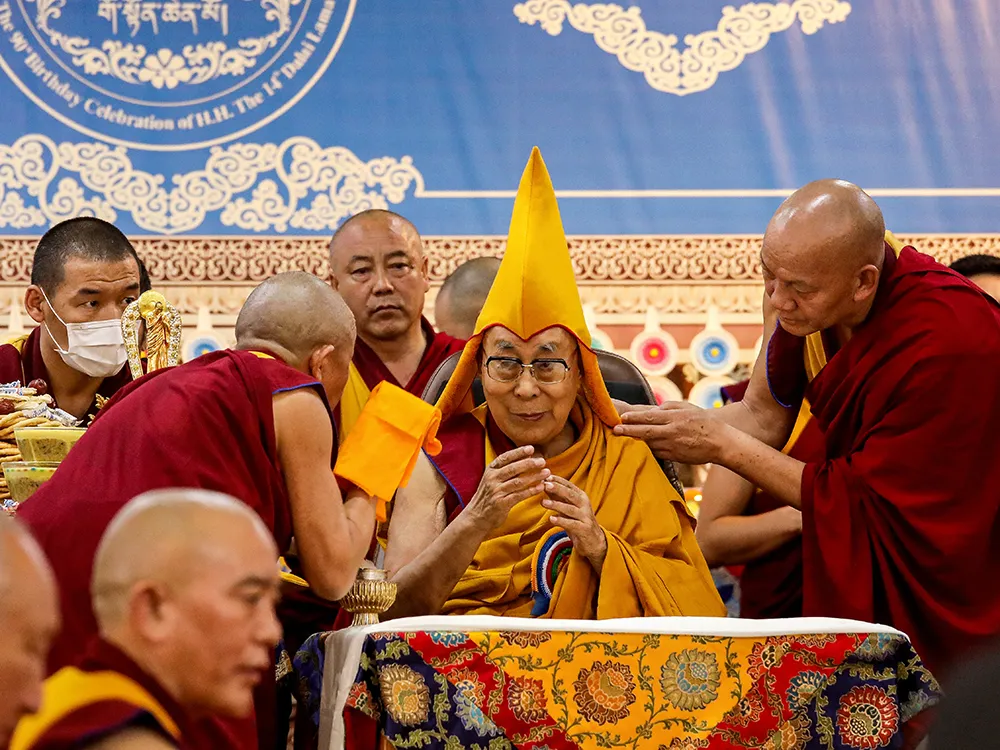
The question of who will succeed the 14th Dalai Lama has reignited geopolitical and religious tensions, as China continues to assert its authority over Tibetan Buddhism. Tibetan leaders in exile and global human rights observers have raised alarms over Beijing’s growing interference in religious affairs, warning that any Chinese-imposed successor could severely damage Tibet’s cultural and spiritual autonomy.
China’s Control Over Succession Process
The Chinese Communist Party (CCP) has made it clear that it will not allow the reincarnation of the Dalai Lama to proceed without its approval. Beijing insists that all Tibetan Buddhist reincarnations must receive state endorsement through the controversial 2007 regulation known as “Order No. 5,” which places religious succession under government control.
The CCP claims that the selection of the next Dalai Lama must occur within Chinese territory, effectively positioning itself as the final arbiter of Tibetan spiritual leadership. This move is widely condemned as a violation of religious freedom, as the institution of the Dalai Lama is inherently spiritual and traditionally chosen through centuries-old Tibetan Buddhist practices, not political decrees.
The Panchen Lama Precedent
Tibetan exiles and international rights groups point to the Panchen Lama case as a cautionary tale. In 1995, the Dalai Lama recognized a six-year-old boy, Gedhun Choekyi Nyima, as the 11th Panchen Lama. Days later, the child disappeared and has not been seen publicly since. China instead installed its own candidate, Gyaincain Norbu, who is largely rejected by Tibetans as illegitimate.
This precedent fuels fears that China may repeat the process with the next Dalai Lama—selecting a politically loyal figure and presenting them as the rightful spiritual leader, thereby eroding the institution’s legitimacy among Tibetan Buddhists.
Statements from the Exile Community
Tibetan leaders, including members of the Central Tibetan Administration based in Dharamshala, have strongly opposed any Chinese role in the succession process. They assert that only the Dalai Lama and senior Tibetan religious authorities hold the spiritual authority to recognize the next reincarnation.
The 14th Dalai Lama himself has previously indicated that he may decide not to reincarnate, or may do so outside of Chinese-occupied Tibet, if the situation does not allow for free spiritual expression. He has also stated that the choice of his successor should be made according to the will of the Tibetan people, not dictated by a foreign government.
Global Implications
The succession battle is not just a religious or internal Tibetan issue—it has international implications. Countries with strong Buddhist populations, including India, Nepal, Bhutan, Mongolia, and parts of Southeast Asia, watch the situation closely. The question of succession also impacts India-China relations, as India hosts the Dalai Lama and the Tibetan government-in-exile.
Human rights organizations argue that if China installs its own Dalai Lama, it would mark a significant encroachment on religious freedom and further consolidate Beijing’s control over Tibetan identity and culture.
Risk to Tibetan Culture and Stability
Beijing’s efforts to control religious leadership in Tibet are part of a broader strategy to assimilate Tibetan culture into the Chinese mainstream. This includes the expansion of Mandarin education, restrictions on monastic life, surveillance of religious institutions, and the suppression of Tibetan language and traditions.
The fear is that a state-sponsored Dalai Lama would serve as a puppet of the Communist Party, weakening the influence of independent Tibetan Buddhism and undermining resistance to cultural assimilation.
The question of the Dalai Lama’s succession is shaping up to be a pivotal moment in the Tibetan struggle for spiritual and cultural self-determination. China’s interference poses a direct threat to the core of Tibetan identity, and the outcome could define the future of Tibetan Buddhism for generations to come. As global concern mounts, the world watches closely to see whether spiritual tradition or state power will determine the next Dalai Lama.
Comments are closed.