
China to Supply 40 J-35 Stealth Fighter Jets to Pakistan, Shifting Regional Air Power Dynamics

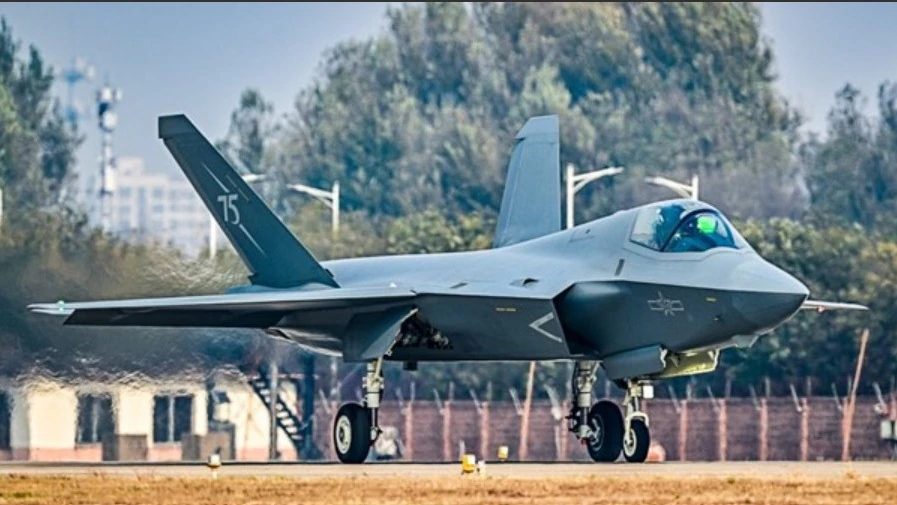
In a strategic move that could significantly reshape South Asia’s aerial combat landscape, China is reportedly preparing to supply 40 fifth-generation Shenyang J-35 stealth fighter jets to Pakistan. The deal, if finalized and executed, will make Pakistan one of the few nations globally to operate advanced stealth aircraft, placing it in a select league currently beyond India’s reach.
The development underscores the deepening military and technological cooperation between China and Pakistan, and poses new challenges for India’s air superiority strategy, especially as it continues to await the induction of indigenous fifth-generation fighters like the AMCA (Advanced Medium Combat Aircraft), still in development.
What Is the J-35?
The Shenyang J-35 is a next-generation, carrier-capable stealth fighter developed by China’s state-owned Shenyang Aircraft Corporation. Equipped with:
-
Low radar cross-section design
-
Advanced avionics and sensors
-
High thrust-to-weight ratio
-
Modern electronic warfare suites
The J-35 is China’s answer to the U.S. F-35 Lightning II, and it offers capabilities well beyond fourth-generation fighters currently in Pakistan’s arsenal, such as the JF-17 and F-16.
Military analysts believe that this acquisition could transform Pakistan’s air warfare capabilities, providing it with a stealth edge in potential future conflicts.
Implications for India
India, which currently operates advanced fourth-generation platforms like the Rafale, Sukhoi Su-30MKI, and Tejas Mk-1A, has yet to induct a fifth-generation stealth fighter. The country’s ambitious AMCA program is underway but still several years from deployment.
The Pakistan-China fighter jet deal comes at a time when India is looking to upgrade its air force capabilities amid tensions along the Line of Actual Control (LAC) and continued border skirmishes. The move could:
-
Force strategic recalibration in India’s defense planning
-
Accelerate India’s indigenous fighter programs
-
Increase dependence on key allies like France, Russia, and the U.S. for interim air superiority solutions
A Strategic Signal to the Region
Experts view the J-35 deal not merely as an arms sale but as a symbolic and strategic message from China to the region, particularly India. It also deepens China’s role as the primary military and economic benefactor of Pakistan, at a time when Islamabad’s economy is strained and defense imports face global scrutiny.
If the deployment proceeds as planned, Pakistan could begin receiving the aircraft by 2028, giving its air force a technological leap unmatched in South Asia outside of China.
Global Reactions and Concerns
Defense experts worldwide are closely watching the deal, concerned it may spark an arms race in the region. Western nations are particularly wary of Chinese stealth technology being proliferated beyond its borders, especially to countries with tense military histories.
India’s Ministry of Defence has yet to issue an official response, but sources suggest that high-level reviews are already underway to assess the implications of Pakistan’s potential J-35 deployment.
The China-Pakistan J-35 deal represents more than just a defense contract — it could mark the beginning of a new chapter in South Asian air power balance. As Pakistan edges closer to acquiring stealth dominance, regional stakeholders, especially India, will be compelled to respond — either by accelerating indigenous technologies or by seeking strategic defense partnerships abroad.
Comments are closed.