
China Begins Construction on World’s Largest Hydropower Dam on Tibetan Plateau, Raising Regional Concerns

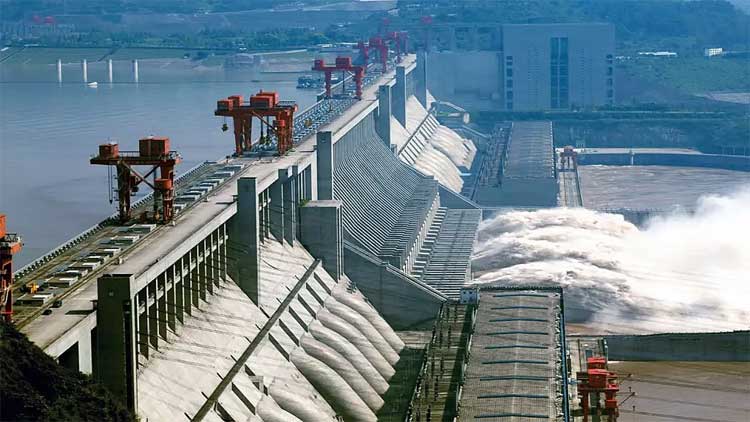
China has officially launched construction on what is set to become the world’s largest hydropower dam, located on the eastern edge of the Tibetan Plateau, state-run Xinhua News Agency reported. The massive project, estimated to cost around $170 billion, is a key component of China’s drive to expand renewable energy capacity and cut carbon emissions.
Unveiling the project, Chinese Premier Li Qiang called it a “project of the century,” emphasizing the importance of ecological preservation to avoid environmental degradation. The dam will consist of five cascading hydropower stations on the lower reaches of the Yarlung Zangbo River, known as the Brahmaputra once it enters India and Bangladesh.
While Chinese authorities assert the dam will not significantly impact the environment or downstream water availability, India and Bangladesh have voiced serious concerns. Experts and NGOs warn the project could disrupt river flows and livelihoods for millions downstream. The International Campaign for Tibet has cautioned that the project may cause irreversible harm to the plateau’s fragile ecosystem.
The dam is expected to generate a staggering 300 billion kilowatt-hours of electricity annually, supporting local energy needs in Tibet and contributing to China’s national power grid. Officials also claim it will aid in achieving China’s carbon neutrality targets, boost engineering and manufacturing industries, and create new employment opportunities in Tibet.
A particularly steep 50-km stretch of the Yarlung Zangbo, where the river plunges 2,000 meters, provides ideal conditions for hydropower. China has already initiated hydropower generation along the river’s upper reaches, and this new venture significantly escalates its activity in the region.
Despite Beijing’s assurances, transparency remains limited. Authorities have yet to disclose how many people may be displaced or how the project might alter the biodiversity of one of the world’s most ecologically rich regions.
Comments are closed.