
China Announces 30-Day Visa-Free Travel for UK Citizens After Starmer’s Beijing Visit

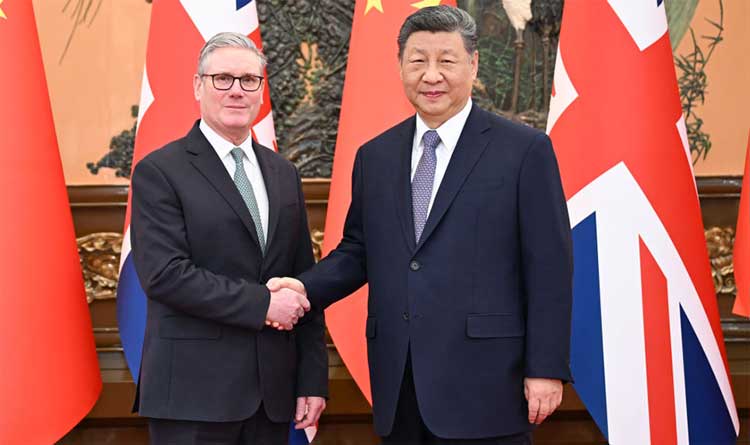
In a landmark diplomatic development, China has agreed to grant British citizens visa-free entry for stays of up to 30 days for tourism and business purposes. The announcement was made during UK Prime Minister Sir Keir Starmer’s visit to Beijing in late January 2026, marking a significant easing of travel restrictions between the two countries.
Leaders on both sides hailed the move as a boost to “people-to-people ties” and a sign of renewed engagement after years of strained relations driven by geopolitical tensions, trade disputes, and human rights concerns.
First UK PM Visit Since 2018
Sir Keir’s visit was the first by a British prime minister to China since 2018, underlining a fresh effort to reset bilateral relations. On January 29, he met President Xi Jinping and senior Chinese officials at the Great Hall of the People to discuss trade, investment, security cooperation, and cultural exchange.
The most significant outcome was China’s decision to allow UK passport holders to enter the country without a visa for up to 30 days. The policy is understood to be unilateral, offering no reciprocal visa-free access for Chinese citizens to the UK.
With this move, the UK joins more than 50 countries, including France, Germany, Japan, Australia, and Canada, whose citizens already benefit from similar arrangements.
Benefits for Travellers and Businesses
The policy is expected to deliver immediate advantages for British travellers and companies:
-
Simplified short-term travel: Visitors will no longer need to undergo time-consuming visa applications for stays under 30 days.
-
Easier business visits: Executives attending meetings, negotiations, and conferences can plan trips more efficiently.
-
Tourism growth: Improved access is likely to stimulate tourism and related industries in both countries.
Previously, applicants typically spent around £150 per short-stay visa, along with additional processing costs. The new arrangement removes these barriers for short visits.
However, the exemption does not apply to long-term stays, employment, full-time study, or residency. Existing visa rules remain in place for those purposes.
Economic and Trade Motivations
The visa concession forms part of a broader effort to strengthen economic cooperation. Starmer’s delegation included representatives from finance, legal, healthcare, and education sectors, reflecting the UK’s push to expand its services presence in China.
Talks also addressed tariff reductions on British exports, including Scotch whisky, aimed at improving market access. These measures align with Britain’s strategy to diversify trade links amid global economic uncertainty.
For China, the policy supports its wider push to attract foreign visitors, encourage investment, and revive international travel following years of pandemic-related restrictions.
A Delicate Diplomatic Balance
Starmer has framed the engagement as part of a “more sophisticated relationship” with China, combining economic cooperation with candid dialogue on sensitive issues such as human rights and regional security.
The approach has drawn mixed reactions. Some former lawmakers welcomed the renewed dialogue, while critics warned against overlooking concerns over surveillance, civil liberties, and geopolitical rivalry.
Internationally, figures including former US President Donald Trump have criticised the rapprochement as risky for Western strategic interests. Starmer has rejected such claims, arguing that engagement with China does not undermine ties with traditional allies.
Broader Geopolitical Context
The agreement comes amid a wider reassessment of China relations by Western nations. Canada and several European countries have recently secured similar visa-free arrangements, reflecting Beijing’s effort to project openness and rebuild international confidence.
China’s expanding visa-free network highlights its ambition to position itself as a major global tourism and business hub.
For the UK, the move symbolises warming ties after years of diplomatic stagnation. Joint statements by Starmer and Xi emphasised long-term cooperation and stability, despite ongoing global tensions.
Implementation Still Pending
Chinese authorities have yet to confirm the official start date of the new policy. Until formal guidelines are issued, British travellers are advised to follow existing visa requirements.
Public Reaction
Many Britons have welcomed the decision as a practical and people-friendly reform that opens new opportunities for travel and commerce. Others have expressed frustration over uncertainty surrounding its rollout.
Outlook
The visa-free agreement represents one of the most significant positive shifts in UK-China relations in recent years. Whether it leads to deeper cooperation or sparks renewed political debate will depend on how both countries balance economic ambition with strategic caution in the years ahead.
Comments are closed.