
Carney Denies Backtracking on Davos Remarks After Call With Trump

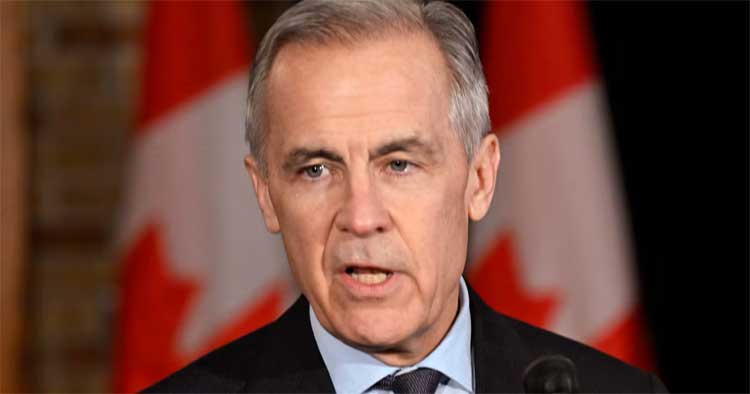
Canadian Prime Minister Mark Carney on Tuesday rejected claims that he softened his criticism of US global leadership during a phone call with President Donald Trump.
Carney’s speech at the World Economic Forum in Davos last week described the US-led rules-based international order as facing a “rupture” and urged middle powers to reduce their dependence on American economic influence, which he said was being used partly as coercion.
The remarks angered Trump, who warned Carney to “watch his words,” saying “Canada lives because of the United States.”
On Monday, US Treasury Secretary Scott Bessent told Fox News that Carney had “aggressively walked back” his comments during a call with Trump. However, Carney denied this on Tuesday.
“To be absolutely clear, I meant what I said in Davos,” Carney told reporters in Ottawa. “I said this directly to the president.”
He added that Canada had been among the first countries to recognize shifts in US trade policy under Trump and was responding accordingly.
Carney said the call, initiated by Trump, also covered issues such as Arctic security, Ukraine, and Venezuela.
India, EU Conclude ‘Mother of All Deals’ Creating Massive Free Trade Zone
India and the European Union have concluded negotiations on a landmark free trade agreement that will create a market of nearly two billion people, Prime Minister Narendra Modi and European Commission President Ursula von der Leyen announced on Tuesday.
The agreement, dubbed the “mother of all deals,” is expected to be signed later this year and come into force in early 2027. Talks began in 2007 but stalled several times before gaining momentum last year amid changing US trade policies.
Speaking in New Delhi alongside European Council President Antonio Costa, Modi said the deal would generate major opportunities for India and Europe.
“It represents 25 percent of global GDP and one-third of global trade,” Modi said.
Von der Leyen said the pact demonstrated that “rules-based cooperation still delivers results.”
Under the agreement, the EU will eliminate or reduce tariffs on 99.5 percent of Indian exports over seven years, benefiting sectors such as textiles, leather, marine products, and gems and jewelry. In return, India will cut tariffs on 96.6 percent of EU goods, including automobiles, industrial products, wine, and chocolates.
The European Commission estimates the deal will save European exporters up to $4.75 billion annually in duties and could double EU exports to India by 2032.
Experts say the agreement will strengthen cooperation in green technology, digital rules, and critical raw materials, while boosting foreign investment in India.
However, analysts caution that the deal may not fully offset losses caused by high US tariffs.
“In the short term, it will partially offset export losses to the US but cannot entirely compensate for them,” said economist Anupam Manur.
The pact comes amid rising trade tensions with Washington, including recent tariff hikes imposed by President Trump on India and threats against EU members.
Comments are closed.