
Canada’s Mark Carney dials Modi for G7 invite; PM confirms attendance

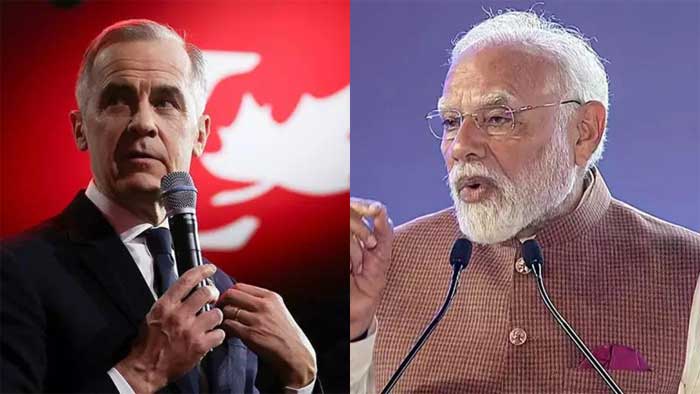
Canadian Prime Minister Mark Carney invited his Indian counterpart Narendra Modi to attend the G7 Summit later this month during their first phone call on Friday, signalling Ottawa’s intent to reset relations with New Delhi after a diplomatic row over the killing of a Khalistani separatist.
The invitation for Modi to attend the outreach session of the G7 Summit came a little more than a week before the multilateral meet, and there has been intense speculation in diplomatic circles in recent days whether the Indian leader, who participated in the past five G7 Summits, would be invited.
“Glad to receive a call from Prime Minister @MarkJCarney of Canada. Congratulated him on his recent election victory and thanked him for the invitation to the G7 Summit in Kananaskis later this month,” Modi said in a social media post.
“As vibrant democracies bound by deep people-to-people ties, India and Canada will work together with renewed vigour, guided by mutual respect and shared interests. Look forward to our meeting at the Summit,” he said.
People familiar with the matter said on condition of anonymity that the phone call was initiated by the Canadian side. “The Canadians want India to be at the G7 Summit,” one of the people said.
The people said Canada is keen to expand cooperation with India, especially in trade and investment, at a time its relations with the US are under great strain because of the Trump administration’s tariffs and other punitive economic measures.
Carney spoke to PM Modi a day after his phone call with Chinese Premier Li Qiang. A readout from the Canadian Prime Minister’s Office said Carney and Li discussed the “importance of engagement” and agreed to regularise channels of communication between the two countries.
Modi had been quick to congratulate Carney on social media when the provisional results of Canada’s general election projected a victory for the Liberal Party on April 29. “I look forward to working with you to strengthen our partnership and unlock greater opportunities for our people,” Modi said in a post on X on April 29.
Carney’s election win had triggered hopes for a reset of the bilateral relationship that hit an all-time low under his predecessor Justin Trudeau, especially after he went public in September 2023 with allegations that Indian government agents were linked to the killing of Khalistani separatist Hardeep Singh Nijjar. India had dismissed the charge as “absurd”.
Under the Trudeau government, Ottawa and New Delhi repeatedly clashed on the Khalistan issue, downgraded diplomatic ties and expelled each other’s diplomats. India also accused Canada of providing safe haven to extremist elements.
However, the lack of an invitation for Modi to attend the G7 Summit, which Carney will host in the resort of Kananaskis in Alberta on June 15-17, had previously raised questions about the prospects of the bilateral relationship.
Modi’s participation in the G7 Summit is expected to set the stage for several bilateral meetings, including with US President Donald Trump, whom he last met in February. India and the US are currently engaged in intense negotiations for the first tranche of a bilateral trade agreement.
Since 2019, Modi has been invited to the outreach session of the G7 Summits in France, the UK, Germany, Japan and Italy, largely in recognition of India’s growing economic heft and role in coping with global challenges.
India and Canada are also set to appoint new high commissioners in each other’s capitals. The positions have been vacant since India withdrew its envoy last year after he and five other diplomats were named as “persons of interest” in the investigation into Nijjar’s killing. India’s ambassador to Spain, Dinesh K Patnaik, has been widely tipped to be the next high commissioner in Ottawa.
Though India and Canada have resumed contacts between their security and law enforcement agencies since late last year, New Delhi continues to have concerns about the activities of Khalistani elements in Canada, including the possibility of protests during Modi’s visit.
“Our hope is that we can rebuild our ties based on mutual trust and sensitivity,” external affairs ministry spokesperson Randhir Jaiswal said in March, after Canadian Security Intelligence Service (CSIS) chief Daniel Rogers attended a security conclave hosted by National Security Adviser Ajit Doval in New Delhi.
Comments are closed.