
Biggest oil disruption in history? Energy hubs ablaze in US and Russia too

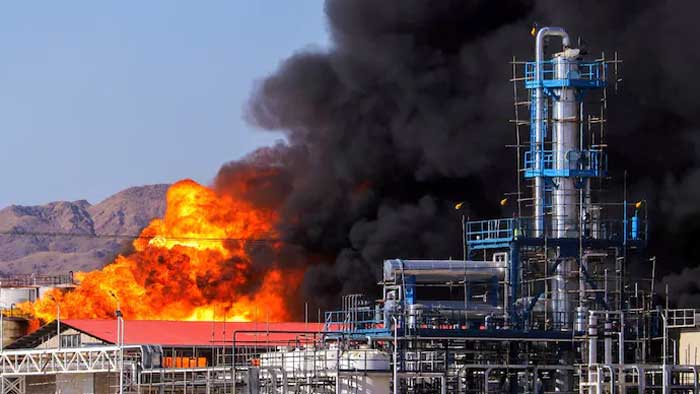
While addressing the Rajya Sabha, Prime Minister Narendra Modi warned that the fallout of the Middle East war would be long-lasting, flagging risks to India’s supplies of crude oil, natural gas and petrochemicals.
The widening US–Israel–Iran conflict has already pushed oil prices sharply higher, with Brent Crude crossing $100 a barrel amid Iran’s curbs on traffic through the Strait of Hormuz and tit-for-tat strikes on Gulf energy infrastructure.
But the disruption is no longer confined to the Middle East.
Middle East: energy hubs under fire
The conflict that began on February 28 has increasingly targeted critical energy assets across the Gulf. Israel struck Iran’s South Pars gas field — the world’s largest — prompting retaliatory attacks across the region.
In Ras Laffan Industrial City, operated by QatarEnergy, Iranian missile strikes caused major fires and damage, forcing production halts that could cut LNG export capacity by up to 17%.
Saudi Arabia’s SAMREF refinery and Kuwait’s Kuwait Petroleum Corporation facilities at Mina al-Ahmadi and Mina Abdullah were also hit by drone attacks, triggering fires and raising fears of prolonged supply disruptions.
Russia: Ukraine steps up strikes
In Eastern Europe, the Russia–Ukraine war has added to the strain on global energy flows.
Ukrainian forces targeted Rosneft’s Saratov refinery, damaging processing units and storage tanks used to supply fuel to the Russian military. Additional strikes hit the Baltic port of Primorsk and a refinery in Ufa, disrupting exports and igniting storage facilities.
These attacks have complicated Russia’s efforts to maintain exports, including shipments to India, which has become a major buyer of discounted Russian crude.
United States: refinery outage adds pressure
Even outside active war zones, disruptions have compounded the crisis. In Port Arthur, Texas, a major refinery operated by Valero Energy was forced to shut down after explosions and fires damaged key units.
The facility, capable of processing about 435,000 barrels per day, is one of the largest in the US. Its temporary closure has tightened fuel supply at a time when US exports — including shipments to India — have been rising.
Markets rattled, supply shock deepens
The overlapping shocks have rattled global energy markets. Brent crude briefly surged as high as $119 per barrel before stabilising above $100, compared with around $70 before the conflict.
The International Energy Agency has described the situation as the largest supply disruption in oil market history, with an estimated shortfall of around 8 million barrels per day.
Repeated strikes on Gulf infrastructure — especially damage to LNG capacity in Qatar — have also raised fears of multi-year disruptions to global gas supply. Analysts warn that continued attacks could make recovery of key facilities difficult, threatening long-term energy security.
With conflicts intensifying in both the Middle East and Eastern Europe, the risks to global supply chains are mounting. Without swift diplomatic de-escalation, the world could be headed toward a prolonged energy crisis, with ripple effects on inflation, trade and economic stability.
Comments are closed.