

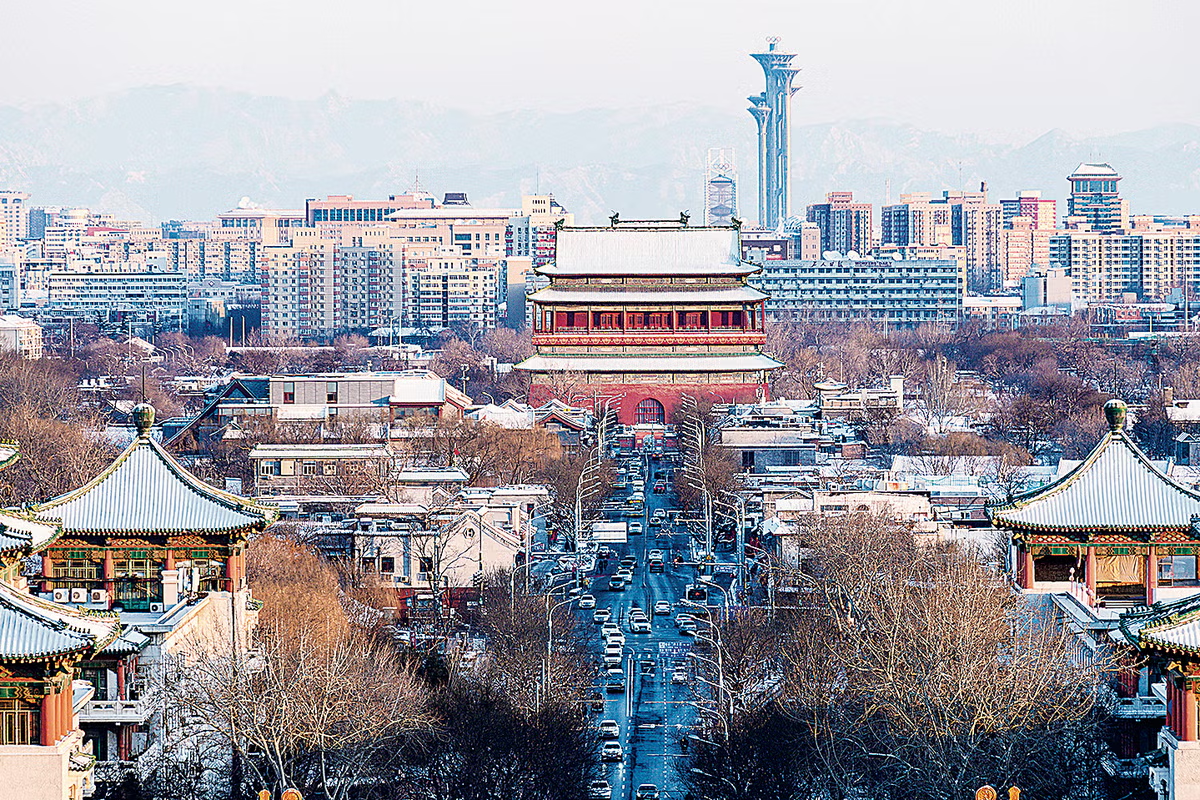
In mid-2025, Beijing, China’s historic and political capital, faces a profound crisis that transcends economic woes, signaling what some call the “death of a capital’s spirit.” Once a vibrant symbol of imperial grandeur and modern ambition, the city now grapples with economic collapse, social disillusionment, and political instability, as reported in July 2025 analyses. With a population exceeding 22 million, Beijing’s blend of ancient heritage—boasting the most UNESCO World Heritage Sites globally—and modern innovation is overshadowed by a pervasive sense of despair. The “lying flat” movement, widespread business closures, and capital flight reflect a societal unraveling, while political purges and flooding disasters exacerbate the malaise. This article explores the multifaceted crisis, its impact on Beijing’s spirit, and the challenges and opportunities for renewal, as of August 19, 2025, at 5:17 PM IST.
The Crisis: Economic and Social Dimensions
Economic Collapse
-
Systemic Unraveling: By July 2025, Beijing’s economy reflects China’s broader downturn, with a GDP of ¥49.84 trillion but only 5.2% growth, driven by a faltering service sector (¥42.5 trillion, up 5.1%). The Chinese Communist Party’s (CCP) internal circulation model, meant to spur consumption, has failed due to inadequate social security, leading to stalled spending and stagnation.
-
Capital Flight and Business Closures: A July 2025 report notes capital flight and stock market exits as trust in the CCP erodes. Industries face cutthroat competition, with restaurants, hair salons, and car dealerships closing en masse due to unsustainable price wars and low demand.
-
Impact on Residents: Disposable income rose to ¥85,415, but consumer spending growth (4.5%) lags behind cultural (26.8%) and transportation (16.7%) expenses, reflecting cautious financial behavior amid uncertainty.
Social Malaise and the Lying Flat Movement
-
Disillusionment: The “lying flat” movement, where young people reject overwork and societal pressures, has taken root in Beijing, symbolizing a silent rebellion against the CCP’s promise of prosperity. This reflects a crisis of faith, with citizens disillusioned by decades of communist rule.
-
Exodus and Despair: A desperate exodus of citizens, coupled with widespread despair, marks Beijing’s social landscape. Posts on X highlight a shift from smog-laden skies to “crisp blue” due to clean air policies, but this contrasts with the city’s emotional gloom.
-
Mental Health Crisis: The societal unraveling contributes to mental health challenges, with 44% of suicides in 2009–2011 occurring among those over 65, and rural residents, including Beijing’s outskirts, facing heightened risks.
Political Instability and Leadership Crises
CCP Internal Strife
-
Purge Dynamics: Infighting among CCP officials, particularly within the military, defines 2025. Purges targeting Xi Jinping’s allies, coupled with speculation about his waning power, create unprecedented instability. Insiders suggest Xi’s role may become ceremonial, with a consensus forming for his potential removal.
-
Corruption Crackdowns: The June 2025 sentencing of Li Aiqing, former Beijing Capital Group chairman, to death with reprieve for bribery and abuse of power underscores anti-corruption efforts but also highlights systemic issues within Beijing’s elite.
Xi’s Leadership Fragility
-
Health and Power: Xi’s health, like that of other authoritarian leaders, is a state secret, fueling speculation akin to Putin’s “poop briefcase” protocol. The secrecy surrounding Xi’s status amplifies perceptions of fragility, mirroring Beijing’s broader crisis.
-
Policy Failures: The failure of ambitious policies like Made in China 2025, though reduced in name, persists in spirit, with “core technology” pursuits unable to reverse economic decline.
Environmental and Cultural Strains
Flooding Disasters
-
July 2025 Floods: Torrential rains killed at least 30 people in Beijing’s northern outskirts, with 28 deaths in Miyun and two in Yanqing. The city received 543 mm of rain in days, nearly its annual average, prompting evacuations of 80,000 residents and a red alert for flash floods and mudslides.
-
Climate Vulnerability: Beijing’s susceptibility to extreme weather, linked to climate change, exposes infrastructure weaknesses, with 136 villages losing power and roads damaged. Xi’s call for “all-out” rescue efforts highlights the crisis’s severity.
Cultural Erosion
-
Heritage vs. Decay: Beijing’s 3,000-year history, from the Yan Kingdom to the Ming and Qing dynasties, is embodied in landmarks like the Forbidden City and Temple of Heaven. Yet, rapid development and urban decay threaten this heritage, with only 38% of Old Beijing protected as historic areas.
-
Artistic Resistance: The Beijing Dangdai Art Fair in May 2025, themed “CONCAVE-CONVEX,” reflects resilience through art, with galleries showcasing works by artists like Cai Guo-Qiang amid economic tariffs and market shifts.
Challenges
-
Economic Recovery: Beijing’s economic stagnation, with businesses closing and capital fleeing, poses a long-term challenge to restoring growth, especially without robust social security to boost consumption.
-
Political Stability: Xi’s potential ousting and military purges create uncertainty, risking further erosion of public trust and governance efficacy.
-
Mental Health Burden: The social malaise, amplified by the lying flat movement, strains Beijing’s mental health resources, with limited access to therapy (₹2,000–5,000 per session) and cultural stigma hindering care.
-
Environmental Risks: Recurrent flooding, as seen in 2023 and 2025, demands costly infrastructure upgrades, with economic losses from extreme weather exceeding $7.6 billion in 2025’s first half.
-
Cultural Preservation: Balancing modernization with heritage protection remains challenging, as urban development threatens Beijing’s historic identity.
Opportunities
-
Policy Reforms: The 15th Five-Year Plan, emphasizing consumption, offers a chance to address social security gaps, potentially reviving Beijing’s economy and consumer confidence.
-
Mental Health Advocacy: Gen Z’s openness to mental health, with 60% seeking digital therapy, can drive Beijing’s adoption of accessible platforms, reducing despair.
-
Cultural Revival: Initiatives like Beijing Dangdai and cycling infrastructure (3,200 km of routes by 2025) can reinvigorate the city’s spirit, blending heritage with modern innovation.
-
Climate Resilience: Investments in flood-resistant infrastructure, spurred by 2025 disasters, can enhance Beijing’s adaptability, aligning with global sustainability goals.
-
Global Engagement: Despite political tensions, Beijing’s role as a cultural and research hub, with the highest scientific output globally, can attract international collaboration, fostering renewal.
Comments are closed.