
BCCI’s ‘Attitude Change’, Asia Cup Fallout With Mohsin Naqvi Behind Pakistan’s Boycott: Ex-ICC Chief Ehsan Mani

The ongoing dispute involving the Pakistan Cricket Board (PCB) and the International Cricket Council (ICC) over the T20 World Cup has intensified, with uncertainty still looming over the highly anticipated Group A clash between India and Pakistan scheduled for February 15 in Colombo.
With the 20-team tournament set to begin in just two days, there remains no official clarity on whether the marquee fixture will go ahead. On February 1, the Government of Pakistan announced that its team, led by Salman Ali Agha, would not face Suryakumar Yadav’s India, triggering widespread concern and speculation.
No formal explanation was provided for the decision, though it is believed to be linked to Bangladesh’s recent exit from the tournament. The ICC had reportedly removed Bangladesh after the Bangladesh Cricket Board (BCB) declined to travel to India, citing security concerns.
Mani Calls for ICC Mediation
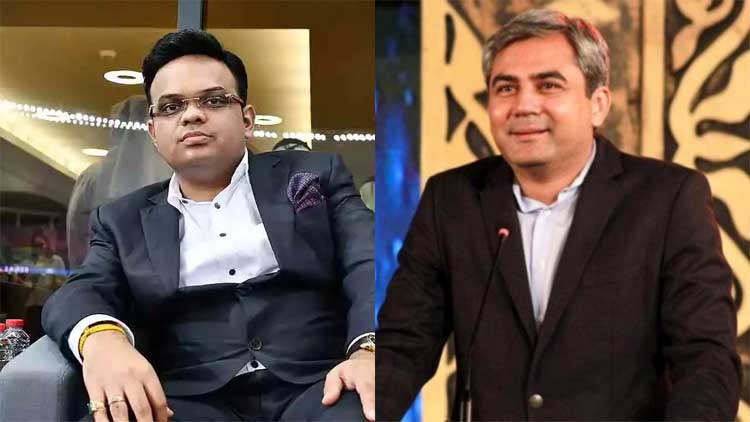
Speaking to Hindustan Times Digital, former PCB and ICC chairman Ehsan Mani said it was time for ICC chairman Jay Shah to directly engage with the Pakistani government and the PCB to resolve the impasse.
Mani, who led the ICC from 2003 to 2006, recalled how diplomatic efforts during his tenure helped facilitate India’s 2004 tour of Pakistan.
“The ICC chairman must engage not only with the PCB but also with the government. That is his responsibility,” Mani said, urging proactive dialogue to salvage the fixture.
Asia Cup Fallout in Focus
Mani suggested that strained relations following the Asia Cup 2025 may have influenced Pakistan’s stance. He cited incidents where Indian players reportedly declined to shake hands with their Pakistani counterparts and refused to accept the trophy from PCB chief Mohsin Naqvi.
“You have to look at the background. It’s not a good relationship between the countries, which is sad,” Mani said, adding that ties between the BCCI and PCB had deteriorated in recent years.
He noted that Pakistan would likely argue it was acting under government directives, similar to India’s refusal to tour Pakistan in previous ICC events.
Sanctions Unlikely to Be Easy
Reports have suggested that Pakistan could face ICC sanctions, potentially affecting its cricketing future. However, Mani believes enforcing penalties would be complicated, particularly given precedents set by other boards.
“The PCB has signed participation agreements, but they will argue it is legally reasonable to follow government instructions,” he said.
Mani also pointed out that broadcasters, particularly JioStar, could raise claims against the ICC, but determining liability would require close scrutiny of contractual terms.
“In my time, all matches were treated equally. There was no special valuation for India-Pakistan games,” he added.
ICC’s Handling Under Scrutiny
Mani criticised the ICC for issuing a public statement urging Pakistan to reconsider without first engaging privately with the PCB.
“If I were chairman, I would have spoken to the PCB first before issuing a statement,” he said, stressing the importance of direct communication.
He also questioned the ICC’s decision to reject Bangladesh’s request to move its matches to Sri Lanka and to replace the team with Scotland.
“There should have been accommodation for Bangladesh’s concerns. ICC failed there,” Mani said, suggesting political factors may have influenced the decision.
‘Politics Hurting World Cricket’
Concluding his remarks, Mani lamented the growing role of politics in international cricket.
“I strongly dislike politics coming into the game. It’s not good for world cricket,” he said.
With the tournament set to begin imminently, all eyes are now on the ICC and its leadership to resolve the crisis and preserve one of cricket’s most anticipated rivalries.
Comments are closed.