
Bangladesh’s BNP claim ‘sweeping’ election win

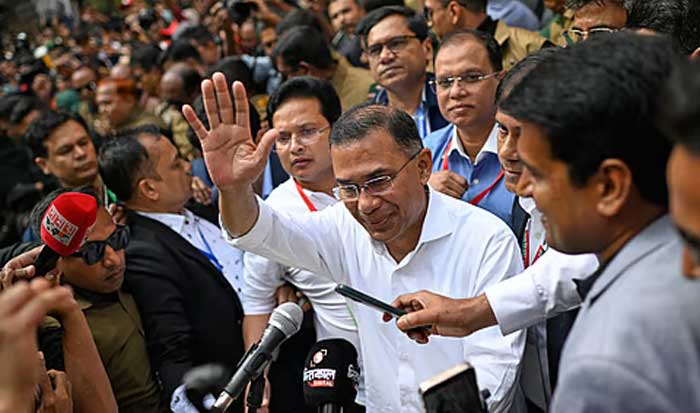
The Bangladesh Nationalist Party (BNP) on Friday declared a decisive victory in the country’s first general elections since the violent 2024 uprising, with its acting chairman Tarique Rahman emerging as the frontrunner for prime minister.
While official results were still pending, the United States embassy in Dhaka quickly congratulated Rahman and the BNP, describing the outcome as a “historic victory.” Rahman had expressed confidence ahead of polling that his party — sidelined during the 15-year rule of former premier Sheikh Hasina — would return to power.
“This victory was expected,” said senior BNP leader Salahuddin Ahmed, crediting voters for placing their trust in the party following last year’s unrest. He cautioned, however, that the road ahead would be challenging, stressing that it was “not a time for celebration.”
Early projections by local broadcasters indicated the BNP had comfortably crossed the majority mark in parliament. Jamuna TV estimated the party had won 212 seats, well beyond the 150 needed for control, while Somoy TV aired similar figures.
The Islamist coalition led by Jamaat-e-Islami was projected to secure around 70 seats — a significant gain compared with previous elections, though far short of its ambitions for power. Party chief Shafiqur Rahman had yet to comment on the forecasts.
The Election Commission of Bangladesh said final tallies for the 299 contested constituencies would be released later in the day. An additional 50 seats reserved for women will be allocated through party lists.
Despite jubilant scenes outside BNP offices overnight, party leaders urged restraint. Senior BNP figure Ruhul Kabir Rizvi called the outcome a “sweeping victory” and asked supporters to offer prayers rather than hold street celebrations.
Polling day passed largely without incident, in contrast to a campaign period marred by sporadic violence that left five people dead and hundreds injured. Authorities reported only minor disruptions during voting, even as UN experts had warned of rising tensions and disinformation ahead of the election.
Interim leader Muhammad Yunus, who has governed since Hasina’s ouster in August 2024, appealed for unity as the transition neared. “We may have differences of opinion, but we must remain united in the greater national interest,” Yunus said after casting his ballot.
Hasina, sentenced to death in absentia and currently in India, dismissed the vote as “illegal and unconstitutional.”
Voters also participated in a referendum on Yunus’s proposed democratic reform charter, which includes term limits for the prime minister, enhanced presidential powers, and greater judicial independence. Television projections suggested strong backing for the proposals, potentially reshaping Bangladesh’s political framework.
Comments are closed.