
Bangladesh Pushes for Trade, Economic Cooperation as Pakistan’s Deputy PM Visits Dhaka

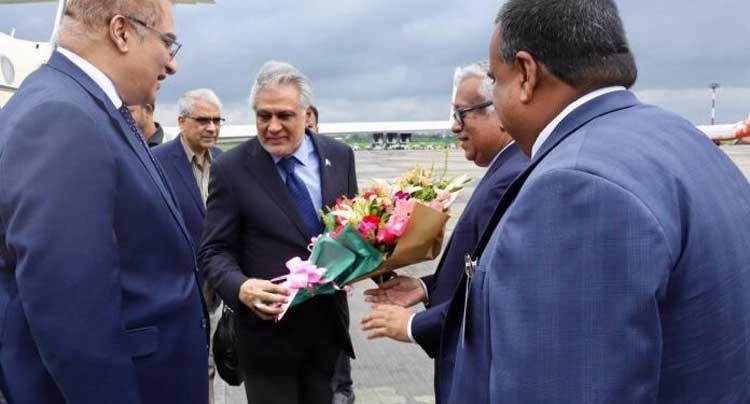
Bangladesh is seeking to boost trade and economic cooperation with Pakistan, the office of Chief Adviser Prof. Muhammad Yunus said on Saturday, as Dhaka welcomed Pakistan’s Deputy Prime Minister Ishaq Dar in the highest-level visit from Islamabad in years.
Dar’s two-day trip includes meetings with Yunus and Foreign Affairs Adviser Touhid Hossain, with talks expected to cover bilateral relations as well as regional and global issues.
“During the visit of the Pakistan deputy prime minister, Bangladesh will focus on increasing bilateral trade, commerce, and economic cooperation,” Yunus’ deputy press secretary Azad Majumder told Arab News.
The visit follows Yunus’ two meetings with Pakistan’s Prime Minister Shehbaz Sharif over the past year—first on the sidelines of the UN General Assembly in New York last September, and later at the D-8 Summit in Cairo in December. At the Cairo meeting, the leaders identified areas for closer cooperation, including textiles, sugar industries, and youth exchanges, Majumder said.
The push marks a rapid thaw in Dhaka-Islamabad ties after decades of mistrust since Bangladesh’s independence in 1971, which ended 24 years of union with Pakistan.
Ahead of Dar’s arrival, Pakistan’s Commerce Minister Jam Kamal Khan visited Dhaka to discuss expanding trade ties, with talks focusing on agriculture and food security. Earlier in April, Pakistan’s Foreign Secretary Amna Baloch held the first round of foreign office consultations in Dhaka in 15 years. Last November, Pakistani cargo ships docked at Chittagong port for the first time since 1971.
Humayun Kabir, former Bangladeshi ambassador to the US, said both countries appear ready to “make up for lost time” and normalize ties. “We have many complementarities, particularly in trade and commerce. Besides, there is scope for people-to-people contact and academic exchange,” he noted.
But historical wounds remain. “Pakistan has yet to address the outstanding issue of the genocide committed during the 1971 war of independence,” Kabir said. “Unless this emotional issue is resolved, other areas of cooperation may face obstacles. Once settled, it could pave the way for a truly normal and mutually beneficial relationship.”
Comments are closed.