
Bangladesh Halts Rohingya Relocation to Bhasan Char as Project Deemed Unsustainable

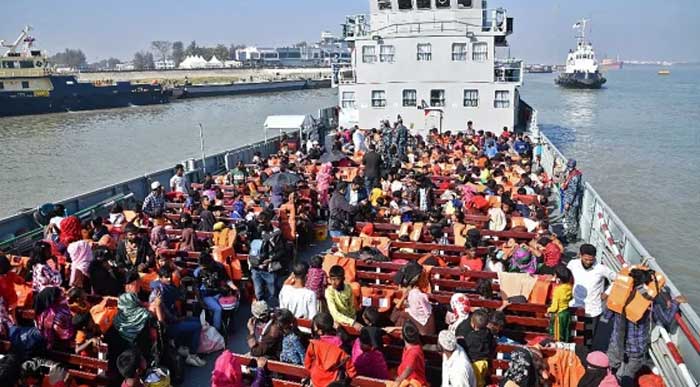
When Bangladesh launched a multi-million-dollar initiative to relocate Rohingya refugees to the remote island of Bhasan Char, authorities promised safer housing and improved living conditions. Five years later, the controversial project has stalled, with the government declaring it unviable and thousands of refugees returning to overcrowded camps on the mainland.
Bhasan Char, a 40-square-kilometre island that emerged from river sediments around two decades ago, lies more than 60 kilometres off Bangladesh’s mainland in the Bay of Bengal. Never previously inhabited, the island was developed to house up to 100,000 Rohingya refugees living in densely populated camps in the Cox’s Bazar district.
Relocations began in December 2020 despite strong objections from the United Nations and international humanitarian organisations, which warned that the island was prone to cyclones and flooding and that its isolation could hinder emergency response. The Bangladesh Navy transported more than 1,600 refugees in the first phase, followed by another 1,800 later that month. Over 25 relocation phases, more than 38,000 Rohingya were moved to the island by October 2024.
The project was spearheaded by the government of former prime minister Sheikh Hasina, who was ousted last year. The current administration has since suspended further relocations indefinitely.
“The Bangladesh government will not conduct any further relocation of the Rohingya to Bhasan Char island,” Mizanur Rahman, refugee relief and repatriation commissioner in Cox’s Bazar, told Arab News on Sunday. “The present government considers the project not viable.”
Rahman said data from UN agencies revealed that maintaining operations on Bhasan Char was around 30 percent more expensive than running the mainland camps in Cox’s Bazar. He added that refugees were increasingly unwilling to move to the island.
“Many of those previously relocated have fled,” Rahman said. “Around 29,000 are currently living on the island, while about 10,000 have returned to Cox’s Bazar on their own.”
The Rohingya, a predominantly Muslim ethnic minority from Myanmar’s Rakhine state, have faced decades of persecution after being stripped of citizenship in the 1980s. In 2017 alone, around 750,000 fled to Bangladesh following a brutal military crackdown. Today, about 1.3 million Rohingya live in 33 camps in Cox’s Bazar, making it the world’s largest refugee settlement.
The Bangladeshi government invested an estimated $350 million in Bhasan Char, constructing concrete housing, cyclone shelters, roads, freshwater systems and other infrastructure. While the island offered improved physical living conditions compared to the squalid mainland camps, residents faced severe restrictions.
There was no regular transport service to the island, freedom of movement was limited, and livelihood opportunities were scarce, with residents heavily dependent on aid supplies from the mainland.
“Considering all aspects, we can say that Rohingya relocation to Bhasan Char is currently halted,” Rahman said. “Following the fall of Sheikh Hasina’s regime, only one batch of Rohingya was relocated. The government is no longer allocating funds for this purpose.”
“The Bangladeshi government has spent around $350 million from its own resources,” he added. “It appears the project has not turned out to be successful.”
Comments are closed.