
Aviation Minister Says Modi Made ‘Hawai Chappal Se Hawai Jahaz’ Possible, But Airfares Can’t Be Capped Year-Round

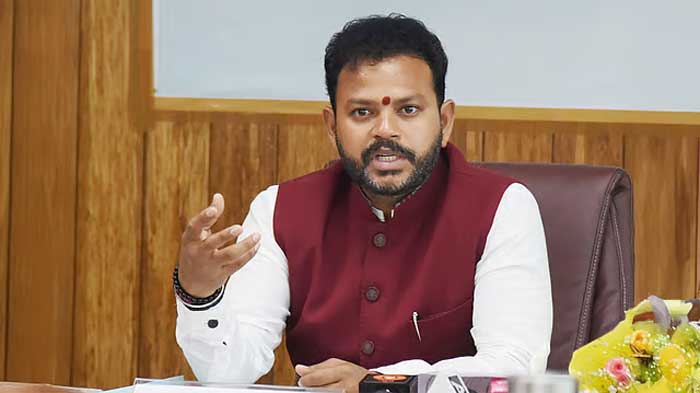
Civil aviation minister Ram Mohan Naidu on Friday addressed Parliament on the rapid growth of India’s aviation sector, the challenges facing airlines, and the Centre’s response during crises—including the recent disruptions at IndiGo.
Speaking during a discussion on regulating airfares, Naidu said the central government retains the authority to step in and cap ticket prices when “extraordinary circumstances” arise.
He cited multiple instances when the Centre had exercised these powers: the Covid-19 pandemic, the Prayagraj Kumbh, the Pahalgam terror attack, and the recent IndiGo crisis, during which fares on several routes began to surge following widespread cancellations.
‘Hawai Chappal Se Hawai Jahaz’
Responding to a resolution on airfare regulation, Naidu said the strong sentiments expressed by MPs reflected how deeply aviation has become connected to the masses under Prime Minister Narendra Modi’s leadership.
“The slogan ‘Hawai chappal se hawai jahaz’ has been proved right with the way members have spoken. Unless aviation touches the masses, you don’t see this kind of emotion from both sides of the House,” he said.
Deregulation Key to Sector Growth, Says Minister
Naidu emphasised that India’s aviation sector has been deliberately kept deregulated to encourage competition and allow more players to enter the market.
“We have seen multiple airlines come in and face multiple challenges. But for aviation to grow, it must stay deregulated so competition survives and more players can join,” he said.
However, he stressed that airfares fluctuate primarily during festive seasons or periods of concentrated travel demand—such as Onam in Kerala—and cannot be capped year-round.
“It is not that airfares rise every day. These are specific seasons and specific routes where demand spikes. Market demand and supply naturally regulate airfares,” he noted.
Govt Stepped In During IndiGo Disruptions
Naidu’s remarks come days after IndiGo—operator of over 65% of India’s domestic market—cancelled hundreds of flights starting December 2, causing major disruption at airports nationwide.
The minister attributed the chaos to capacity constraints and said the government intervened swiftly to prevent a fare surge.
“If we didn’t interfere, there could have been a rise in airfares. We immediately released an order with distance-based fare caps and communicated it clearly to airlines,” he said.
Fare Caps Announced on December 6
The Ministry of Civil Aviation subsequently issued an order capping maximum fares as follows:
-
Up to 500 km: ₹7,500
-
500–1,000 km: ₹12,000
-
1,000–1,500 km: ₹15,000
-
Above 1,500 km: ₹18,000
Naidu reiterated that while deregulation is essential for the sector’s long-term health, the Centre retains powers to prevent “opportunistic pricing” during disruptions.
“In extraordinary circumstances, the central government can interfere and cap fares so passengers are not exploited,” he said.
Comments are closed.