
Australia Leads Massive Multinational War Games in Talisman Sabre 2025

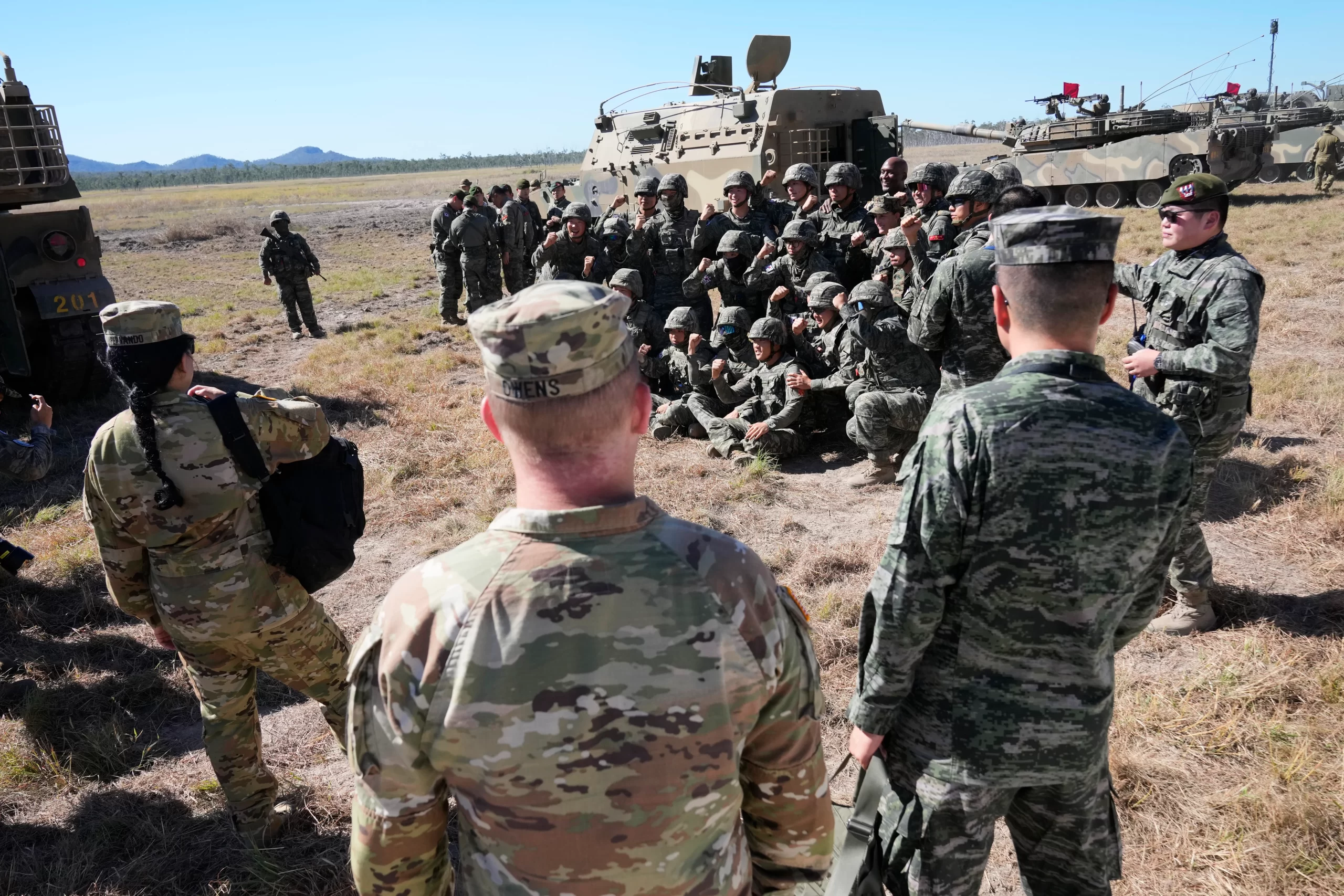
Australia launched its most extensive military exercise to date, Exercise Talisman Sabre 2025, on July 13, 2025, uniting over 35,000 personnel from 19 nations in a three-week display of military strength and interoperability. Held across Queensland, Northern Territory, Western Australia, New South Wales, Christmas Island, and, for the first time, Papua New Guinea, the exercise began with an opening ceremony in Sydney. Participants include the United States, Canada, Fiji, France, Germany, India, Indonesia, Japan, the Netherlands, New Zealand, Norway, Papua New Guinea, the Philippines, South Korea, Singapore, Thailand, Tonga, and the United Kingdom, with Malaysia and Vietnam as observers. Amid expectations of Chinese surveillance, the exercise reinforces Australia’s pivotal role in Indo-Pacific security and aligns with India’s Viksit Bharat 2047 vision of global leadership through enhanced defense cooperation.
A Multilateral Showcase of Military Power
Originating in 2005 as a U.S.-Australia bilateral exercise, Talisman Sabre has grown into a leading multilateral platform, demonstrating advanced military capabilities across land, sea, air, cyber, and space domains. The 2025 edition, the 11th and largest yet, features cutting-edge operations, including Australia’s inaugural live-fire deployment of the M142 High Mobility Artillery Rocket System (HIMARS), recently acquired from the United States. Brigadier Nick Wilson hailed the HIMARS launch at Queensland’s Shoalwater Bay Training Area—a 4,500 square kilometer Outback expanse—as a “remarkable day” for the Australian Army, marking its adoption of long-range, multi-domain platforms for precision strikes.
The exercise encompasses complex operations such as amphibious landings, air combat maneuvers, and cyber defense drills, aimed at enhancing interoperability among allied forces. The inclusion of Papua New Guinea as a new venue expands the exercise’s regional footprint, reflecting Australia’s commitment to strengthening security ties with Pacific Island nations. Advanced assets, including the UK’s Carrier Strike Group (featuring HMS Prince of Wales and HMS Richmond) and Australia’s F-35 jets, highlight the technological sophistication of the drills.
Strategic Significance Amid Chinese Surveillance
Talisman Sabre 2025 unfolds in a tense Indo-Pacific geopolitical landscape, driven by China’s assertive military and economic actions in the South China Sea and beyond. Chinese surveillance ships have monitored the past four iterations of the exercise, and Australian Defense Industry Minister Pat Conroy noted that such activity is anticipated again, stating, “It’s very unusual for them not to observe.” As of July 13, no Chinese vessels had been detected, but Australia is prepared to “observe their activities and monitor their presence” while adjusting operations to ensure security.
The exercise coincides with Australian Prime Minister Anthony Albanese’s six-day visit to China, beginning July 15, 2025, to meet President Xi Jinping and discuss trade and diplomatic relations. Albanese downplayed concerns about Chinese surveillance, remarking, “That would be nothing unusual. That has happened in the past, and I’ll continue to assert Australia’s national interest.” This dual approach—hosting a massive military exercise while engaging diplomatically with China—illustrates Australia’s strategic balancing act in the region.
Posts on X underscore the exercise’s geopolitical weight, with users describing it as a “clear signal to China” and a testament to “Bharat’s rising influence” through India’s participation. The involvement of Quad nations (U.S., Japan, India, and Australia) reinforces the exercise’s role in countering China’s regional ambitions, particularly in contested maritime zones.
India’s Strategic Contribution
India’s participation in Talisman Sabre 2025 strengthens its defense partnership with Australia, building on bilateral exercises like AUSTRAHIND, AUSINDEX, and PITCHBLACK. The third edition of AUSTRAHIND, conducted in Pune in November 2024, focused on counter-terrorism and sub-conventional operations, while AUSINDEX and PITCHBLACK have enhanced naval and air cooperation. India’s presence alongside Quad partners underscores its commitment to a rules-based Indo-Pacific order.
India’s ongoing defense modernization, including plans for domestic production of Russian R-37M hypersonic missiles and maintenance facilities for S-400 air defense systems, bolsters its contributions to multinational exercises. Talisman Sabre offers Indian forces a platform to train with advanced systems like HIMARS and F-35s, enhancing interoperability and exposure to cutting-edge technologies. This aligns with India’s Viksit Bharat 2047 vision, which emphasizes global leadership through defense self-reliance and regional security cooperation.
Broader Regional and Global Impact
The participation of 19 nations, including NATO allies (UK, France, Germany, Netherlands, Norway) and Indo-Pacific partners (Japan, South Korea, Indonesia, Philippines), reflects a collective commitment to regional stability. The inclusion of Fiji, Tonga, and Papua New Guinea highlights the exercise’s focus on fostering a broader Indo-Pacific security network. The expansion to Papua New Guinea signals Australia’s intent to counter China’s growing influence in the Pacific, strengthening ties with neighboring nations.
Talisman Sabre 2025 also serves as a testing ground for emerging technologies and strategies, such as cyber warfare and space-based operations, essential for modern conflicts. The integration of advanced platforms like the UK’s Carrier Strike Group and Australia’s HIMARS underscores the exercise’s emphasis on multi-domain capabilities, preparing allied forces for complex, high-intensity scenarios.
Challenges and Opportunities
The exercise highlights Australia’s challenge of balancing defense priorities with economic dependence on China, its largest trading partner. Strained Australia-China relations, stemming from trade disputes and Australia’s call for a COVID-19 origins inquiry in 2020, add complexity to the regional dynamic. Chinese surveillance necessitates robust counter-intelligence measures to protect operational secrecy.
For India, the exercise presents opportunities to enhance operational readiness and strengthen strategic partnerships. However, challenges such as delays in acquiring American GE F404 engines for the Tejas Mk1A fighter jet highlight India’s reliance on foreign suppliers. Initiatives like the DRDO’s Mounted Gun System (MGS) reflect progress toward self-reliance, which will enhance India’s contributions to future exercises.
Strengthening Indo-Pacific Security
Exercise Talisman Sabre 2025 positions Australia as a leader in multilateral defense cooperation, uniting 35,000 personnel from 19 nations to bolster Indo-Pacific security. Amid anticipated Chinese surveillance, the exercise demonstrates a unified commitment to a rules-based order, with India’s participation highlighting its growing global influence. By fostering interoperability and showcasing advanced capabilities, the war games prepare allied forces for future challenges.
For India, Talisman Sabre aligns with Viksit Bharat 2047, enhancing its defense capabilities and reinforcing its role as a key Indo-Pacific player. As the exercise unfolds over three weeks, it serves as a powerful testament to multilateral unity, technological prowess, and Australia’s strategic leadership in securing a stable and prosperous region.
Comments are closed.