
August Sees Devastating Heatwaves and Wildfires Amid World’s Third-Hottest Month on Record

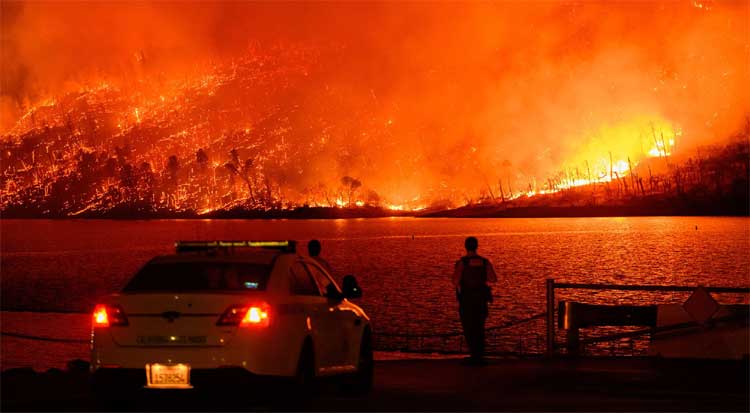
Devastating wildfires and intense heatwaves during August, the world’s third-hottest on record, have highlighted the urgent need to tackle climate change and prepare for its deadly impacts, according to Europe’s Copernicus Climate Change Service.
Southwest Europe endured a third summer heatwave, with fires raging across Spain and Portugal, while much of Asia recorded above-average temperatures during a month that neared historic highs. The world’s oceans, crucial for absorbing excess atmospheric heat, also approached record high temperatures, intensifying extreme weather events.
“With the world’s oceans also remaining unusually warm, these events underline not only the urgency of reducing emissions but also the critical need to adapt to more frequent and intense climate extremes,” said Samantha Burgess, strategic lead for climate at Copernicus.
Global temperatures continue to rise due to human-caused emissions of greenhouse gases, largely from fossil fuel use since the industrial revolution. Copernicus relies on billions of satellite and weather readings on land and sea, with data extending back to 1940. In August 2025, global temperatures averaged 1.29°C above pre-industrial levels, slightly cooler than the record set in 2023 and tied with 2024.
While these incremental increases may seem small, scientists warn they are already destabilising the climate, making storms, floods, and other disasters fiercer and more frequent.
Western Europe recorded the most pronounced above-average temperatures, with southwest France and the Iberian Peninsula hardest hit. Spain experienced a 16-day heatwave that claimed over 1,100 lives, according to the Carlos III Health Institute, while wildfires in Spain and Portugal forced thousands to evacuate. Human-driven climate change made the hot, dry, and windy conditions that fueled the fires 40 times more likely, scientists said last week.
Outside Europe, temperatures soared across Siberia, parts of Antarctica, China, the Korean Peninsula, Japan, and the Middle East. Record-high ocean temperatures were observed in the North Atlantic west of France and the UK, while Mediterranean seas saw slightly less extreme heat than in 2024.
Several countries, including the UK, Japan, and South Korea, endured their hottest summers on record, according to their national weather agencies.
These alarming trends underscore the growing urgency of global climate action to mitigate emissions and adapt to increasingly extreme weather.
Comments are closed.