At the United Nations, Indigenous leaders push for ways to enforce global climate court rulings

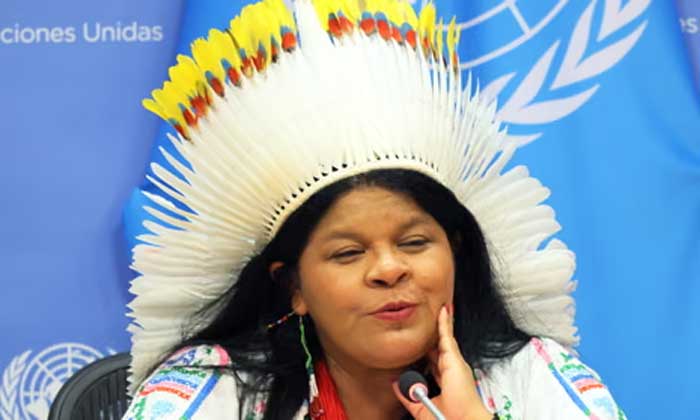
Indigenous communities across regions—from the Pacific to the Amazon—are facing intensifying climate impacts, even as governments fall short of enforcing landmark international rulings on climate responsibility. At the United Nations this week, Indigenous leaders pressed a key question: how to compel states to act on legal decisions meant to protect both the planet and Indigenous rights.
Last year, the International Court of Justice issued an advisory opinion stating that governments contributing to climate change should be held accountable for the harm caused, particularly to vulnerable island nations. A similar stance came from the Inter-American Court of Human Rights, which urged countries to cut fossil fuel emissions and integrate Indigenous knowledge into climate policy.
Yet, Indigenous delegates say a major gap remains between legal recognition and real-world enforcement. Many governments, they argue, continue to sidestep these obligations.
“This is a moment of opportunity… these are instruments of power,” said Luisa Castañeda-Quintana of Land is Life, urging Indigenous communities to actively use these rulings to strengthen advocacy efforts.
Ecuador highlights enforcement failures
In Ecuador, where the constitution has recognised the rights of nature since 2008, enforcement remains inconsistent. Officials pointed to court victories like the protection of the Vilcabamba River, but Indigenous leaders say extractive industries continue to operate on their lands.
Juan Bay of the Waorani Nation accused authorities of failing to protect Indigenous communities living near oil operations, calling such actions incompatible with climate commitments. Despite legal safeguards, new mining laws and ongoing oil extraction have drawn criticism from activists.
A wider regional pattern
According to UN special rapporteur Albert Kwokwo Barume, the issue extends across Latin America and the Caribbean—where strong legal frameworks often coexist with weak implementation and limited consultation with Indigenous peoples.
Global resistance and political pushback
Efforts to translate legal rulings into policy have also faced resistance from powerful nations. Vanuatu led a UN resolution calling for fossil fuel phaseouts and climate reparations, but the United States opposed it, urging countries to reject the proposal. A vote has now been delayed.
Legal experts say the rulings have clarified states’ obligations—but turning that clarity into action remains the challenge.
Climate impacts already unfolding
Meanwhile, Indigenous communities are already dealing with the consequences. In northern Canada, First Nations groups report flooding, evacuations and unsafe water linked to climate change. In Aotearoa New Zealand, Māori communities face stronger storms without sufficient support.
Leaders stress that these are not just environmental issues but human rights concerns tied to longstanding failures to honour Indigenous rights and treaties.
Momentum continues despite challenges
Despite resistance, legal momentum is growing. The African Court on Human and Peoples’ Rights is now examining a case on climate obligations, including displacement caused by environmental change.
For Indigenous advocates, international forums remain critical tools. But as many at the UN forum emphasised, their true power will depend on whether governments can be pushed to move from promises to action.
Comments are closed.