
Asia Cup Final: India vs Pakistan – History, Tension, and the Battle Ahead

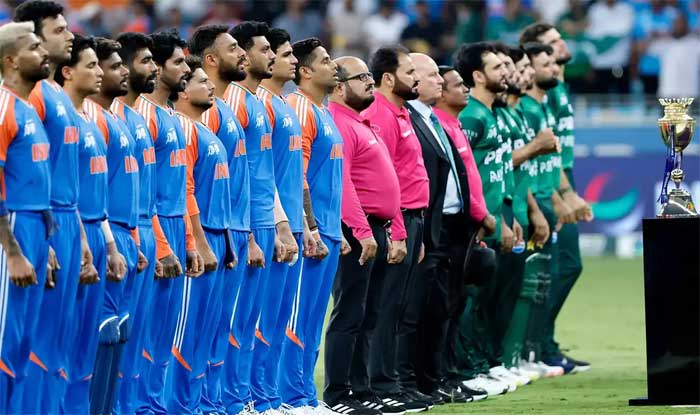
It has taken 41 years for India and Pakistan to meet in an Asia Cup final, a stage that combines cricketing spectacle with the weight of geopolitical tension. Off-field controversies have often overshadowed on-field action, placing immense pressure on players from both sides.
India enter the final as the dominant force of the tournament. Their unbeaten 6-0 run, including convincing wins over Pakistan by seven and six wickets at the Dubai International Cricket Stadium, underscores their superiority—even if they have yet to deliver the perfect, complete game. The team has relied heavily on Abhishek Sharma’s attacking starts and Varun Chakravarthy’s spin magic, living up to their status as defending World Cup champions and the world’s top-ranked T20I side. Even against Sri Lanka, who nearly ended India’s seven-match winning streak, the team found a way to win despite missing frontline pacers.
Pakistan, traditionally bowling-heavy, have shown flashes of promise. Shaheen Shah Afridi has regained form, Haris Rauf is channeling his energy positively, and spinners Abrar Ahmed and Saim Ayub have controlled the middle overs, despite inconsistent batting. Yet India are not “most teams.” The Indian squad has maintained focus amid distractions, including skipper Suryakumar Yadav’s code-of-conduct hearing.
Tensions between the sides have been palpable. Pakistan reacted to India’s snub of handshakes with empty boycott threats, delayed matches, and confrontations with match officials. On the field, India have remained composed, while Pakistan have sometimes appeared petulant.
India’s batting relies on timely contributions from Suryakumar Yadav and Shubman Gill. Despite opening partnerships with Abhishek Sharma, both leaders have underperformed individually, making the final a crucial moment to step up. Abhishek himself has been in sublime form, posting three consecutive half-centuries and equaling a record with seven straight 30-plus scores in T20Is.
Pakistan’s batting has been inconsistent, with only Sahibzada Farhan and Fakhar Zaman showing sustained runs. Others, including Salman Agha, have struggled, leaving the team vulnerable under pressure.
While form favors India, cricket offers no guarantees. A bad day—such as dropping four catches against Pakistan last Sunday—can alter outcomes. If India play to the level of their previous six games, they will be favorites. Pakistan’s challenge will be to disrupt that rhythm and seize the moment.
Suryakumar’s question, “What rivalry?”, may be just the psychological jolt Pakistan needs. The final promises not just cricket, but a battle of nerve, skill, and temperament on one of the sport’s most charged stages.
Comments are closed.