
As West Retreats, China, India and Brazil Poised to Lead Global Climate Agenda at COP30

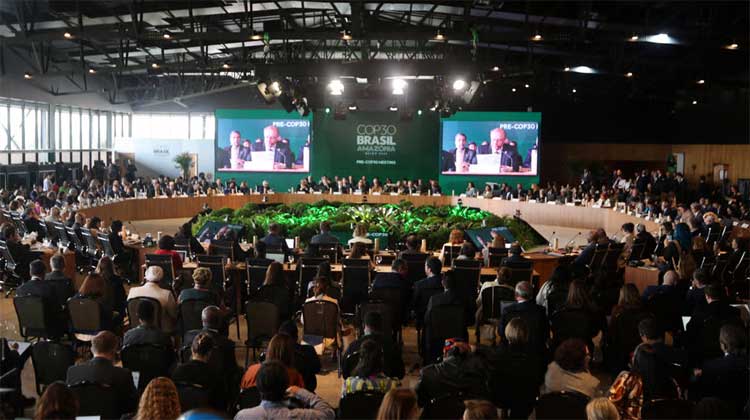
With the West wavering in its commitment to climate action, emerging economies — led by China, India and Brazil — are expected to step up and take charge at next month’s UN Climate Summit (COP30) in Belem, Brazil. The November 10–21 conference comes amid the United States’ renewed withdrawal from global climate efforts under Donald Trump, and Europe’s preoccupation with energy security amid the ongoing Russia–Ukraine war.
Analysts say this vacuum in leadership offers the Global South a rare opportunity to redefine the direction of international climate policy.
“With the US retreating and Europe facing domestic pressures, countries like Brazil, India and China now have the space to shape the global climate discourse,” said Li Shuo, director of the Asia Society Policy Institute’s China Climate Hub.
“Unlike the Western powers, their approach is likely to emphasise aligning development with decarbonisation.”
Li added that emerging economies could provide “a much-needed course correction” by grounding climate politics in shared prosperity and real action over rhetoric.
A Critical Juncture for Climate Goals
The summit takes place as the world remains off track to meet the Paris Agreement’s goal of limiting global warming to 1.5°C. According to a UN report, even if all current pledges are implemented, temperatures are projected to rise between 2.6°C and 2.8°C by 2100.
A 0.3°C temperature rise since 2015 has already led to an average of 11 additional hot days each year worldwide, worsening heatwaves across regions such as the Amazon, West Africa and South Asia, a joint study by World Weather Attribution and Climate Central found earlier this month.
Past COP summits have struggled to secure firm commitments on fossil fuel phaseouts or adequate funding for climate finance, leading experts to call for a decisive shift toward clean energy this year.
“The clean energy transition is the foundation of the next generation of market growth,” said Sunwoo Lee, CEO of JADE Dialogues, an Asia-Pacific platform focused on energy transition and finance. “Nations that integrate technology, finance and diplomacy around it will shape the future global order.”
Emerging Powers Align on Climate and Trade
Expectations are mounting for China, India and Brazil to unveil new climate initiatives at COP30 while simultaneously deepening trade and diplomatic ties.
In New Delhi this week, India and Brazil agreed to expand their preferential trade agreement, targeting US$20 billion in bilateral trade by 2030, up from US$12 billion last year. Meanwhile, India and China are set to resume direct passenger flights by late October after nearly five years, signalling efforts to rebuild economic and logistical links. A Chinese foreign ministry spokesperson said these moves align with the integration goals of BRICS.
Climate Action Gains Ground in the Global South
All three nations have made significant progress in clean energy and emissions reduction:
-
China invested US$625 billion in clean energy and met its wind and solar capacity targets six years ahead of schedule.
-
India achieved its goal of sourcing 50% of installed electricity capacity from non-fossil fuel sources in July 2025, five years ahead of its 2030 deadline.
-
Brazil launched a national biofuel expansion programme and pledged US$1 billion to a global forest conservation fund.
According to Aarti Khosla, director of Climate Trends, these achievements position the three nations to lead a “transformational shift” at COP30.
“This moment offers India, China and Brazil — all among the top four in renewable capacity — a platform to align not just on green growth but also on broader strategic priorities like trade, technology, South-South cooperation and multilateral reform,” Khosla said.
As Western influence wanes, analysts say COP30 could mark the beginning of a new climate leadership era, led by emerging economies determined to fuse development, equity and decarbonisation into the next phase of global climate action.
Comments are closed.