
As India enters 2026, climate change becomes an economic reality: Why execution, not ambition, will define growth

As India enters 2026, climate change has crossed a decisive threshold. It is no longer an environmental externality or a distant future risk. It has become a measurable economic variable—shaping productivity, inflation, infrastructure resilience, financial stability, and national competitiveness.
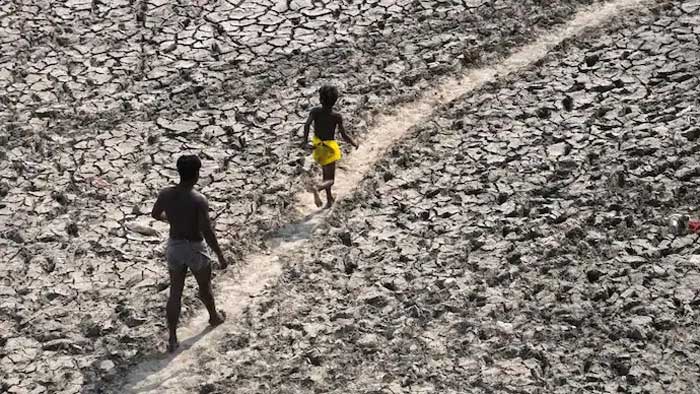
The past year offered a stark warning. One of the hottest summers on record brought prolonged heatwaves across northern and central India, disrupting construction schedules, factory output, logistics chains, and agricultural productivity. Government and industry estimates suggest that heat stress alone is already eroding between 4 and 6 per cent of GDP annually, through lost working hours, rising healthcare costs, and volatile crop yields. Climate impact is no longer episodic. It is structural, recurring, and embedded in India’s growth model.
What changed most significantly in 2025 was not awareness, but accountability. Climate risk began influencing real economic decisions. Infrastructure projects slipped as extreme weather events grew more frequent. Urban flooding disrupted transport networks and municipal services across multiple tier-one and tier-two cities. Insurance coverage tightened sharply in high-risk zones, with higher premiums and exclusions for commercial assets. Food price volatility became increasingly sensitive to erratic rainfall, complicating inflation management. Climate risk is now shaping credit assessments, asset valuation, project timelines, and public expenditure planning across the economy.
The execution gap
At the same time, India’s position as a climate solutions economy strengthened materially. By mid-2025, the country crossed 190 gigawatts of installed renewable energy capacity, with annual additions among the highest globally. Domestic manufacturing of solar modules, batteries, electrolysers and power electronics scaled rapidly under production-linked incentive schemes. Green hydrogen moved beyond announcements into pilot deployments across refining, fertilisers and steel. Sustainability is no longer discussed in isolation; it is increasingly framed around energy security, import substitution and industrial competitiveness.
Yet execution remains the defining constraint. India requires roughly USD 300 billion annually in climate-related investment through 2030 to remain on a credible transition pathway. Actual flows remain well below this level. Global capital is available, but absorption is constrained by currency risk, limited credit enhancement, short-tenor debt, and uneven project readiness—especially at the state and municipal levels. This shortfall is most acute in adaptation. Despite being among the world’s most climate-vulnerable economies, less than a quarter of India’s climate finance supports adaptation.
Urban resilience highlights this imbalance clearly. Cities face intensifying heat stress, flooding and water scarcity, yet investments in cooling infrastructure, drainage systems and water reuse remain largely dependent on stretched public budgets. District cooling, climate-resilient housing, flood control systems and wastewater recycling are proven and commercially viable globally. In India, they remain under-deployed due to the absence of standardised procurement models, predictable revenue streams and bankable project structures. Without these, private capital remains cautious, leaving cities fiscally exposed.
From ambition to delivery
Globally, the climate agenda has shifted decisively toward delivery. COP30 reinforced a clear message: ambition without execution is no longer sufficient. Adaptation finance, industrial transition pathways and delivery frameworks dominated negotiations. For India, the implication is clear. International credibility will increasingly hinge on measurable outcomes, not long-dated targets. Large emerging economies will be judged on how effectively policy intent translates into industrial transformation and financial deployment.
That makes 2026 a decisive inflexion point. The policy groundwork laid in 2025 must now convert into tangible outcomes. India’s draft green taxonomy has brought long-awaited clarity on what qualifies as sustainable economic activity, enabling more disciplined capital allocation. The Reserve Bank of India’s Regulatory Climate Oversight framework, notified in September 2025, has begun embedding climate risk into financial governance, disclosure and risk management. National roadmaps on carbon capture, utilisation and storage (CCUS), alongside climate-focused R&D strategies, signal a shift from intent to industrial planning in hard-to-abate sectors.
The Department of Science and Technology’s CCUS R&D roadmap is particularly strategic. It recognises a central reality of India’s development path: sectors such as cement, steel, refining, fertilisers and chemicals will continue to underpin growth and cannot be decarbonised through renewables and electrification alone. By anchoring CCUS within a domestic research, demonstration and deployment framework, the roadmap bridges scientific capability and industrial application. If executed with urgency, CCUS can protect export competitiveness under emerging carbon regimes, create new value chains around carbon utilisation, and position India as a solutions provider rather than a compliance follower.
From theory to consequence
Carbon markets will also move from theory to consequence in 2026. As the European Union’s Carbon Border Adjustment Mechanism enters its execution phase, Indian exporters in steel, cement, aluminium and chemicals will face direct carbon cost exposure. India’s green steel policy announcements in 2025 are therefore strategically critical, offering early movers a pathway to protect margins while reducing emissions intensity. Delay will translate directly into competitiveness loss.
One dimension of the energy transition now requires far more candid discussion: nuclear power. If India is serious about deep decarbonisation while sustaining high growth, nuclear energy must re-enter the policy conversation as a scale solution, not a marginal option. Baseload clean power cannot be delivered through renewables alone. Rationalising the nuclear liability framework, accelerating approvals for advanced reactor technologies and enabling public-private participation could materially strengthen energy security, grid stability and decarbonisation simultaneously.
Equally under-leveraged is energy efficiency, arguably the fastest and least-cost climate lever available today. Efficiency improvements across industry, buildings, appliances and transport deliver immediate returns through reduced energy demand, lower operating costs and higher productivity. For industry, efficiency is not a compliance burden—it is a competitiveness strategy. In 2026, it will be central to managing exposure to volatile energy prices, tightening carbon norms and trade-linked reporting obligations.
Adaptation must finally move to the centre of India’s climate strategy. Heat-resilient building codes, reflective roofing, district cooling, advanced forecasting, climate-resilient seeds, water-efficient industrial processes and decentralised energy systems already exist. What is missing is coordinated deployment at scale, enabled by regulatory clarity, bankable project design and blended finance structures that use public capital to de-risk private investment.
The year that matters
Industry must lead this transition operationally. Boards must treat climate exposure as a core business risk, not a sustainability sidebar. Firms that invest early in efficiency, electrification, clean power procurement and climate analytics will protect margins and market access. Those that delay will face rising compliance costs and strategic disadvantage.
Financial institutions are equally central. Embedding climate risk into lending, underwriting and portfolio strategy is a matter of asset quality and long-term return protection—not ethics. Banks and insurers that price risk accurately and support credible transition finance will be more resilient as volatility intensifies.
For policymakers, 2026 must be about enabling execution at scale: standardised climate data frameworks, stronger municipal finance mechanisms, scalable blended-finance platforms, nuclear policy reform and tighter alignment between industrial policy and decarbonisation pathways. Public capital must crowd in private investment, not replace it.
India enters 2026 with structural advantages—scale, technical capability, entrepreneurial depth and a development trajectory still being shaped. Climate change can either slow that trajectory or strengthen it. The outcome will depend on how decisively intent is converted into implementation.
Comments are closed.