
Are You CIA? Any Pakistan Links to CJP?’ Sonam Wangchuk Answers Key Questions

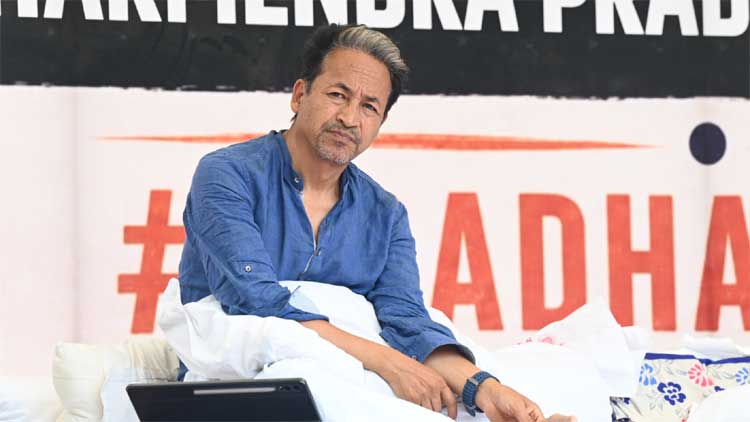
Activist Sonam Wangchuk has dismissed allegations of foreign funding or links to the Cockroach Janta Party (CJP) protest movement, saying his decision to support the campaign was based on available data, conversations with its members and what he witnessed on the ground.
Speaking on the Prakhar Gupta podcast, Wangchuk was questioned about allegations surrounding the movement’s funding and alleged foreign connections. Gupta jokingly asked him whether he was a CIA operative, prompting Wangchuk to respond with humour that if he was, “I am yet to discover it,” adding that perhaps the agency had such a sophisticated recruitment system that even the person being recruited would not know about it.
Wangchuk cites follower data
Wangchuk said he did not conduct any elaborate independent investigation into allegations involving CJP founder Abhijeet Dipke, including questions about his educational credentials and alleged links to Pakistan, Bangladesh or the US.
“I didn’t run some sophisticated research software,” he said.
However, Wangchuk said he examined analytics after authorities, including the Lieutenant Governor, claimed that the movement had a large following in Bangladesh, Pakistan and the US.
According to Wangchuk, the data he reviewed showed that 94 per cent of the movement’s followers were from India, while only 6 per cent were from other countries.
He said the foreign component was not significant enough to raise alarm bells for him.
“If it were 30 per cent foreign and 70 per cent Indian, red lights would have blinked for me,” Wangchuk said, adding that the follower data, combined with what he saw during the protests and his conversations with members, convinced him that the movement was not being directed by a foreign power.
He said people could question the protesters over issues such as their personal backgrounds or past employment, but he did not believe they were being controlled by an outside force.
’20 children died and they are being forgotten’
Wangchuk said his decision to support the protesters was ultimately driven by the cause they were raising.
He recalled that the protesters feared arrest when they reached Delhi and said he decided to join them and undertake a hunger strike if they were detained.
“I gave them that cover because I was convinced there was nothing fishy,” he said.
Wangchuk acknowledged that screenshots or analytics alone should not be considered conclusive proof and said he supported further investigation into claims about the individuals associated with the movement.
“In hindsight, I don’t think they were paid off by anyone,” he said, while adding that anyone making significant claims should be subjected to scrutiny if those claims later prove exaggerated or false.
But he said the larger issue overshadowed such questions for him.
Wangchuk pointed to claims that 20 children had died by suicide over the issue being raised by the protesters, calling it a “massive, uncelebrated tragedy”.
He compared the significance of the deaths with the sacrifice of Mohamed Bouazizi, whose self-immolation helped trigger the Arab Spring, and said the deaths of 20 children should not be forgotten.
As someone associated with education policy, Wangchuk said the issue deeply affected him and that he believed the protesters were highlighting a genuine concern.
Asked whether his support was ultimately for the cause rather than the organisation or the individuals behind it, Wangchuk gave a clear answer:
“Yes, for the cause.”
Comments are closed.