
Are India’s Imports from Russia Excessive? A Closer Look at the Numbers

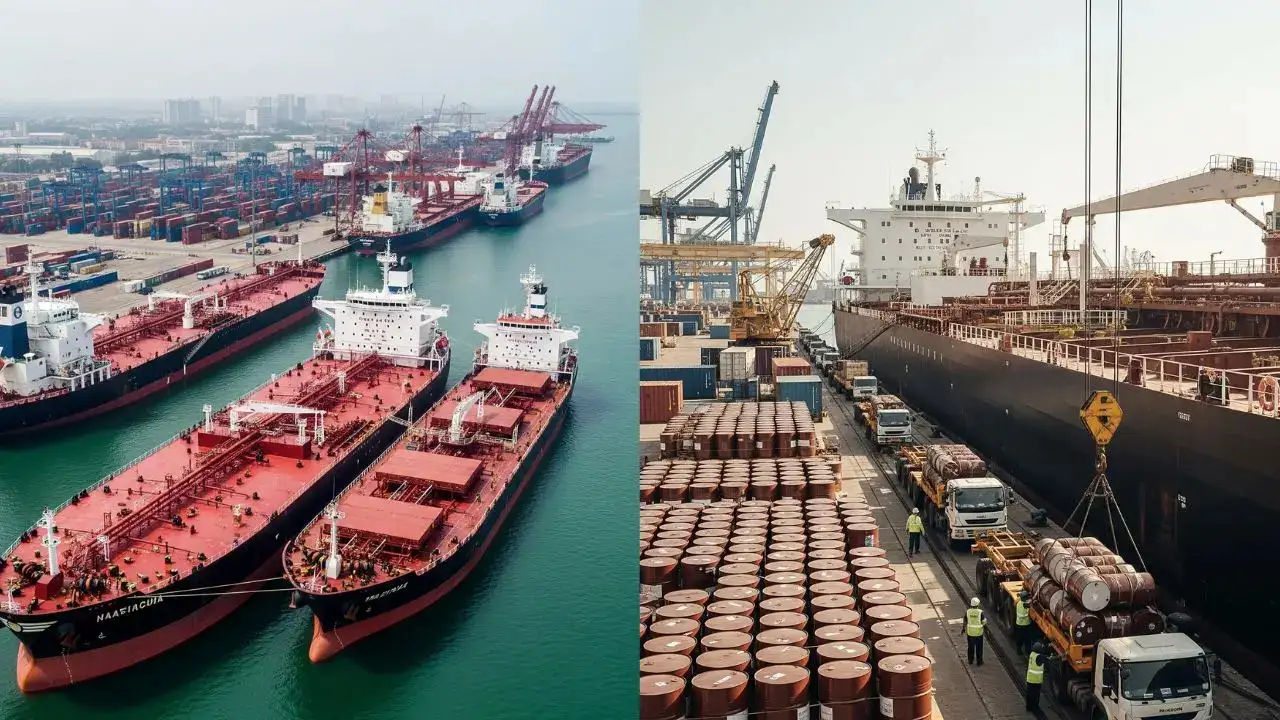
India’s imports from Russia have grown rapidly over the past three years, raising questions in policy and economic circles: Is this level of dependence excessive, or is it a calculated strategy driven by market dynamics and geopolitical realities? This article breaks down the trade figures, key commodities, strategic implications, and future outlook to provide a clear picture.
India–Russia Trade: A Growing Imbalance
Between 2020 and 2024, India’s imports from Russia rose sharply—from around USD 5.5 billion to over USD 61 billion. However, Indian exports to Russia remained relatively modest, growing from just USD 2.6 billion to USD 4.2 billion in the same period. This has resulted in a massive trade imbalance, with a deficit of nearly USD 57 billion in FY 2023–24 alone.
A significant portion of these imports is driven by purchases of crude oil, which accounts for nearly three-quarters of the total import volume. Other key imports include petroleum products, thermal coal, fertilizers, and industrial chemicals.
The Role of Russian Crude Oil in India’s Energy Strategy
Russia has emerged as India’s top oil supplier over the past three years, displacing traditional suppliers like Iraq and Saudi Arabia. As of mid-2025, Russia contributes approximately 36% to 40% of India’s total crude oil imports.
Key trends include:
-
Peak Import Levels: In June 2025, India imported about 2.08 million barrels per day (mbpd) from Russia—its highest level in nearly a year.
-
Discount Advantage: Indian refiners have benefited from substantial discounts on Russian crude, which have helped control domestic fuel prices.
-
Market Adaptability: Despite temporary dips in volume due to shipping challenges or sanctions pressure, India has consistently maintained Russian oil in its energy mix.
India also imports Russian coal, naphtha, and fertilizers, enhancing its energy and agriculture security.
Economic and Strategic Rationale
India’s increasing imports from Russia are grounded in several practical considerations:
-
Energy Security: With global oil markets under pressure due to conflicts and supply disruptions, India seeks reliable, long-term partners.
-
Cost Efficiency: The discounted price of Russian oil has helped India curb inflation and reduce fiscal pressure.
-
Diversification: While Russia’s share has grown, India continues to import from a wide range of suppliers, including the Middle East, the U.S., and Latin America.
-
Non-Dollar Trade: Some of these imports are settled in alternate currencies like the rupee or yuan, reducing dollar dependency.
Challenges and Risks
While economically beneficial, heavy reliance on Russian imports also presents several challenges:
-
Trade Deficit: The large and widening trade imbalance is economically unsustainable in the long term unless exports to Russia are significantly increased.
-
Sanctions Pressure: Western sanctions, especially from the U.S. and European Union, pose legal and logistical risks to Indian entities dealing with Russian firms.
-
Geopolitical Exposure: A sudden escalation in sanctions or regional conflict could disrupt supply chains and expose India to diplomatic strain.
-
Limited Export Growth: Despite efforts, India’s exports to Russia remain small and uneven, with only moderate gains in pharmaceuticals, machinery, and tea.
Key Trade Figures
| Metric | FY 2023–24 |
|---|---|
| Total Imports from Russia | USD 61.4 billion |
| Total Exports to Russia | USD 4.2 billion |
| Trade Deficit | USD 57.2 billion |
| Russian Share of Oil Imports | ~36–40% |
| Peak Oil Import Volume | 2.08 mbpd (June 2025) |
Calculated Risk or Over-Dependence?
India’s current level of imports from Russia is undeniably high, but whether it is excessive depends on how the trade is managed going forward. On one hand, the strategy has provided economic relief and energy stability during volatile global conditions. On the other, it exposes India to trade deficits and geopolitical risks.
To mitigate these concerns, India is actively working to:
-
Increase exports to Russia
-
Diversify its energy sources
-
Develop alternative payment mechanisms
-
Build strategic reserves and domestic refining capacity
In sum, while the numbers are large, they reflect a pragmatic balancing act. Whether this dependence becomes a long-term vulnerability will depend on how swiftly India can diversify its trade partnerships and strengthen its export base.
Comments are closed.