
Amarnath Yatra Resumes: 7,908 Pilgrims Depart for Holy Cave Shrine After Weather-Induced Pause

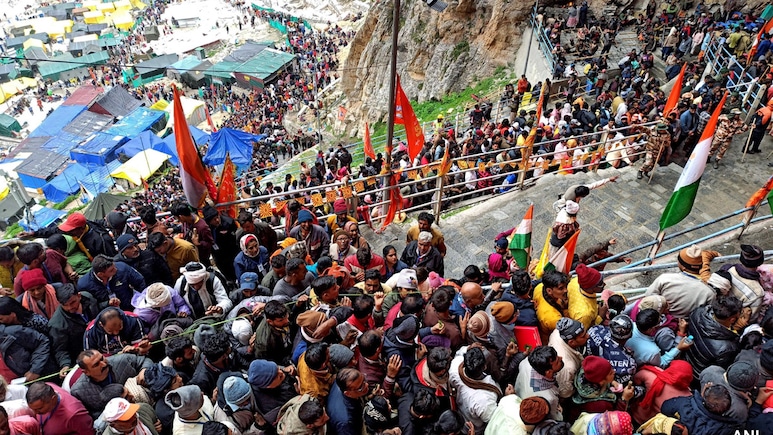
Amarnath Yatra, one of India’s most revered Hindu pilgrimages, resumed after a day-long suspension due to heavy rainfall and landslides in Kashmir. A batch of 7,908 pilgrims departed from Jammu’s Bhagwati Nagar Yatri Niwas base camp in two escorted convoys, heading to the twin base camps of Nunwan (Pahalgam) and Baltal in the Kashmir Himalayas. This resumption follows a robust response to the 38-day pilgrimage, which began on July 3 and has already seen over 2.56 lakh devotees visit the 3,880-metre-high cave shrine housing the naturally formed ice lingam, a symbol of Lord Shiva. This article explores the resumption, its significance, logistical details, and implications, framed through the Needonomics framework, which emphasizes need-based spiritual and economic practices.
Resumption of the Amarnath Yatra
The Amarnath Yatra was halted on July 17, 2025, due to continuous rainfall triggering landslides and shooting stones along the treacherous trekking routes, rendering them unsafe. The Border Roads Organisation (BRO) and rescue teams worked tirelessly to restore the affected stretches, ensuring safe passage for pilgrims. On July 18, the Yatra resumed on both the 48-km Pahalgam route and the shorter, steeper 14-km Baltal route, with pilgrims departing from Jammu and the twin base camps in Kashmir.
The 16th batch of 7,908 pilgrims, comprising 5,957 men, 1,613 women, 26 children, 290 sadhus, and 22 sadhvis, left Bhagwati Nagar in 261 vehicles, escorted by CRPF and police personnel. The first convoy of 92 vehicles carrying 2,879 pilgrims departed at 3:30 a.m. for Baltal, while the second convoy of 169 vehicles with 5,029 pilgrims left at 4:25 a.m. for Nunwan (Pahalgam). Amid chants of “Bum Bum Bhole” and “Har Har Mahadev,” Jammu transformed into a “city of divinity,” reflecting the spiritual fervor of the pilgrims.
Logistical and Security Arrangements
The Shri Amarnathji Shrine Board (SASB), chaired by Lieutenant Governor Manoj Sinha, has implemented extensive arrangements to facilitate the pilgrimage. Key logistical details include:
-
Routes: Pilgrims access the cave shrine via the traditional 48-km Pahalgam route, passing through Chandanwari, Sheshnag, and Panchtarni over four days, or the 14-km Baltal route, allowing same-day darshan. No helicopter services are available this year due to security concerns.
-
Registration: Over 4 lakh people have registered online, with 4,000 fresh devotees arriving daily in Jammu for on-the-spot registration. Thirty-four accommodation centers across Jammu, from Lakhanpur to Banihal, house over 50,000 pilgrims.
-
Security: Following a terrorist attack on April 22, 2025, in Pahalgam’s Baisaran meadow, which killed 26 civilians, authorities deployed an additional 180 companies of Central Armed Police Forces (CAPFs) to augment the Army, BSF, CRPF, SSB, and local police. Multi-tier security ensures safe passage, with roads sanitized before convoys depart.
The Bhumi Pujan of the Chhari Mubarak (Lord Shiva’s Holy Mace) was performed on July 10 at Pahalgam, led by Mahant Swami Deependra Giri, marking a key ritual of the Yatra. The pilgrimage, which began on July 3, is set to conclude on August 9, coinciding with Shravan Purnima and Raksha Bandhan.
Significance of the Amarnath Yatra
The Amarnath cave shrine, located at 3,888 meters in the south Kashmir Himalayas, houses a naturally formed ice lingam that waxes and wanes with the lunar cycle, believed to symbolize Lord Shiva’s mythical powers. The Yatra, an annual testament to faith and endurance, attracts devotees from India and abroad. Despite initial fears of low turnout after the April terror attack, Jammu and Kashmir Chief Minister Omar Abdullah expressed optimism, stating, “We have crossed 2.5 lakh. If this pace continues, we may reach 3.5 lakh,” surpassing last year’s 5.10 lakh pilgrims.
The Yatra’s resumption reflects the resilience of devotees and the administration’s commitment to safety. Posts on X, including one from @ANI on July 18, highlight the enthusiasm of the 7,908 pilgrims departing amid tight security, underscoring the pilgrimage’s spiritual and cultural significance.
Needonomics and Consumer Wisdom
The Needonomics framework, which prioritizes essential needs over wants, aligns with the Yatra’s focus on spiritual fulfillment as a core human need. Pilgrims undertake the arduous trek to seek divine blessings, reflecting a need-based approach to faith over material pursuits. Street economics, or consumer wisdom, is evident in devotees’ practical choices, such as opting for registered routes and verified accommodations to avoid risks like counterfeit travel services.
Social sentiment on X, as seen in posts from @airnewsalerts and @greatandhranews, reflects widespread support for the Yatra’s continuation despite weather challenges, with devotees valuing the spiritual experience. The Recognition Heuristic drives participation, as the Amarnath shrine’s revered status attracts pilgrims globally. However, the absence of helicopter services due to security concerns highlights ethical considerations, prioritizing safety over convenience, aligning with Needonomics’ call for responsible resource allocation.
Economic and Ethical Implications
The Amarnath Yatra significantly boosts Jammu and Kashmir’s economy, supporting local businesses like lodging centers, porters, and shopkeepers. The influx of over 2.56 lakh pilgrims in the first 15 days generates substantial revenue, contributing to the region’s projected tourism growth. The SASB’s infrastructure upgrades, including RFID tags and enhanced facilities, improve pilgrim experiences while fostering economic activity.
Ethically, the Yatra’s management reflects a commitment to safety and inclusivity, with stringent security measures addressing past tragedies like the 2000 Pahalgam massacre and the 2025 terror attack. However, the suspension of helicopter services may limit accessibility for elderly or differently-abled pilgrims, raising questions about equitable access. Needonomics advocates balancing spiritual needs with practical inclusivity, suggesting future innovations like alternative transport options.
The resumption of the Amarnath Yatra on July 18, 2025, with 7,908 pilgrims departing from Jammu, underscores the enduring spiritual and cultural significance of this pilgrimage. Despite weather-related challenges and security concerns, the SASB’s robust arrangements and devotees’ unwavering faith ensure its continuation. Through the lens of Needonomics, the Yatra prioritizes essential spiritual needs, fostering consumer wisdom and economic resilience. As the pilgrimage progresses toward its August 9 conclusion, it remains a powerful symbol of devotion, community, and ethical governance, with the potential to set a record turnout in 2025.
Comments are closed.