
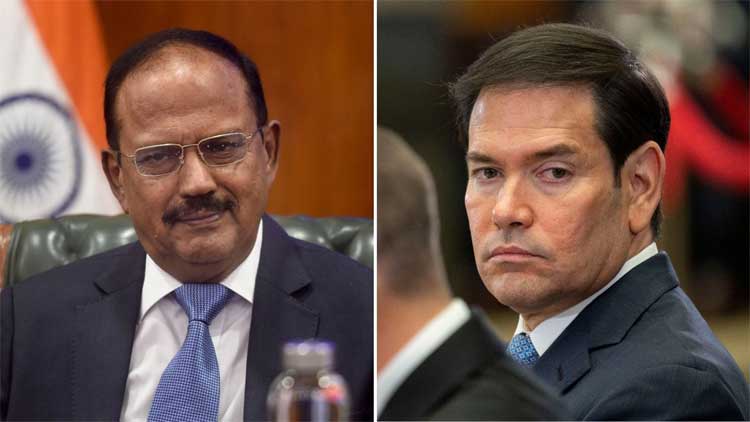
Ajit Doval told Marco Rubio India ‘won’t be bullied, will wait out Trump’s term’: Report

United States President Donald Trump on Monday announced that the United States and India have reached a significant trade agreement, marking a major reset in relations between the world’s two largest democracies.
In a post on Truth Social, President Trump said that the deal will see American tariffs on Indian goods significantly lowered and claimed that India would stop purchasing Russian oil as part of the agreement.
What the Leaders Have Said
Prime Minister Narendra Modi welcomed the announcement, thanking Trump for reducing duties on “Made in India” products in a post on X (formerly Twitter). Modi wrote that collaboration between the two economies would “benefit our people and unlock immense opportunities for mutually beneficial cooperation.”
However, the Indian government’s public statements confirmed only the tariff reduction, without explicitly acknowledging commitments regarding Russian oil purchases or sweeping tariff eliminations on U.S. goods.
Union Minister Ashwini Vaishnaw described the agreement as a “win-win deal” that would benefit citizens and industries in both countries.
Background: Months of Diplomatic Moves
Months before the announcement, National Security Advisor Ajit Doval visited Washington in a bid to smooth bilateral tensions and revive stalled trade talks, according to a Bloomberg report. During that visit, Doval reportedly told then-U.S. Secretary of State Marco Rubio that India would not be bullied and that it wanted to move past recent acrimony to restart negotiations. He also said India would be willing to wait for a better climate even beyond Trump’s term, provided public criticism was toned down.
That meeting took place shortly after Modi’s high-profile engagements with Russian President Vladimir Putin and China’s Xi Jinping, highlighting India’s delicate balance between major global powers.
Key Elements of the Trade Agreement
Tariff Reductions
Under the announced deal, the U.S. has agreed to lower reciprocal tariffs on Indian goods from previously elevated levels to about 18%, a significant rollback from punitive rates imposed amid 2025 tensions.
Energy and Oil Purchases
President Trump claimed that India agreed to end purchases of Russian oil and would instead boost energy imports from the U.S. and potentially Venezuela as part of the broader economic cooperation.
However, analysts and Indian officials have noted that India’s energy strategy remains focused on ensuring supply security and affordability, and formal steps to halt Russian oil imports have not yet been fully detailed or confirmed officially. Indian refiners would need time to adjust sources, and any shift toward U.S. or Venezuelan energy would unfold over months.
Expanded Market Access
Trump also stated that India would reduce its tariffs and non-tariff barriers on U.S. goods, potentially to zero, broadening market access for American exporters. The extent of these commitments and the list of products affected are still being worked out.
Market and Sector Reactions
India’s financial markets responded positively to the tariff announcements, with the rupee strengthening and stock indexes rallying, although gains were tempered by mixed sector impacts and ongoing uncertainty over full deal details.
Trade experts say the agreement — even at this stage — reduces uncertainty for exporters and may enhance India’s competitiveness in key sectors by lowering U.S. tariff barriers.
Outlook and Uncertainties
While both sides have celebrated progress, the deal’s formal legal text is still awaited, and key provisions — especially around energy commitments and tariff timelines — require further clarification and implementation plans.
Diplomats and trade analysts caution that the deal’s strategic implications — particularly with regard to Russian oil and global energy markets — will be watched closely by all major trading partners.
Comments are closed.