
Ahead of Bihar Polls, Shifting Loyalties Take Centre Stage

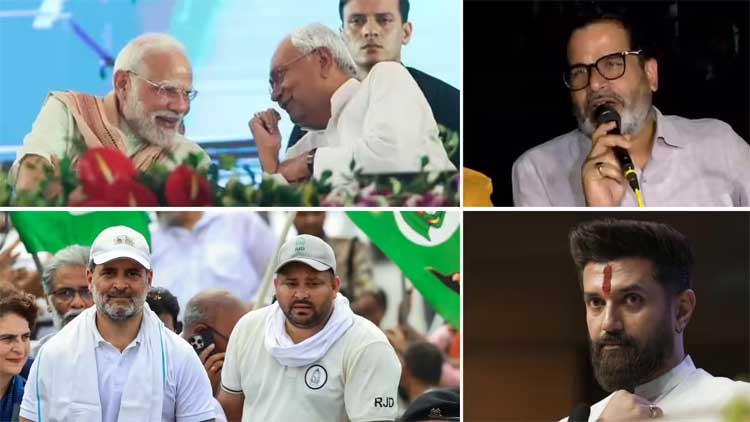
Bihar’s political arena, long known for its volatility, is witnessing yet another wave of defections as the assembly election campaign gathers pace. Party-hopping, once viewed as opportunism, has now become a strategic norm — driven less by ideology and more by the pursuit of electoral success.
Earlier this week, former MP and four-time MLA Sarfaraz Alam joined Prashant Kishor’s Jan Suraaj Party, marking his third major political shift. The son of former Union minister Mohammad Taslimuddin, Alam has represented Jokihat four times — twice for the RJD (1996, 2000) and twice for the JD(U) (2010, 2015) — reflecting the fluid loyalties that have come to define Bihar’s politics.
Defections as Strategy
The upcoming polls have seen an unprecedented number of political turncoats fielded by major parties. Nine candidates who previously won on different party tickets are now contesting under new banners. Following the fall of the Grand Alliance government last year, seven MLAs from the RJD and Congress crossed over to the NDA, with all but one rewarded with fresh tickets.
Among them, Sangeeta Kumari left the RJD for the BJP and will contest from Mohania, while Bharat Bind, another RJD defector, is now the BJP’s candidate in Bhabhua. The JD(U) has also embraced defectors, offering tickets to four former RJD leaders — Kedarnath Singh (Baniyapur), Chhote Lal Rai (Parsa), Vibha Devi (Nawada) and Chetan Anand (Nabinagar).
Perhaps the most dramatic example comes from Mokama, where the JD(U) has fielded Anant Singh, husband of sitting RJD MLA Neelam Devi, symbolising how personal influence often trumps party allegiance.
Congress deserters have also found new homes. Siddharth Saurav has joined the BJP to contest from Bikram, while former minister Murari Kumari Gautam will run from Chenari on an LJP (Ram Vilas) ticket.
The RJD, too, has welcomed defectors. Beena Devi, wife of former RLSP leader Surajbhan Singh, was named RJD’s candidate from Mokama just a day after her husband quit his party. The RJD list also includes JD(U) defectors Sanjiv Kumar (Parbatta) and Bogo Singh (Matihani), and even independents like Shailendra Pratap Singh (Taria).
Defections Don’t Always Pay Off
However, switching sides doesn’t always guarantee success. Several sitting legislators who backed the NDA after the trust vote have failed to secure nominations. Prahlad Yadav, who sought a BJP ticket from Suryagarha, was sidelined in favour of a JD(U) candidate. Mishrilal Yadav, a VIP defector, is also missing from the BJP list. In Gaura Bauram, VIP leader Swarna Singh was replaced by her husband Sujit Kumar Singh, while Prakashveer from Rajoili failed to get a ticket despite joining the NDA.
Congress veteran Ashutosh Sharma said turncoats often serve as “political barometers” in Bihar. “A rise in defections toward one camp is seen as a sign of its growing momentum. Established parties seldom hesitate to welcome leaders they once opposed,” he said.
He added that the influx of new entrants often sidelines loyal grassroots workers, creating internal resentment that could influence voter turnout. “In Bihar, personal networks outweigh party loyalty — winnability is the ultimate ideology,” Sharma noted.
Smaller Parties Join the Game
The defection trend isn’t limited to the major players. In Gopalganj, former MLA Riyazul Haque Raju and Kartar Singh Yadav, son of strongman Dadan Pahalwan, joined the BSP. In Shahabad, leaders Rajesh Kushwaha and Manish Yadav switched to the Rashtriya Lok Morcha (RLM) under Upendra Kushwaha.
Ideology Takes a Back Seat
Political analysts see this churn as evidence of the steady erosion of ideological commitment in Bihar’s politics. Patna-based observer Priya Darshan said the state’s politics, once defined by loyalty and ideological conviction, has become “purely transactional.”
“Parties now assess candidates based on caste calculus, local influence, and winnability rather than past allegiance. In Bihar, loyalty is rewarded only if it brings votes. Political organisations have become electoral machines,” Darshan said.
“For parties, inducting defectors is a calculated gamble — a turncoat with a solid vote base can tilt close contests. For candidates, it’s a way to revive political fortunes and enhance bargaining power.”
Comments are closed.